

- Mount Kailash Blogs
- @nagarjuna_travels
Mount Kailash, standing majestically in the remote Tibetan Himalayas, has captivated the human imagination for thousands of years. Unlike any other peak on earth, Kailash is not merely a physical mountain; it is a spiritual symbol, a cultural cornerstone, and a cosmic mystery. Its prominence across religions and civilizations has earned it the extraordinary title of Axis Mundi, meaning the cosmic axis or the centre of the universe.
This concept reflects far more than geography. It represents the belief that Kailash is a point where the physical and spiritual worlds meet, where heaven descends to earth, and where spiritual energies rise upward. To understand why Mount Kailash commands this sacred identity, we must explore its mythology, symbolism, geography, and the mysterious aura that surrounds it.
Revered by Multiple Religions
One of the most remarkable attributes of Mount Kailash is its universal acceptance as a sacred space. Few places on earth are worshipped by so many different faiths, each attributing profound cosmic significance to the mountain.
In Hinduism, Kailash is revered as the eternal home of Lord Shiva and Goddess Parvati. The mountain is seen as the physical manifestation of Mount Meru, the mythological cosmic axis around which the universe revolves. Shiva's meditative presence at its summit symbolizes the still centre of existence, untouched by the chaos of creation.
In Buddhism, Kailash is believed to be the dwelling place of Demchok (Chakrasamvara), a deity symbolizing supreme bliss. Tibetan Buddhist cosmology often depicts a central mountain within mandalas, representing the universe’s spiritual core. Kailash naturally fits this cosmological structure.
For the Jain community, the mountain is known as Ashtapada, the place where the first Tirthankara, Rishabhanatha, attained liberation. This transforms Kailash into a symbolic gateway where the earthly realm touches the liberated world beyond birth and death.
In the ancient Bon religion of Tibet, Kailash is the home of the sky god Sipaimen and is considered the birthplace of the universe itself. Bon mythology describes Kailash as the centre from which all life and sacred energies emerge.
Across these traditions, one theme remains constant: Kailash sits at the heart of spiritual cosmology, making it a natural contender for the title of Axis Mundi.
The Philosophy of Axis Mundi and Its Connection to Kailash
The term Axis Mundi appears in many ancient cultures around the world. It refers to the point where the heavens connect with the earth and the underworld. This axis is believed to uphold the cosmos, serving as a spiritual central pillar that maintains harmony between different realms of existence.
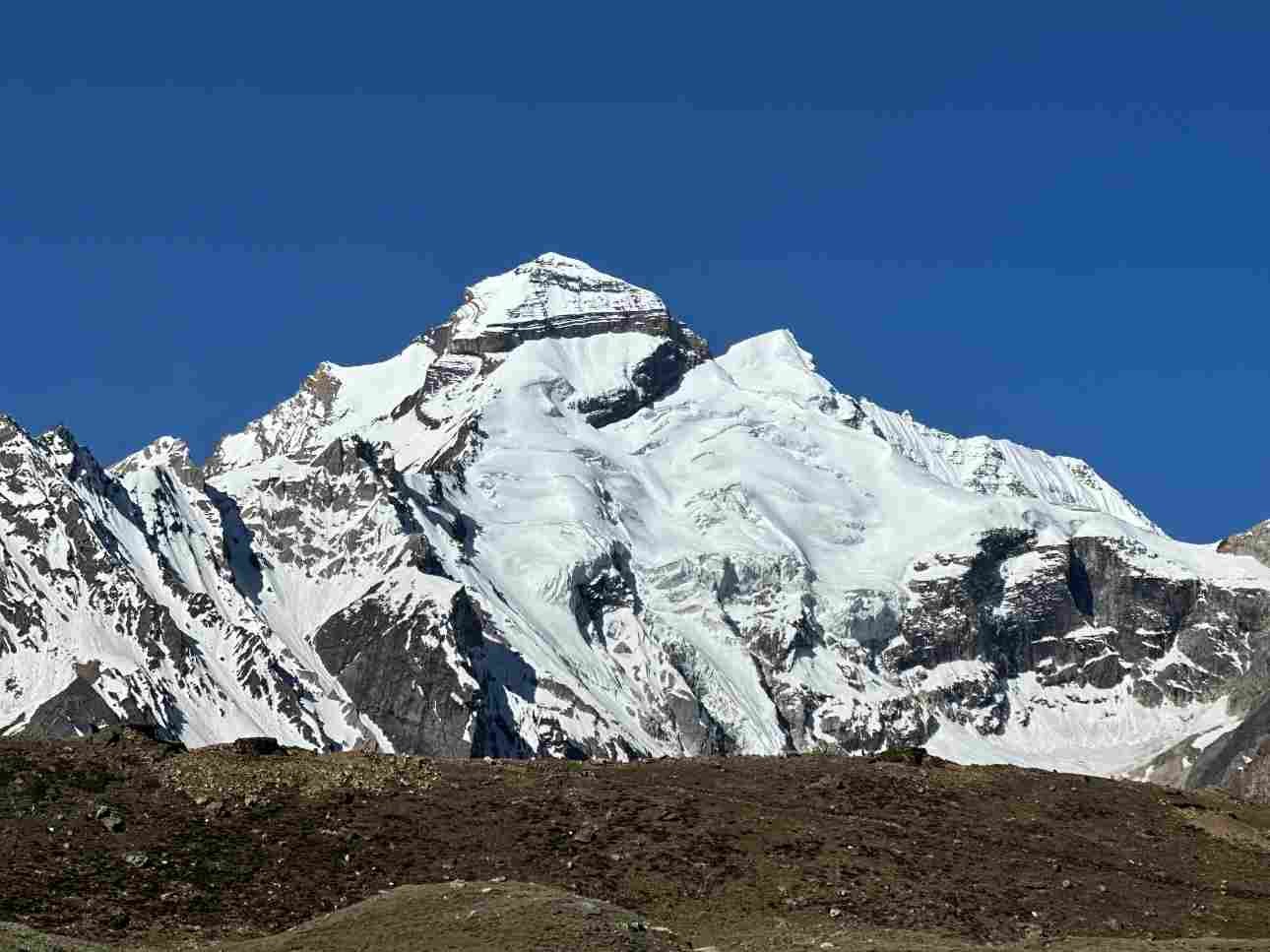
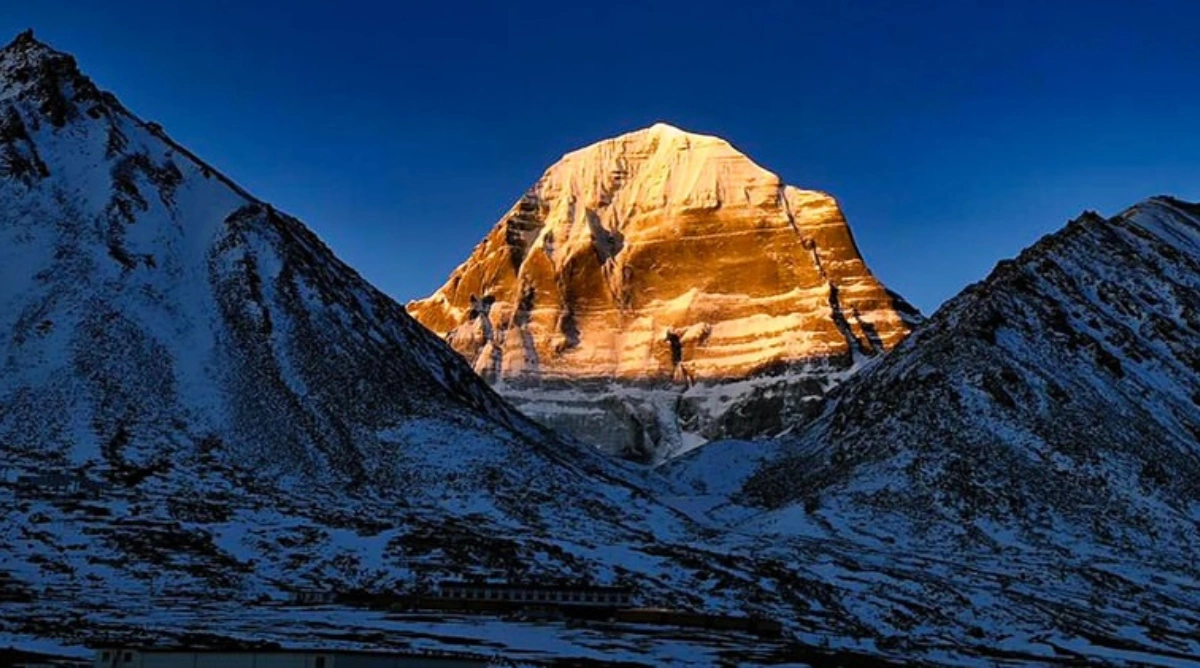
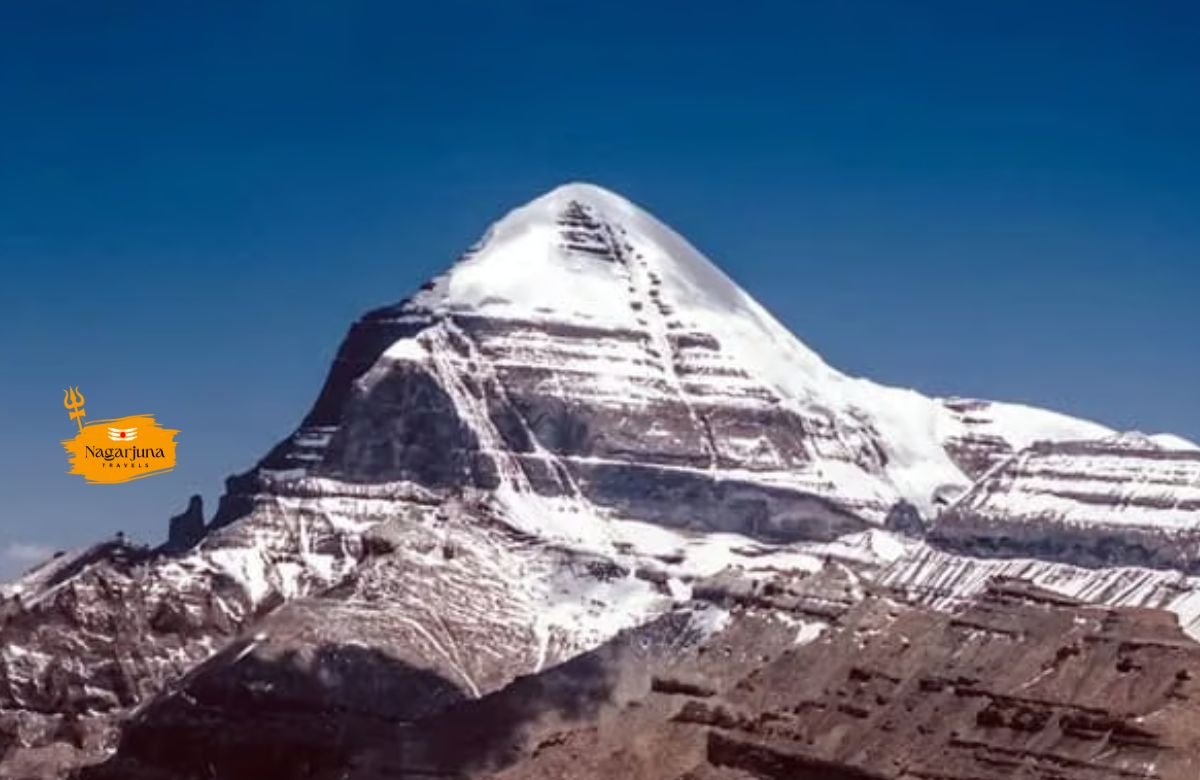
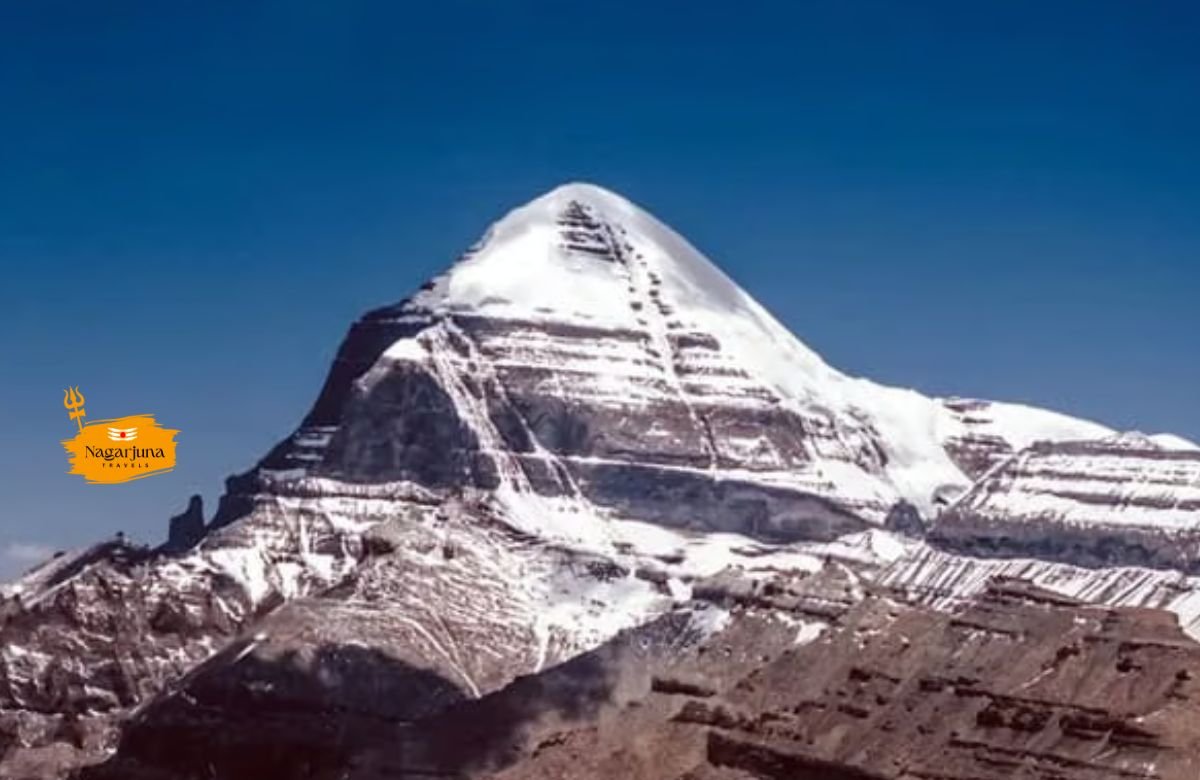
Mount Kailash fits this idea in a surprisingly literal and symbolic way. Its stunning symmetry and four-sided pyramid-like shape immediately evoke images of a cosmic pillar or divine centrepiece. Each of its faces aligns closely with the cardinal directions, a rarity in natural mountain formations. This symmetry has led many scholars and spiritual practitioners to believe that Kailash is not just part of nature—it is a natural marker of cosmic order.
Beyond its shape, the mountain’s geographic isolation further enhances its mystique. Rising alone in a vast arid plateau, Kailash appears like a solitary throne placed right at the earth’s spiritual heart.
A Geographic and Cultural Centre of Civilizations
Historically, Mount Kailash has stood at the crossroads of ancient cultures. Trade routes, pilgrimage trails, and spiritual traditions from India, Nepal, Tibet, Mongolia, and Central Asia all converge toward this one sacred point.
The region surrounding Kailash also forms the source of four of Asia’s greatest rivers: the Indus, Sutlej, Brahmaputra, and Karnali. These rivers have sustained civilizations for thousands of years, giving Kailash a form of geographic centrality that mirrors its symbolic importance.
Because so many cultures historically depended on these rivers, the area naturally evolved into a cultural and spiritual hub. Pilgrims, monks, traders, and sages from distant lands have journeyed to Kailash for millennia, strengthening its reputation as the world’s spiritual nucleus.
Mystical Phenomena and Scientific Curiosity
Adding to its sacred status are the countless mysteries and scientific curiosities surrounding Mount Kailash. Despite being lower in height than many Himalayan peaks, no human being has ever reached its summit. Every known expedition has been stopped—sometimes by weather, sometimes by unexpected obstacles, and often out of spiritual respect for the mountain.
Interestingly, many explorers have reported unusual experiences near the mountain. Compasses sometimes behave unpredictably, and some theories suggest the presence of unusual electromagnetic fields in the region. While not fully proven scientifically, these anomalies contribute to the belief that Kailash is a giant energy vortex radiating cosmic vibrations.
Ancient Tibetan texts even speak of a “stairway to heaven” that once connected the peak to the divine realm. Whether symbolic or mythological, such stories strengthen the mountain’s identity as a cosmic connector between dimensions.
A Symbol of the Inner Universe
Mount Kailash is more than an external landmark—it is also a metaphor for the inner world. Spiritual traditions teach that circumambulating the mountain (the Kora) mirrors the journey of life itself: birth, cleansing, renewal, and liberation.
Walking around Kailash is seen as walking around the entire universe. The mountain remains motionless at the centre, just as divine consciousness remains still at the core of human existence.
This understanding transforms Kailash into a mirror of the inner cosmic axis. It reminds pilgrims that the universe’s centre is not only outside them—it is also within them.
Cultural Stories and Cosmic Symbolism
Ancient scriptures, mandalas, folklore, and religious texts repeatedly place Kailash at the centre of creation. Whether as Shiva’s abode, the seat of a Buddhist deity, the site of Jain liberation, or the Bon birthplace of life, Kailash consistently appears as the meeting point between the divine and the mortal realms.
For thousands of years, sages have described it as the mountain that connects heaven to earth. Artists have painted it as the centre of sacred geometry. Monks have meditated upon it as the cosmic pillar of existence. Even travelers with no religious background often speak of a profound energy when they gaze upon it.
All these perspectives converge to create a powerful cultural and cosmic identity: Kailash is the heart of the world.
Conclusion: The Eternal Cosmic Centre
Mount Kailash is called the Axis Mundi because it represents the meeting point of geography, mythology, spirituality, and mystery. It stands at the intersection of ancient beliefs and modern curiosity, uniting cultures that normally stand apart.
Its perfect geometry, its role in the world’s major religions, its spiritual symbolism, and its unexplained phenomena all reinforce one timeless truth: Kailash is the spiritual centre of the universe — a cosmic pillar rising between heaven and earth.
Even today, millions journey to this sacred region not simply to admire a mountain, but to experience the profound stillness and cosmic presence that Kailash radiates. For them, and for much of the world, Mount Kailash remains the eternal Axis Mundi — the centre of creation and the doorway to the divine.