

- Adi Kailash Blogs
- @Nagarjuna_Travels
Every year, thousands of pilgrims plan the Adi Kailash yatra for May or June — the obvious, popular, 'safe' months — and miss what many seasoned yatris consider the finest window of the entire season. September is when the monsoon lifts from the Kumaon Himalayas, the clouds pull away from the peaks, the air turns crystal clear, the roads stabilise after the rains, and Adi Kailash and Om Parvat emerge in conditions that May and June simply cannot match. The question of Adi Kailash in September specifically comes up more each year as experienced pilgrims share what they found at the end of the season — clearer darshan of Om Parvat's sacred OM formation, quieter trails, fewer crowds at the key darshan points, and a quality of Himalayan light in September and October that photographers and pilgrims alike describe as unlike any other time of year. This guide covers everything you need to know about the Adi Kailash September window: what the route looks like, what the weather does, why September is underrated, and how to plan a yatra that uses this post-monsoon reopening to its full advantage.
The Adi Kailash Yatra Season: Understanding When the Route Opens and Closes
The Adi Kailash yatra is not a year-round pilgrimage. The Vyans Valley in Pithoragarh district sits at high altitude in a restricted border zone near the India–Tibet–Nepal trijunction, and the BRO mountain roads that make the yatra accessible are closed by heavy snowfall from late November through April. The yatra season typically runs from May to October or early November, framed by snow at the start and snow at the end. Within this May-to-October window, there are two clearly distinct phases. The first phase runs from late April or May through late June — the pre-monsoon season, which is sunny, relatively dry, and extremely popular. The second phase runs from September through October — the post-monsoon season, which is where Adi Kailash in September sits, and which offers a genuinely different and in many ways superior experience. July and August, between the two good windows, bring the Southwest Monsoon with its cloud cover, rain, and occasional road disruptions.
Why September Is One of the Best Times for the Adi Kailash Yatra
September occupies a specific and valuable position in the Adi Kailash yatra calendar — it is the month when the monsoon retreats from the Kumaon Himalayas, the landscape transforms from rain-soaked green to sharp alpine clarity, and the sacred peaks become visible in conditions that the peak tourist season of May–June often cannot match.
The Om Parvat Sacred OM Formation Is Most Visible
The single most compelling reason to plan an Adi Kailash yatra in September is the Om Parvat darshan. The sacred OM snow formation on the face of Om Parvat (6,191 m) — where a natural configuration of snow traces the sacred om symbol on the mountain's dark rock face — is dependent on the right combination of snowfall, melt, and clear visibility. September and early October typically offer exactly this combination: the monsoon snowfall has refreshed the snow fields, the skies have cleared after the rains, and the contrast between the white OM formation and the dark rock behind it is at its sharpest. In May and June, residual winter snowpack can still obscure the formation's definition. By late July and August, cloud cover from the monsoon frequently blocks the view entirely. September represents a genuine sweet spot — refreshed snow, clear air, and the perfect angle of September light on the mountain face in the late morning hours when most pilgrims are at the viewpoint.
Crystal-Clear Himalayan Skies After the Monsoon
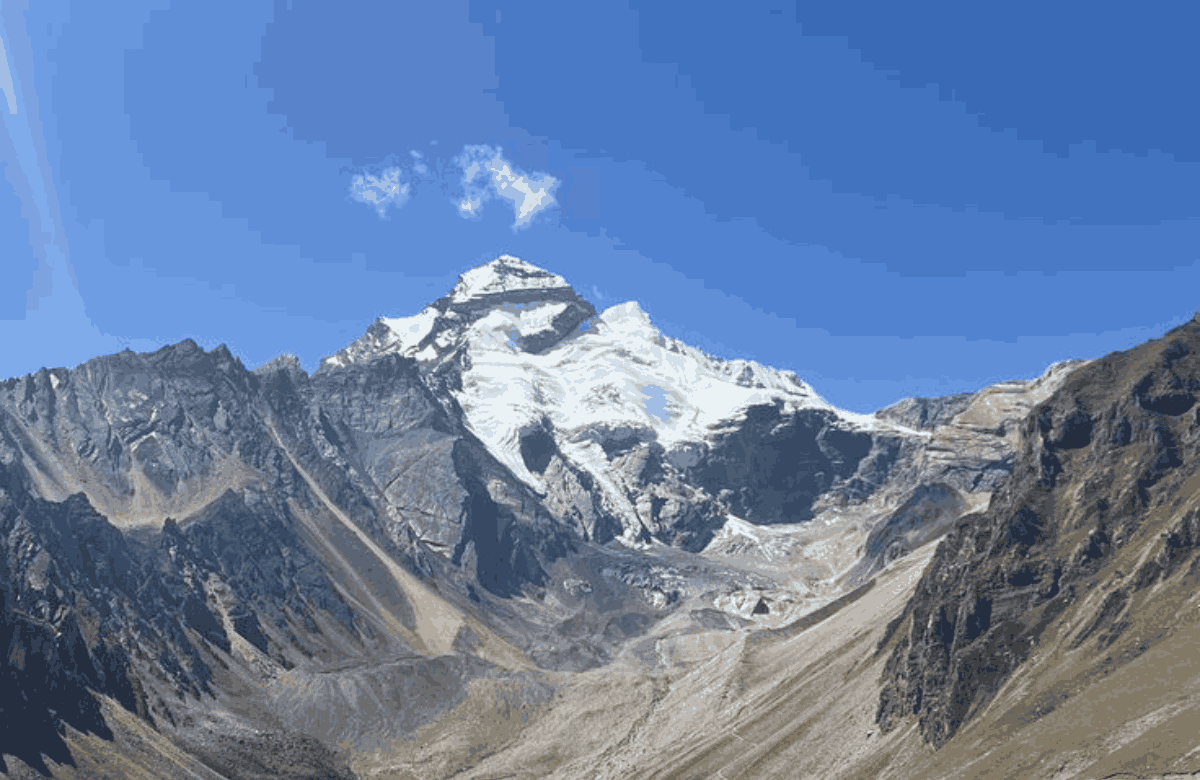
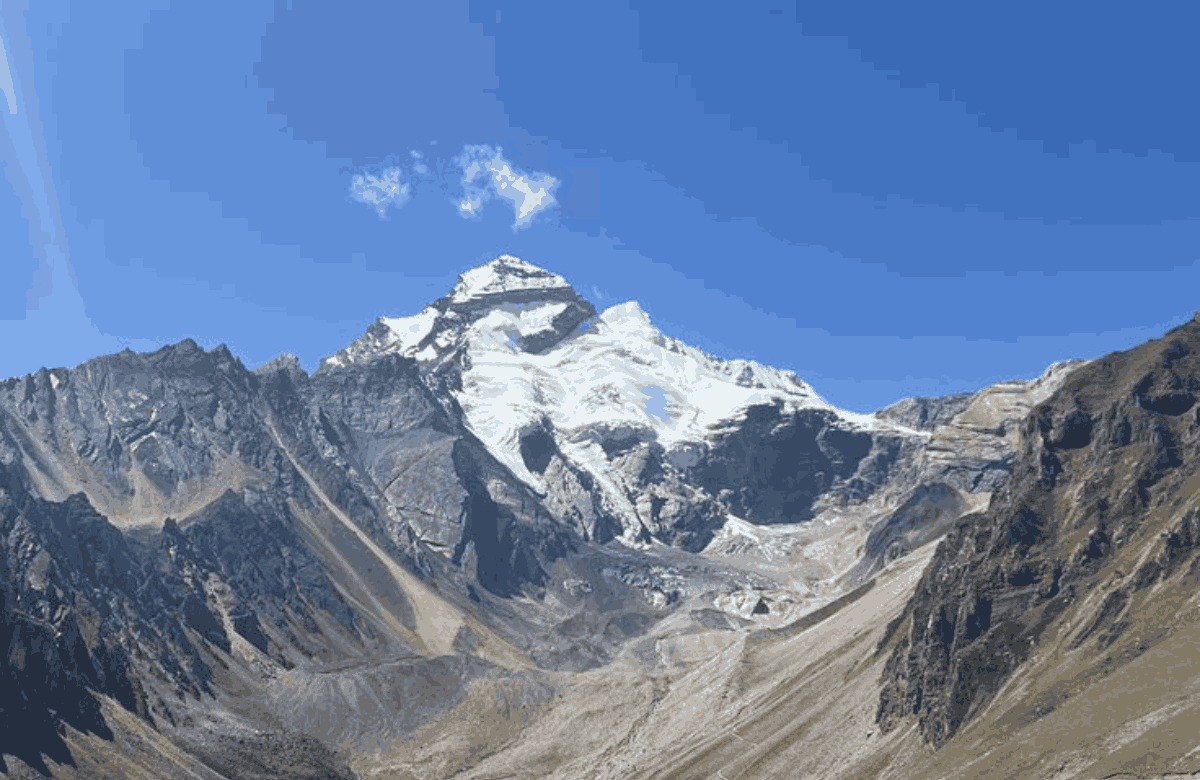
Pilgrims who have visited Adi Kailash in both May and September consistently describe a qualitative difference in visibility. The post-monsoon September sky is washed clean by months of rain — the dust and haze that characterise the pre-monsoon atmosphere are gone, and the light that falls on the Vyans Valley and on the Adi Kailash peak (5,945 m) in September has a quality that photographers describe as the 'golden window.' The Parvati Sarovar at the base of Adi Kailash reflects the peak with unusual clarity in the still September mornings before any wind disturbs the surface.
Significantly Fewer Pilgrims and Quieter Darshan
The May–June peak season brings the majority of the year's yatra traffic onto the Vyans Valley road in a compressed window. ILP checkpoints can see queues, guesthouses at Gunji book out weeks in advance, and the Jolingkong darshan viewpoints — while never exactly crowded by Kedarnath or Vaishno Devi standards — carry more pilgrims than September. For those who value the quality of their darshan experience over the convenience of travelling in peak season, September offers something rare: a genuinely quieter encounter with one of the most sacred and remote landscapes in India.
Lush Post-Monsoon Landscape
The Kumaon Himalayas in September are at their most lush and dramatically beautiful. The monsoon transforms the landscape — every hillside is intensely green, waterfalls cascade from ridgelines that are dry in May, and the Kali River valley through which you drive from Dharchula to Gunji is alive with colour and movement. The rhododendron forests on the approach from Pithoragarh carry late-summer blooms. The Vyans Valley itself — bone-dry in appearance in May — has a deep, vivid green quality in September that makes the landscape feel almost impossibly alive at such high altitude.
Adi Kailash Season Comparison: May–June vs September–October
Here is a clear season-by-season comparison to help you understand where September sits in the full yatra calendar.
| Factor | May–June | September–October |
| Sky | Clear | Crystal Clear |
| Om Parvat View | Good | Best |
| Crowds | High | Moderate |
| Weather | Dry & Pleasant | Cool & Stable |
| Roads | Excellent | Good |
| Temperature | 12–18°C / 2–8°C | 8–15°C / -2–5°C |
| Accommodation | Book 4–6 weeks early | Book 2–3 weeks early |
| Landscape | Snowy Peaks | Green + Clear Peaks |
| Best For | Peak Pilgrimage | Photography & Darshan |
| Overall | Recommended | Best Time to Visit |
Adi Kailash September Weather: What to Expect Day by Day
The weather at Adi Kailash in September follows a recognisable pattern that experienced yatris learn to plan around. Understanding this pattern helps you choose the best specific departure dates within the September window and pack appropriately for conditions that can shift quickly at high altitude.
Early September (1st to 10th): Monsoon Transition
The first week of September is a transition period. The Southwest Monsoon does not lift cleanly on a single date — it retreats gradually northward from the Kumaon hills through September. In the first week, you can still expect intermittent rain, occasional cloud banks over the Vyans Valley, and some road sections with residual monsoon damage from July and August. Road status from the BRO should be checked before departure during this window, and flexibility in the itinerary is wise. That said, early September yatris frequently report clearing conditions and fine darshan — the monsoon is noticeably weaker than August.
Mid-September (11th to 25th): The Peak of the Post-Monsoon Window
Mid-September is widely considered the finest sub-window within the September Adi Kailash yatra period. The monsoon has typically cleared by the second week of September in the Pithoragarh district, leaving behind the crystal clarity that makes this season special. Roads are usually fully repaired and stable. Temperatures are cool but very comfortable for trekking and driving — daytime highs at Jolingkong around 10 to 15 degrees Celsius. The Om Parvat formation is typically visible with exceptional definition. Accommodation is available with reasonable notice. This is the window most experienced September yatris target.
Late September to Early October (25th September to 15th October): Autumn Perfection
The final days of September and the first two weeks of October continue the post-monsoon clarity while introducing the first genuine autumn character to the landscape. Temperatures drop more noticeably — nights at Gunji (3,200 m) can drop to near zero or below, and the Jolingkong area will have clear ice on still water by early morning. Daytime conditions remain excellent. The autumn colours in the Kumaon foothills — the progression from summer green to the golds and ochres of the oak and rhododendron forests — add a visual dimension to the Pithoragarh-to-Dharchula drive that is genuinely beautiful. Snow on the higher peaks becomes more prominent in October, sharpening the contrast between the landscape and the mountain faces.
Road Conditions on the Adi Kailash Route in September
The Pithoragarh–Dharchula–Gunji–Jolingkong road is a BRO-maintained mountain road that runs through steep Himalayan terrain and is subject to monsoon-related damage every year. Understanding road conditions for the Adi Kailash September window is essential for realistic trip planning. July and August bring heavy rainfall to the Kumaon Himalayas that causes landslides, road washouts, and debris accumulation at various points between Dharchula and Gunji. The BRO works continuously to repair damage, and by mid-September the main route is typically fully operational. However, the early September window (first week) can still carry unresolved damage from monsoon peaks in August, and a check on current BRO road status at the Dharchula Public Works Department or through your tour operator is strongly recommended before departure.
- Most vulnerable road sections: the cliff-hanging stretches between Sobla and Gunji, particularly near Sirkha and around the Tawaghat bend, which are frequently affected by monsoon rockfall
- Alternative road via Tawaghat: occasionally used when the main road has temporary closures; adds time but keeps the route moving
- Gunji to Nabi to Jolingkong: the higher altitude sections of this road are actually less affected by monsoon damage than the Kali River valley sections closer to Dharchula
- Road clearance timing: BRO typically clears the full route by the second week of September in most years — 2024 saw full clearance by September 9th; 2023 by September 13th
- Best practice: book a package with an operator who monitors road conditions in real time and has contacts in Dharchula — Nagarjuna Travels does exactly this, providing pilgrims with updated road status before departure
What to See and Experience at Adi Kailash in September
The core spiritual experience of the Adi Kailash yatra — darshan of Adi Kailash peak (5,945 m), the sacred Parvati Sarovar lake, the Gauri Kund, and the OM formation on Om Parvat — is available throughout the yatra season from May to October. In September, each of these sacred sites has a specific character shaped by the post-monsoon conditions.
Adi Kailash Darshan in September
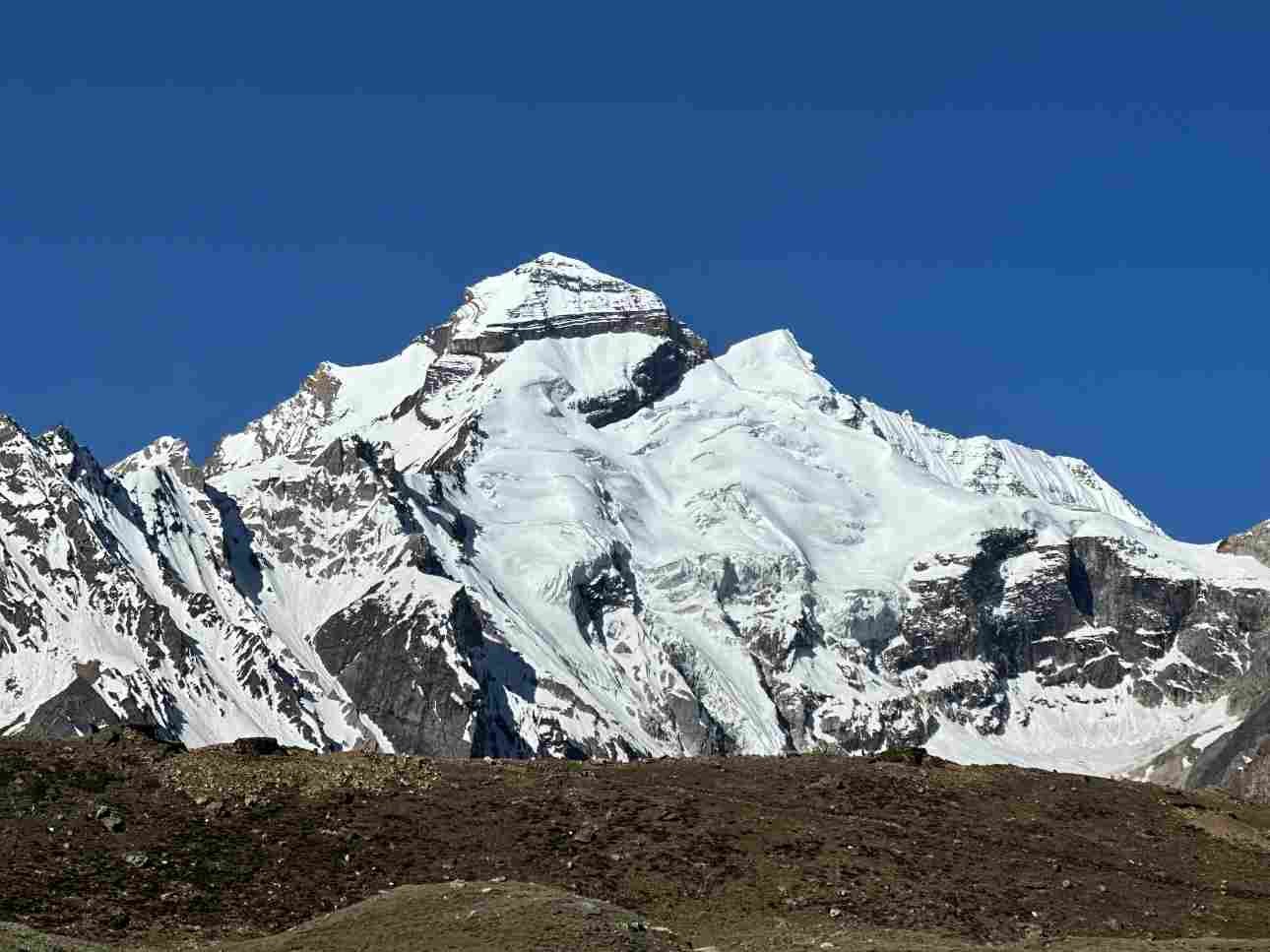
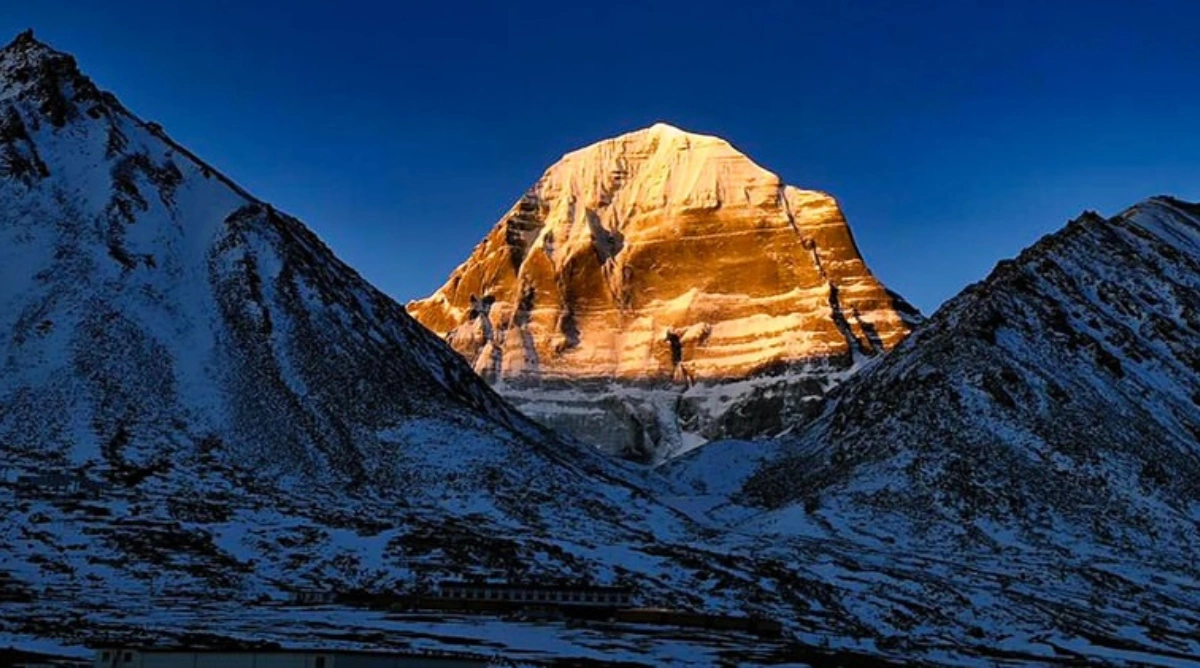
Adi Kailash itself — the earthly abode of Lord Shiva, the 'Chota Kailash' of the Panch Kailash — is visible from the Jolingkong base area in exceptional clarity in September. The peak's dark rock face and its distinctive shape, which closely mirrors the profile of Mount Kailash in Tibet, is free of the atmospheric haze that can soften its appearance in May, and free of the cloud banks that obscure it in July and August. September morning light — particularly in the 8 AM to 11 AM window when the sun is on the south-facing darshan viewpoints — illuminates the peak dramatically.
Parvati Sarovar in September
The Parvati Sarovar — the sacred lake at the base of Adi Kailash that mirrors the relationship of Lake Mansarovar to Mount Kailash in Tibet — is at its most reflective in September. The monsoon has filled the lake to its seasonal maximum, and in the still conditions of September mornings before any wind, the reflection of Adi Kailash in the lake surface is one of the most striking sights of the entire yatra. Many pilgrims who complete the September yatra cite the Parvati Sarovar reflection as the image that stays with them most vividly.
Om Parvat and the Sacred OM Formation in September
The Om Parvat viewing experience in September is, for many pilgrims, the defining argument for making this the season of their yatra. The OM snow formation on the face of Om Parvat (6,191 m) requires three conditions to appear in its full definition: sufficient snow coverage (from recent snowfall or preserved winter/monsoon snow), clear atmospheric visibility, and the right angle of light. September combines all three — monsoon snowfall has refreshed the mountain's snow fields, the post-monsoon atmosphere is crystal clear, and the September morning light strikes the peak at an angle that maximises contrast between the white OM and the dark rock. Not every September day guarantees a clear OM darshan — mountain weather is always variable. But the percentage of clear viewings in September is significantly higher than in the monsoon months, and comparable to or exceeding the best days of the May–June season. A flexible itinerary that builds in an extra morning at the Om Parvat viewpoint maximises your chances.
The Vyans Valley Landscape in September
Beyond the sacred peaks, the journey itself through the Vyans Valley in September is a visual experience unlike any other time of year. The high meadows above Gunji are intensely green from the monsoon rains but the sky above them is the deep cobalt blue of post-monsoon Himalayan autumn. The waterfalls that were dry in May are in full flow. The Kali River below Dharchula runs clear and full. The small villages — Sirkha, Sobla, Nabi — have their harvest character, with families working in the fields and the smell of wood smoke in the morning air. It is a deeply alive landscape.
What to Pack for the Adi Kailash Yatra in September
September conditions at Adi Kailash demand specific packing considerations that differ from the peak May–June season. The key difference is the cold: nights in September are significantly colder than in June, and the altitude means temperatures that feel mild at Pithoragarh (1,814 m) become genuinely biting at Jolingkong (3,600+ m) by evening.
Clothing for September at High Altitude
- Thermal inner layer (top and bottom) — merino wool or synthetic thermal base is essential for September nights above 3,000 m
- Fleece mid-layer — a medium-weight fleece for evenings at Gunji and Jolingkong where temperatures drop fast after sunset
- Heavy down jacket — not optional in September; temperatures at Jolingkong can approach freezing by evening even in the first week
- Waterproof rain jacket and rain trousers — early September may bring rain; even mid-September can see a brief afternoon shower
- Good trekking shoes with ankle support and waterproof lining — trail surfaces after monsoon can carry moisture longer than in May
- Thermal gloves and a warm hat or balaclava for the Jolingkong morning darshan, when temperatures can be 3–8°C even on clear days
- Sunglasses with UV protection — the September sun at altitude is powerful despite the cooler temperatures
Essential Gear and Documents
- Inner Line Permit (ILP) — mandatory for the Vyans Valley restricted zone; arranged by your tour operator in advance
- Valid government-issued photo ID — checked at multiple checkpoints on the route
- BSNL SIM card — the only network with any coverage on the Dharchula–Gunji stretch; essential for communication before the no-signal zone begins above Gunji
- Power bank (minimum 20,000 mAh) — no reliable charging above Gunji; the Jolingkong area has no electrical infrastructure
- Offline maps downloaded before departure — Maps.me Uttarakhand package; internet is not reliable beyond Pithoragarh
- First-aid kit with altitude sickness medication (Diamox — consult your doctor), paracetamol, and personal prescription medicines
- Cash in Indian Rupees — no ATMs beyond Dharchula; carry enough for the full yatra duration plus 20% contingency for weather delays
- Travel insurance with high-altitude medical cover and helicopter evacuation — standard for this terrain
Conclusion
The Adi Kailash in September window is one of the most consistently undervalued periods in the entire sacred pilgrimages calendar of Uttarakhand. While the majority of yatris plan for the obvious May–June peak, September quietly delivers everything that makes this pilgrimage extraordinary — in conditions that, in many ways, are superior to the crowded peak season. Clearer skies. Sharper Om Parvat darshan. Fewer pilgrims. A landscape transformed by the monsoon into something vivid and alive. And temperatures that demand warm layers but reward early-morning starts with views that feel like the mountains are revealing themselves specifically for you. The Adi Kailash yatra season closes each year with the first heavy snowfall of autumn. September is the penultimate chapter — the sacred peaks' final full display before the mountains draw their white curtain for the winter. There is a quality to this window that pilgrims who find it tend to return to. This year, consider joining them