

- Nepal Tourism
- Nagarjuna_Travels
High in the ancient kingdom of Mustang, where the Himalayas give way to a windswept Tibetan-style plateau and the air grows thin and electric, sits one of the most extraordinary sacred sites on earth. Muktinath — the Dham of Liberation — draws Hindu pilgrims seeking moksha and Buddhist devotees following in the footsteps of Guru Rinpoche to the same mountaintop temple, at 3,710 m, in a valley that has been considered sacred for over two thousand years. But for most travellers, Muktinath Nepal remains mysterious. Where exactly is it? How high is Muktinath? How do you get there from Pokhara or Kathmandu? What is the story behind the 108 water spouts? Is it a Hindu temple or a Buddhist shrine? And what is the best time to visit? Most travel content gives partial answers — this guide gives you the complete picture. This is the most comprehensive Muktinath Nepal travel guide available: the full history of Muktinath Dham, its altitude and geography, the unique spiritual features of the temple complex, how to reach Muktinath from Pokhara and Kathmandu, a day-by-day itinerary, practical travel tips, and answers to every question a pilgrim or traveller could ask.
Where Is Muktinath? Location & Geography
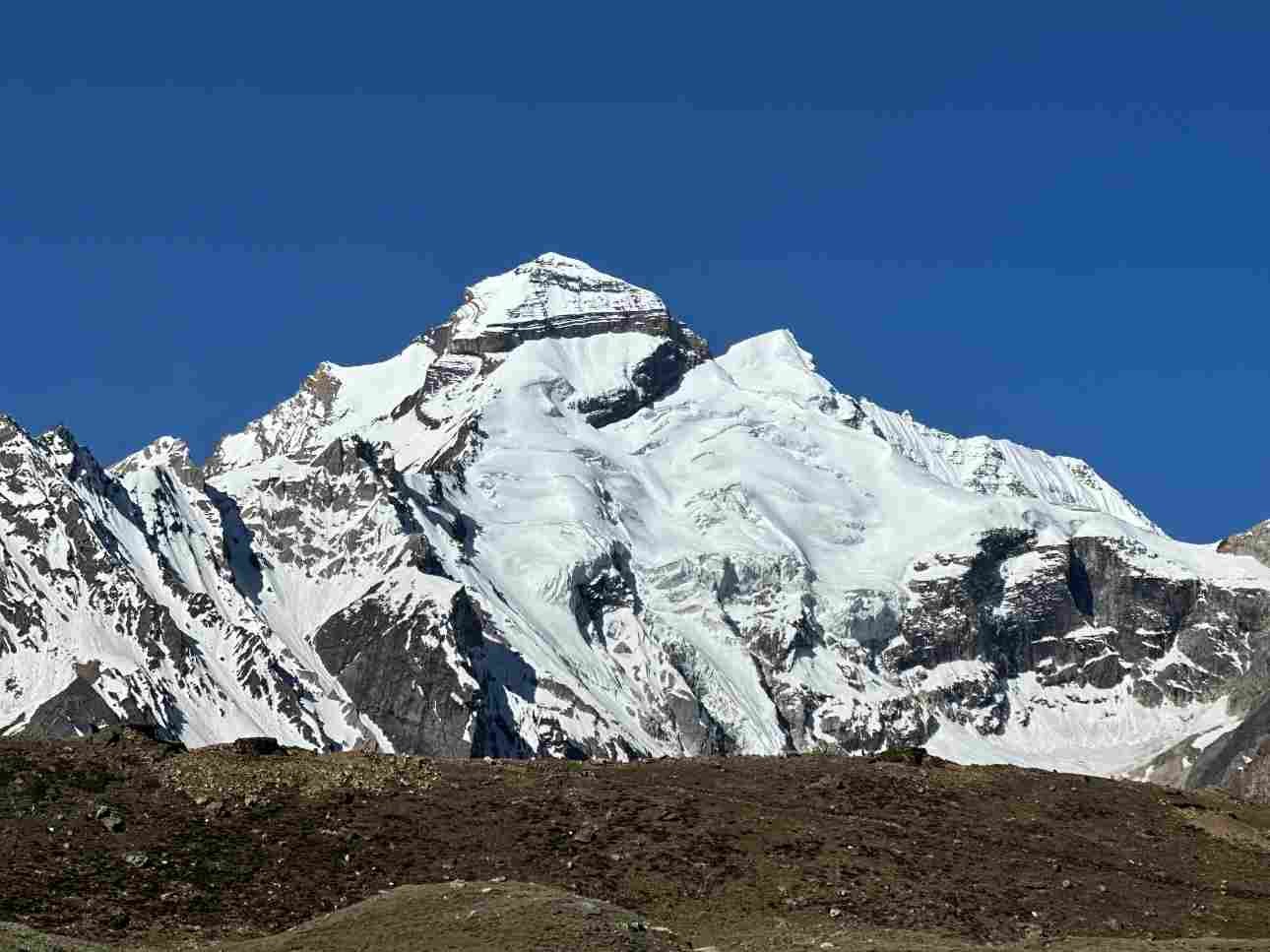
Muktinath is located in the Mustang district of the Gandaki Province, Nepal — in the trans-Himalayan region of the Annapurna massif. The temple sits at the head of the Muktinath Valley on the Tibetan plateau's southern edge, facing the vast arid landscape of Upper Mustang. The geographic setting is extraordinary. To the south and west, the Annapurna and Dhaulagiri mountain ranges form a dramatic backdrop of ice and rock. To the north, the valley opens toward the ancient walled city of Lo Manthang and the Tibetan border. The Kali Gandaki River — one of the world's deepest gorges — flows through the valley below, carrying pilgrims from the Indian plains northward toward this sacred high-altitude shrine.
Key Location Facts
- Country: Federal Democratic Republic of Nepal
- Province: Gandaki Province
- District: Mustang (formerly part of the Kingdom of Lo)
- Village: Ranipauwa (the settlement immediately below the temple)
- Coordinates: 28.8173° N, 83.8714° E
- Nearest Major Town: Jomsom (~18 km south)
- Distance from Pokhara: ~140 km by road / 25 mins by flight to Jomsom
- Distance from Kathmandu: ~280 km by road / ~45 mins by flight to Pokhara then onward
- Region Type: Trans-Himalayan / Tibetan plateau landscape
- River: Kali Gandaki (flows through valley below)
Muktinath Height and Altitude: What to Expect
Muktinath Nepal sits at an altitude of 3,710 m (12,172 ft) above sea level — making it one of the highest sacred sites in the world that is accessible by road or jeep. This altitude has significant implications for pilgrims and travellers, many of whom arrive directly from Jomsom (2,720 m) by jeep without adequate acclimatisation time.
Altitude Profile of the Muktinath Journey
- Pokhara (827 m / 2,713 ft): Most journeys begin here — either by road or by flight connection. Pokhara is at a comfortable low altitude with no acclimatisation concerns.
- Beni (830 m): First stop on the road route from Pokhara. The road begins climbing into the Annapurna foothills here.
- Tatopani (1,189 m): Famous for its hot springs. A popular overnight stop on the drive route.
- Ghasa / Kalopani (2,530 m): The landscape shifts dramatically to a drier, more Tibetan character. Dhaulagiri and Annapurna I become visible on clear days.
- Jomsom (2,720 m / 8,924 ft): The main town of Mustang and the transport hub for Muktinath. The airport here receives flights from Pokhara. Staying a night in Jomsom before ascending to Muktinath is strongly recommended.
- Kagbeni (2,810 m): An ancient fortified village at the confluence of the Kali Gandaki and Jhong rivers. Gateway to Upper Mustang and a significant cultural stop.
- Muktinath Temple (3,710 m / 12,172 ft): The final destination. The ascent from Jomsom to Muktinath by jeep covers approximately 1,000 m of altitude gain — enough to cause mild altitude sickness symptoms in unacclimatised visitors.
Altitude Warning: At 3,710 m, Muktinath is well above the threshold where Acute Mountain Sickness (AMS) can develop. Symptoms — headache, nausea, breathlessness, dizziness — are common in visitors who ascend rapidly from Pokhara by flight + jeep in a single day. Spending at least one night in Jomsom (2,720 m) before visiting Muktinath dramatically reduces AMS risk. Stay hydrated, avoid alcohol, and eat light meals on arrival.
Muktinath History: The Story of This Sacred Himalayan Dham
The history of Muktinath is not a single story — it is the convergence of two great religious traditions, two millennia of spiritual practice, and the extraordinary geography of the Mustang valley, which has served as a crossroads between the Indian subcontinent and Tibet since ancient times.
Ancient Origins and Puranic References
Muktinath's sacred history in the Hindu tradition begins in the Puranas and the Mahabharata. The name Muktinath comes from Sanskrit — 'mukti' (liberation/moksha) and 'nath' (lord/protector) — literally 'the Lord who grants liberation.' Ancient texts describe this location as Mukti Kshetra — the Field of Liberation — where bathing in the sacred 108 water spouts and receiving the darshan of the presiding deity grants moksha from the cycle of birth and death. The Vaishnava tradition identifies Muktinath as one of the 108 Divya Desams — the 108 sacred Vishnu temples mentioned in the devotional hymns of the Tamil Alvars. The Alvars — poet-saints of South India who lived between the 6th and 9th centuries CE — sang of a northern Vishnu temple in the Himalayas called Thiru Saligramam (or Thiru Saligramam). This hymn-reference in the Nalayira Divya Prabandham makes Muktinath the only one of the 108 Divya Desams located outside India. The presence of Shaligram stones — ammonite fossils found in the Kali Gandaki River below Muktinath — adds another layer of sacred significance. Shaligrams are worshipped as natural manifestations of Lord Vishnu by Vaishnavas across the world. The fact that the Kali Gandaki is the world's primary source of Shaligram stones makes this entire valley sacred in the Vaishnava tradition.
The Buddhist History of Muktinath
In the Tibetan Buddhist tradition, Muktinath is called Chumig Gyatsa — meaning 'Hundred Waters' in Tibetan (referencing the 108 sacred water spouts). The site is associated with the great Buddhist master and tantric practitioner Guru Padmasambhava (Guru Rinpoche) — the 8th-century CE sage who brought Vajrayana Buddhism from India to Tibet. According to Buddhist tradition, Guru Rinpoche meditated at this location and performed miracles here, including taming local deities and transforming the site into a place of liberation. The Buddhist shrine at Muktinath — located in the same complex as the Hindu Vishnu temple — is dedicated to Dorje Phagmo (Vajravarahi in Sanskrit), a powerful tantric form of the goddess. A separate Buddhist monastery (gompa) sits adjacent to the main Muktinath Mandir. Tibetan Buddhist monks from the Kagyu and Nyingma lineages maintain both the monastery and their own pilgrimage tradition at this site.
Medieval and Modern History
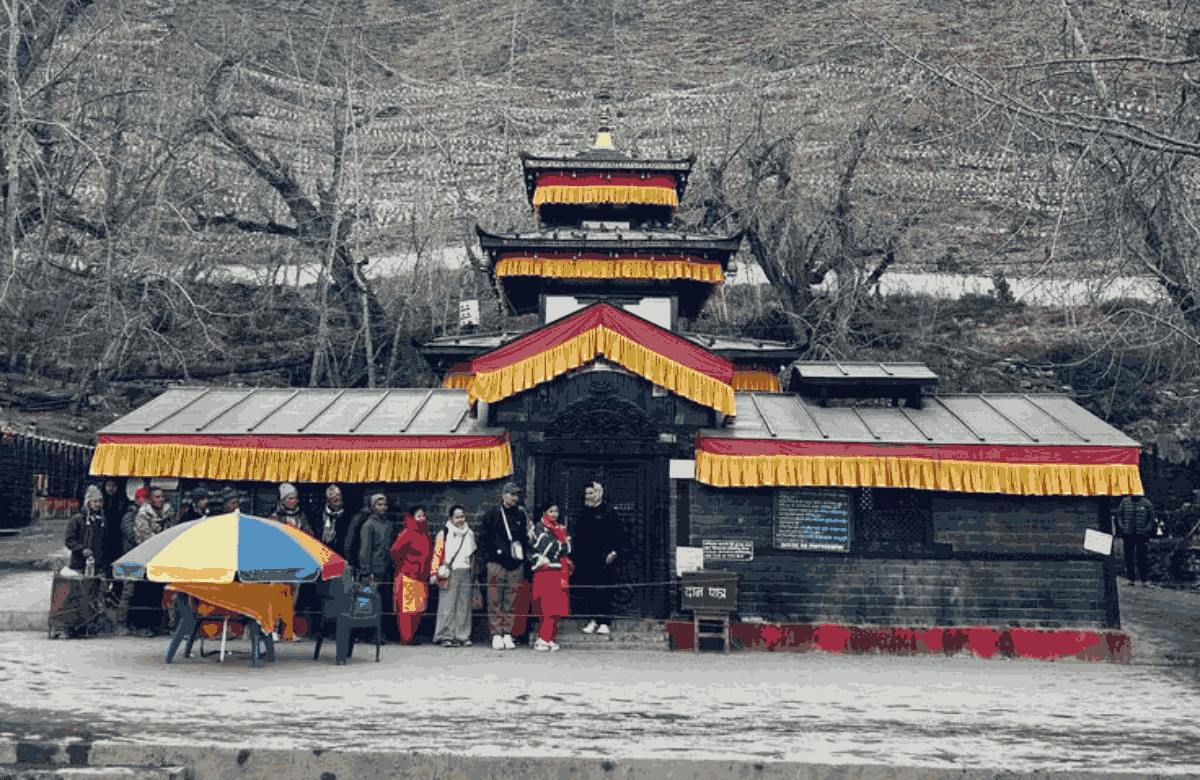
The Kingdom of Mustang — formerly Lo Kingdom — was an independent Tibetan-speaking state for centuries, serving as a crucial trade and pilgrimage corridor between Nepal, India, and Tibet. The current Muktinath Mandir structure was substantially built or renovated in the 18th century CE by royal patronage from the Shah dynasty of Nepal. The temple's management has been overseen by both Hindu priests and Buddhist monks in an unusual and harmonious arrangement that continues today. In 1996, the Government of Nepal and the Muktinath Guthi (temple trust) undertook major renovation work on the temple complex. The current structure — a pagoda-style temple with a gilded roof and intricately carved facade — reflects both Nepali temple architecture and Tibetan artistic influences.
Muktinath Dham: What Makes This Temple Unique?
Muktinath Mandir Nepal is not a single temple — it is a sacred complex with several extraordinary features that exist nowhere else on earth. Understanding these features transforms a visit from sightseeing into a genuine spiritual encounter.
The Main Muktinath Mandir (Vishnu Shrine)
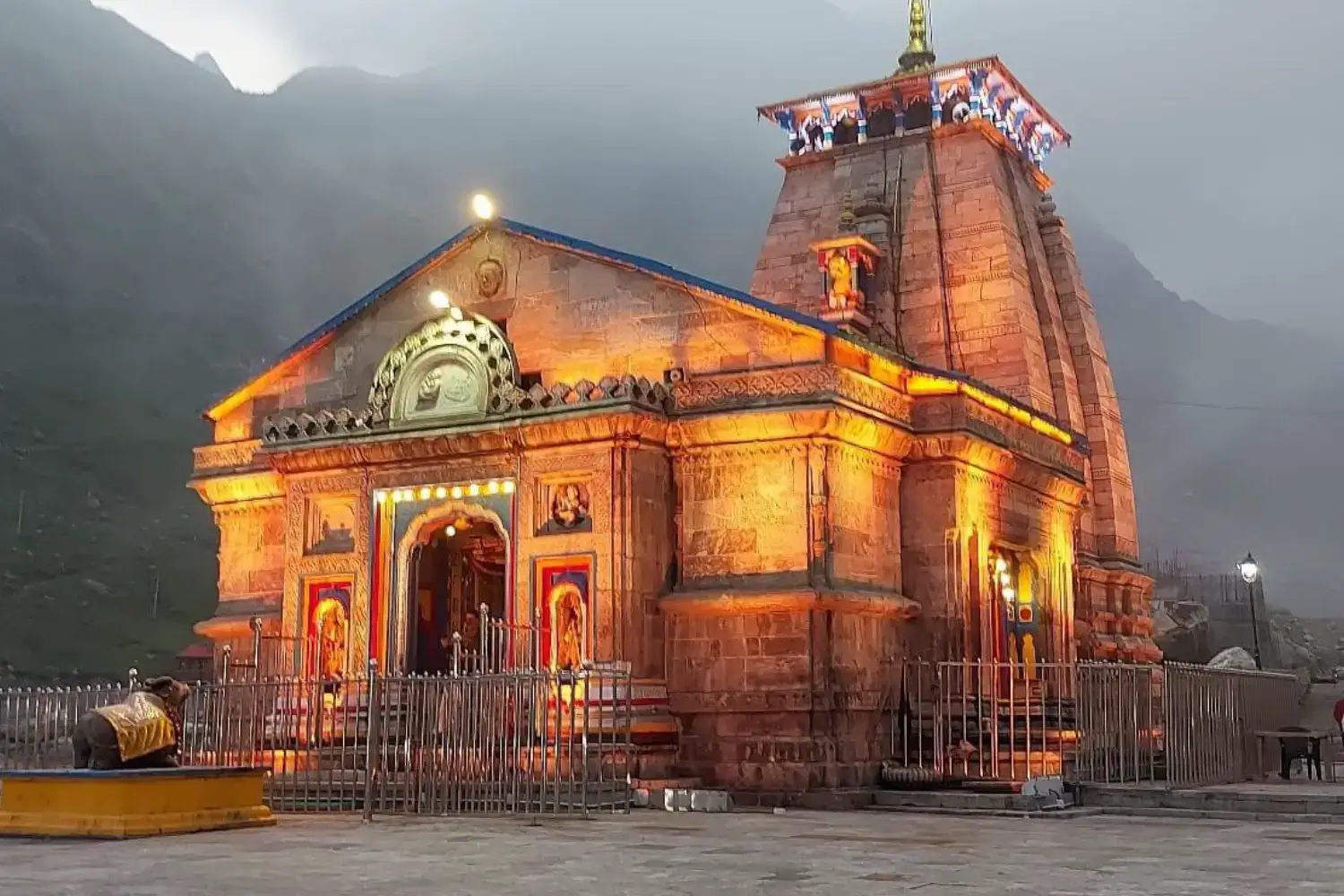
The central shrine at Muktinath Dham is a pagoda-style temple dedicated to Lord Vishnu in his form as Muktinath — the Lord of Liberation. The presiding deity is a gilded image of Vishnu, worshipped here in the Vaishnava tradition as a Swayambhu (self-manifested) sacred presence. The temple's inner sanctum is small and intimate — deliberately so, as it was designed to serve high-altitude pilgrims who often arrive exhausted after days of trekking.
The 108 Water Spouts (Dhara) — The Soul of Muktinath
The most iconic feature of Muktinath Nepal is the 108 sacred water spouts (dhara) arranged in a semicircle around the main temple. Water from a natural spring flows through each of these 108 stone spouts — shaped like the faces of cows (Gomukhi) — throughout the year, even in winter when the surrounding landscape is frozen. The number 108 is sacred in Hinduism (108 Upanishads, 108 Divya Desams, 108 names of each deity) and in Buddhism (108 beads on a mala/rosary). Bathing under all 108 water spouts is considered one of the most purifying acts a pilgrim can perform at Muktinath. The water is ice-cold even in summer — originating from the glaciers and snowfields of the surrounding Himalayan peaks. Devotees who complete the 108-dhara ritual are believed to be liberated from past sins and set firmly on the path to moksha.

The Two Sacred Ponds (Mukti Kunda)
Two small sacred ponds — called Mukti Kunda — sit adjacent to the main temple complex. Both ponds are ice-cold and fed by glacial water from the surrounding peaks. Ritual bathing in these ponds is considered an essential part of the Muktinath pilgrimage. The ponds are also important in the Buddhist tradition — Chumig Gyatsa literally refers to the sacred waters of this site.
The Natural Eternal Flame — A Unique Phenomenon
One of the most extraordinary and scientifically fascinating features of Muktinath Dham is a natural flame that burns from the earth within a small stone enclosure near the main temple. This flame burns continuously — from natural gas seeping through the earth — and is surrounded by both flowing water and soil. The simultaneous presence of fire, water, and earth at a single sacred point is considered one of the most powerful manifestations of divine energy in the Himalayan tradition. Both Hindu and Buddhist pilgrims offer prayers at this flame, which is never extinguished.
The Buddhist Monastery (Gompa)
Adjacent to the Vishnu temple, a Buddhist monastery houses a statue of Dorje Phagmo (Vajravarahi) surrounded by Dhyani Buddhas. Tibetan Buddhist monks maintain this gompa and conduct daily rituals that have continued in unbroken lineage since the time of Guru Rinpoche. The monastery receives both Tibetan Buddhist pilgrims and international Dharma practitioners throughout the year.
The Shaligram Connection
The Kali Gandaki River — which flows through the valley 1,000 m below Muktinath — is the world's primary source of Shaligram stones (ammonite fossils 65–500 million years old). These black spiral-shaped stones are worshipped as natural forms of Lord Vishnu throughout the Vaishnava world. Pilgrims to Muktinath traditionally collect Shaligrams from the Kali Gandaki riverbed at Kagbeni or Jomsom as sacred souvenirs. The Shaligrams found here are considered more sacred than those from any other source.
Practical Travel Tips for Muktinath Nepal
- Indian citizens do not need a Nepal visa: Indian passport holders can enter Nepal without a visa and without paying any entry fee. Carry a valid Indian passport or a valid Voter ID card. TIMS card and ACAP permits (for trekking in the Annapurna region) must be obtained in Pokhara or Kathmandu — do not forget these.
- Book Jomsom flights at least 2 weeks in advance: Jomsom flights operate in very limited morning windows and sell out quickly during peak pilgrimages (Navratri, Ram Navami) and trekkingseasons. Book through Tara Air or Summit Air directly or via a Nepal travel agent. Always have a road travel backup plan as flight cancellations due to weather are common.
- Acclimatise in Jomsom before ascending to Muktinath: The single most important health advice for Muktinath visitors: spend at least one night in Jomsom (2,720 m) before taking the jeep up to Muktinath (3,710 m). This 1,000 m altitude gain in a few hours is enough to trigger AMS in unacclimatised visitors, especially those who flew from Pokhara (827 m) the same morning.
- The 108 dhara ritual is done barefoot: When completing the ritual of bathing under all 108 water spouts at Muktinath, remove footwear before entering the sacred enclosure. The stone path can be wet and slippery — walk carefully. The water is extremely cold. Wear clothes that can get completely wet. Many pilgrims carry a dry change of clothes for after the ritual.
- Carry sufficient Nepali Rupees: ATMs exist in Jomsom but are unreliable and often out of cash during peak season. Withdraw sufficient Nepali Rupees in Pokhara before departing for Mustang. Indian Rupees are widely accepted in Jomsom and Muktinath at approximately NPR 1.60 per INR 1, but carrying NPR directly avoids exchange complications.
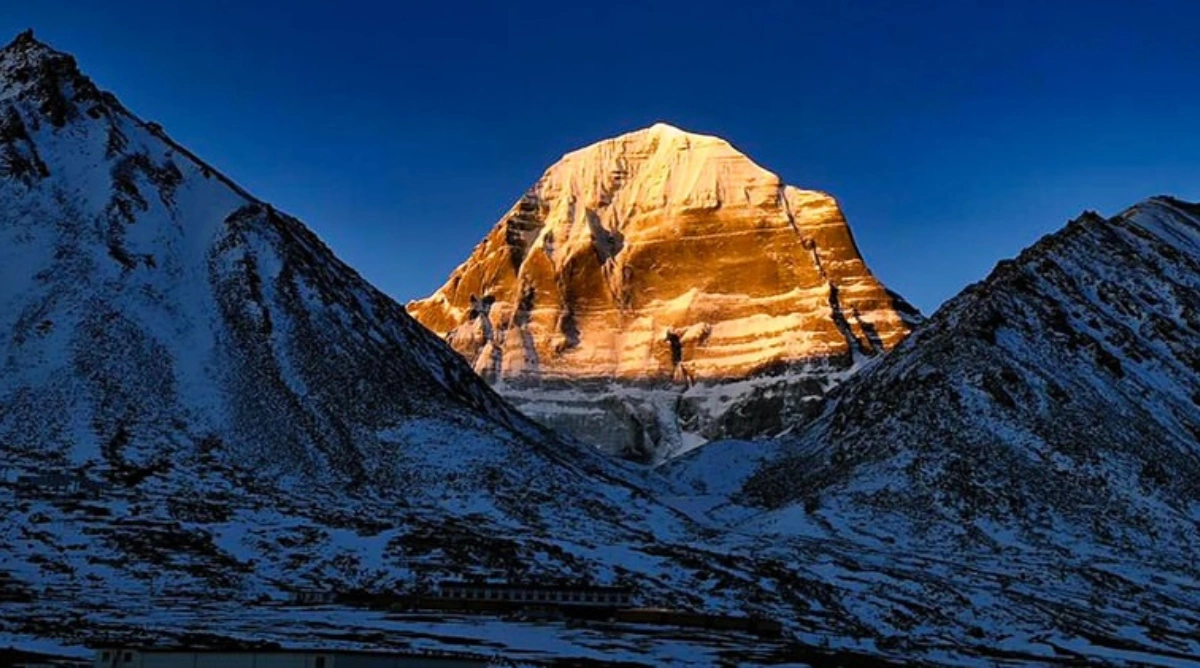
- Visit at dawn for the best experience: The Muktinath temple opens around 6:00 AM. Being there at first light — when the golden Himalayan peaks are illuminated and the temple chants echo across the empty plateau — is an experience that midday crowds simply cannot replicate. Stay overnight in Ranipauwa guesthouses (just below the temple) to ensure you can be at the temple at dawn.
- Dress warmly — temperatures drop sharply after sunset: Muktinath at 3,710 m can be warm in the afternoon sun but drops to near-freezing after sunset and before sunrise even in summer. Carry a warm down jacket, thermal layers, gloves, and a warm hat. The 108 dhara bath will chill you — change into dry, warm clothes immediately after.
Final Thoughts: Where Liberation Waits at 3,710 Metres
Muktinath Nepal is not simply a destination — it is an encounter. An encounter with altitude that humbles you. An encounter with a landscape so ancient and vast that personal concerns dissolve in its scale. An encounter with a sacred site where two great religious traditions have coexisted in harmony for over a thousand years, both pointing toward the same truth from their different directions. The 108 cold water spouts will shock you awake. The eternal flame will remind you of the mystery at the heart of the physical world. The dawn light on Dhaulagiri and Nilgiri from the temple courtyard will render you temporarily speechless. And when you stand before the presiding deity at Muktinath Mandir after all of this — the Lord of Liberation in his high Himalayan home — you will understand exactly why pilgrims have been making this journey for two thousand years. Book your Jomsom flight early. Spend a night in Jomsom first. Be at the temple at dawn. Bring warm clothes and an open heart. Muktinath Dham will do the rest.