

- 12-Jyotirlinga-Blogs
- Chandan_singh
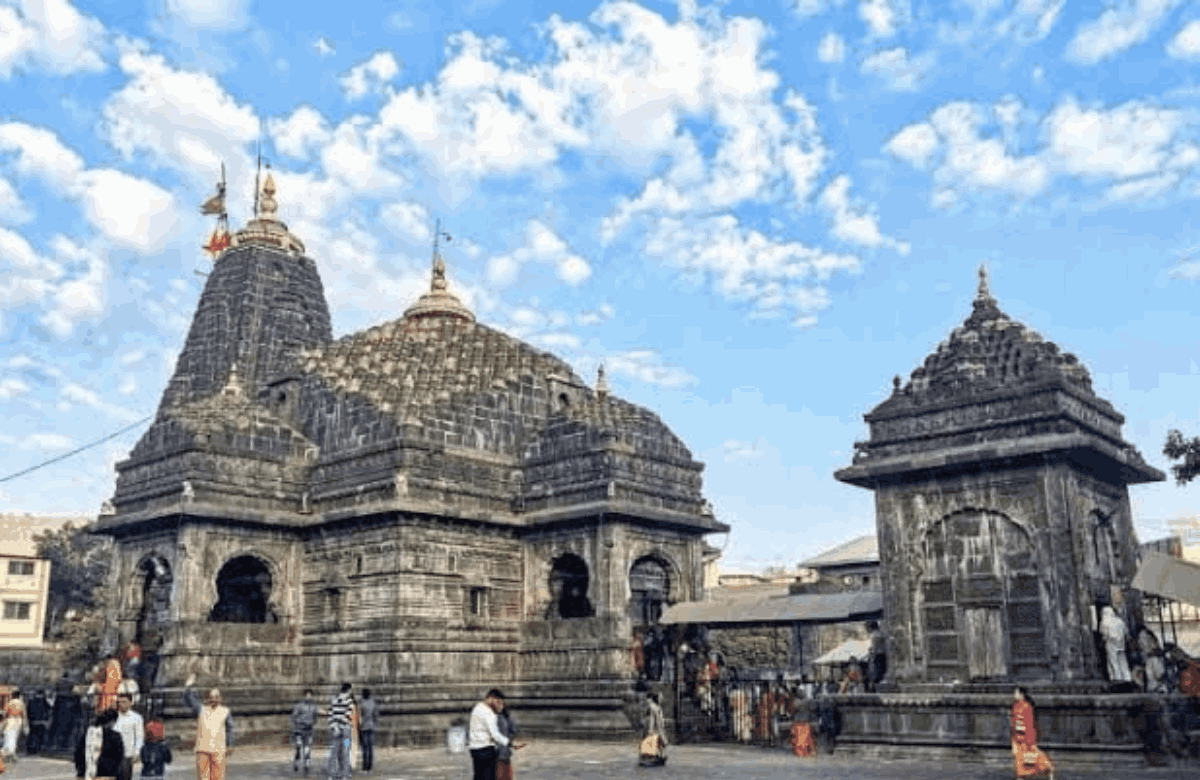
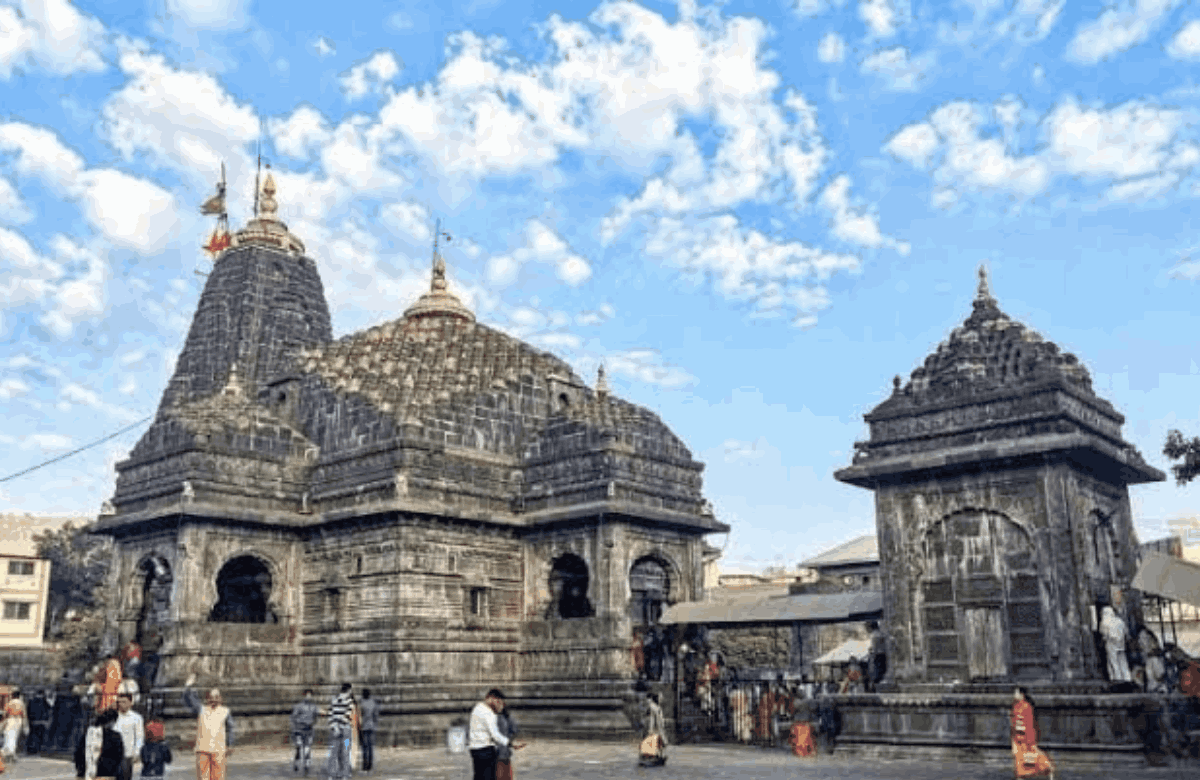
Trimbakeshwar Temple, located in Trimbak town in Nashik district, Maharashtra, is one of the twelve sacred Jyotirlingas of Lord Shiva. The temple is famous for its unique three-faced Jyotirlinga, its connection with the holy Godavari River, and its rich religious and historical significance. Every year, thousands of devotees visit Trimbakeshwar Temple to seek blessings, perform religious rituals and explore nearby sacred sites. Whether you are planning a family pilgrimage or a spiritual trip, knowing the temple timings, darshan options, VIP pass booking process and travel arrangements can make your visit easier.
In this complete guide, you will learn about Trimbakeshwar Temple's history, mythology, darshan timings, aarti schedule, ticket prices, online booking, architecture, nearby attractions and the best time to visit.
Trimbakeshwar Temple at a Glance
| Detail | Information |
|---|---|
| Temple Name | Shri Trimbakeshwar Jyotirlinga Temple |
| Location | Trimbak, Nashik district, Maharashtra |
| Presiding Deity | Lord Shiva |
| Religious Significance | One of the 12 Jyotirlingas |
| Special Feature | Three-faced linga associated with Brahma, Vishnu and Shiva |
| Distance from Nashik | Approximately 28–30 km |
| Nearest Major Railway Station | Nashik Road Railway Station |
| Nearby Airport | Ozar Airport, Nashik |
| General Darshan Timings | 5:30 AM to 9:00 PM, according to the trust information cited |
| Regular Darshan | Free, according to the sources cited |
| Donation Darshan Pass | ₹200 per person on the booking page cited |
| Present Temple Built By | Peshwa Balaji Bajirao, also known as Nanasaheb |
| Sacred Water Body | Kushavarta Kund |
| Sacred River | Godavari |
Important: Temple timings, pass prices, ritual schedules and entry rules may change. Confirm the latest information on the official temple trust website before travelling.
Where Is Trimbakeshwar Temple Located?
Trimbakeshwar Temple is situated in Trimbak town, approximately 28–30 km from Nashik city in Maharashtra. The temple lies at the foothills of Brahmagiri Hill, which is traditionally associated with the origin of the Godavari River.
The temple is surrounded by a spiritually significant landscape that includes sacred hills, water bodies and pilgrimage sites. Its location makes it an important destination for devotees travelling to Nashik and other religious places in Maharashtra.
What Makes Trimbakeshwar Temple Special?
1. One of the Twelve Jyotirlingas
Trimbakeshwar is one of the twelve Jyotirlingas dedicated to Lord Shiva. These sacred shrines hold a special place in Hindu religious tradition.
2. The Three-Faced Jyotirlinga
The temple is known for its distinctive linga, traditionally associated with Brahma, Vishnu and Shiva. This feature makes Trimbakeshwar particularly significant among Shiva temples.
3. Connection With the Godavari River
The Godavari is traditionally believed to originate in the Brahmagiri hills near the temple. The river is often called the Ganga of the South because of its religious importance.
4. Sacred Kushavarta Kund
Kushavarta Kund is an important bathing place for pilgrims. Many devotees visit the sacred tank before proceeding to the temple for darshan.
5. Simhastha Kumbh Tradition
Trimbakeshwar shares a strong connection with the Simhastha Kumbh Mela, which is held in the Nashik region. The gathering attracts pilgrims and religious groups from across India.
Trimbakeshwar Temple Darshan Timings
According to the temple trust information cited in this guide, the general darshan timings are from 5:30 AM to 9:00 PM. However, different travel websites may publish different schedules, and timings can change during festivals and special religious occasions.
Trimbakeshwar Temple Timings at a Glance
| Detail | Reported Timing |
|---|---|
| General Opening Time | 5:30 AM |
| General Closing Time | 9:00 PM |
| Donation Darshan Booking Slots | The booking page cited lists slots between 6:00 AM and 8:00 PM |
| Last Entry | The booking notes cited mention 9:00 PM |
| Shravan Month Opening | Some travel sources report 5:00 AM |
These timings are based on the source information used for this guide. Check the official temple trust website before your visit.

Why Do Temple Timings Differ on Different Websites?
You may find different Trimbakeshwar Temple timings online for several reasons:
Some travel articles contain outdated information.
Certain websites publish inconsistent opening and closing times.
The temple may follow a different schedule during Shravan and major festivals.
Donation darshan booking slots may not cover the temple's entire opening period.
For a smoother visit, arrive well before the evening closing time and verify the latest schedule before departure.
Trimbakeshwar Temple Aarti Timings
Aarti and puja schedules are important for devotees who want to experience the temple's daily rituals. However, the source information used for this guide does not establish a complete official clock-time schedule for every ritual.
The following timings have been reported by travel websites and should be treated as approximate.
| Ritual | Reported Time |
|---|---|
| Kakad Aarti | Around 5:00 AM |
| Rudrabhishek | 7:00 AM to 8:30 AM |
| Afternoon or Madhyan Aarti | Around 1:00 PM |
| Crown or Mukut Display on Mondays | Around 4:00 PM to 5:00 PM |
| Nijaroop Darshan | Around 7:00 PM |
| Shej Aarti | Around 9:00 PM |
The jewelled crown associated with the sacred linga is reportedly displayed on Mondays during the late afternoon.
Note: These timings are not guaranteed. Confirm the day's ritual schedule at the temple.
How Long Does Trimbakeshwar Darshan Take?
The time required for darshan depends on the day, season, festival schedule and number of visitors.
One commercial travel guide cited in the source material provides the following estimates:
Regular days: Approximately 45–90 minutes in the general queue.
Shravan Mondays: The general queue may take 6–8 hours.
Donation darshan pass: Some sources estimate around 45 minutes, although waiting times may increase during peak periods.
These are travel estimates rather than official guarantees. If your schedule is flexible, consider visiting on a weekday outside major festival periods.
Trimbakeshwar Temple Tickets and VIP Pass Price
Regular darshan at Trimbakeshwar is described as free in the sources cited in this guide. The temple trust also provides a donation darshan pass, commonly called the VIP pass or VIP darshan ticket.
The booking page cited in the source material lists the donation darshan pass at ₹200 per person. Check the live booking page to confirm the price and conditions for your selected date.
Trimbakeshwar VIP Pass Price
| Detail | Information |
|---|---|
| Regular Darshan | Free, according to the sources cited |
| Donation Darshan Pass | ₹200 per person on the booking page cited |
| Children Under 10 | Exemption stated on the booking page cited |
| Divyangjan | Exemption stated on the booking page cited |
| Identification | QR pass and valid photo ID required |
One travel blog cited in the source material claims that the pass price may rise to ₹500 on Shravan Mondays and major festivals. The trust information cited does not confirm this higher fee, so check the official booking page before making payment.
Difference Between Regular Darshan and VIP Darshan
| Feature | Regular Darshan | Donation Darshan Pass |
|---|---|---|
| Price | Free | ₹200 per person on the booking page cited |
| Booking | Follow current temple entry arrangements | Online booking may be available |
| Waiting Time | Can be long during busy periods | May offer a different entry arrangement |
| Identification | Follow current temple rules | QR pass and photo ID required |
| Best For | Visitors with flexible schedules | Visitors who prefer a booked entry arrangement |
A paid pass should not be considered a guarantee of zero waiting time, particularly during Shravan and major festivals.
How to Book Trimbakeshwar VIP Darshan Online
To avoid unofficial booking websites, use the temple trust's official website:
Official website: https://trimbakeshwartrust.com
The booking process described in the source material is as follows:
Open the official temple trust website.
Navigate to the donation darshan booking page.
Sign in and select your preferred date.
Enter the required visitor details.
Add the main visitor and any permitted additional visitors.
Select the accepted identification type.
Complete the online payment.
Open the Transaction History section.
Download the QR pass.
Carry the QR pass and a valid photo ID to the temple.
The booking information cited in the source guide states that the QR pass is issued in the main visitor's name.
Important Rules Before Booking
The pass is described as valid for the booked date only.
The pass is non-transferable.
Carry the QR pass and matching identification.
Read the cancellation and refund terms carefully before paying.
Keep a screenshot or printed copy of the QR pass.
Check the entry time and designated gate mentioned in your booking instructions.
The source material notes that the cancellation wording on the booking page is inconsistent. Therefore, do not assume that a refund will be available unless the current terms clearly confirm it.
Can You Buy a Darshan Pass at the Temple?
The source material notes that the temple trust lists an offline donation darshan counter. However, the exact counter location and opening hours were not established in the sources checked.
Ask at the temple entrance or an official information counter for the current procedure. During busy periods, online booking may be more convenient if suitable slots are available.
History of Trimbakeshwar Temple
Trimbakeshwar Temple has a long religious history and is an important pilgrimage destination associated with Lord Shiva and the Godavari River.
The present temple was built by Peshwa Balaji Bajirao, also known as Nanasaheb, during the 18th century. It was constructed primarily from black basalt stone on the site of an older shrine.
Who Built Trimbakeshwar Temple?
The present Trimbakeshwar Temple is attributed to Peshwa Balaji Bajirao, the third Peshwa of the Maratha Empire. The temple trust and Nashik district information cited in the source material associate him with the construction of the present structure.
His reign is generally listed as 1740–1760 in the cited information, although one secondary source gives 1761 as the end year.
The source material does not establish an exact construction year or a reliable construction cost.
The Older Temple
Trimbak was an established pilgrimage town before the present temple was built. Some secondary sources state that the earlier temple was destroyed during the reign of Aurangzeb. However, the temple trust information cited in the source guide confirms only that the present temple was built on the site of an older shrine.
The exact circumstances surrounding the earlier temple should therefore be treated cautiously.
Renovation and Later Developments
Renovation: A source cited in the original research attributes a renovation in 1779 to Ahilyabai Holkar of Indore.
Kushavarta Kund: Secondary sources associate the construction of the sacred tank with Shrimant Sardar Raosaheb Parnerkar.
Kumbh traditions: Nashik and Trimbakeshwar developed important but distinct roles in the Simhastha Kumbh bathing traditions.
Important Historical Dates
| Date or Period | Event |
|---|---|
| 1740–1760 | Reign of Peshwa Balaji Bajirao, associated with the present temple |
| 1779 | Renovation attributed to Ahilyabai Holkar in a cited source |
| 1954 | Registration of the Devasthan Trust, according to the trust information cited |
| 1995 | Formation of the board of trustees, according to the source material |
| 2027 | Next Simhastha Kumbh at Nashik and Trimbakeshwar, as described in the source guide |
The Story of Trimbakeshwar Jyotirlinga
The traditional story of Trimbakeshwar Jyotirlinga revolves around Sage Gautama, his wife Ahalya, the Godavari River and Lord Shiva.
The Legend of Sage Gautama
1. A Gift of Water
Sage Gautama and his wife Ahalya lived on Brahmagiri. During a long drought, Varuna granted Gautama a spring that never ran dry. The water became associated with the Gautami River.
2. Jealousy Among the Sages
According to the legend, the wives of other sages became jealous of Gautama and influenced their husbands against him.
3. The Incident Involving a Cow
The sages approached Ganesha in an attempt to have Gautama expelled. Ganesha took the form of a weak cow that entered Gautama's crops. When Gautama tried to drive it away with barley straws, the cow collapsed and died.
4. The Accusation
The other sages accused Gautama of killing a cow and demanded that he leave the area. Gautama sought a way to atone for what he believed had happened.
5. Penance to Lord Shiva
Gautama worshipped Lord Shiva and performed penance. Shiva appeared and declared Gautama sinless, according to the traditional account.
6. The Arrival of the Godavari
Gautama asked for the Ganga to flow there and purify the land. The Ganga agreed on the condition that Shiva also remain at the site.
Shiva stayed as the Trimbakeshwar Jyotirlinga, while the river became associated with the Gautami, now known as the Godavari.
Why Is the Godavari Called the Ganga of the South?
The traditional legend connects the Godavari with the sacred Ganga. This association makes Trimbakeshwar an important pilgrimage destination for devotees seeking spiritual purification.
Kushavarta Kund plays an important role in this tradition, and many pilgrims visit the tank before proceeding to the temple.
Connection With Simhastha Kumbh
Trimbakeshwar and Nashik are associated with the Simhastha Kumbh Mela, a major religious gathering. The traditional account connects the gathering with the religious significance of the Godavari and the position of Jupiter.
Architecture of Trimbakeshwar Temple
Trimbakeshwar Temple is primarily built from black basalt and stands within a walled courtyard. The structure combines traditional temple architecture with detailed stonework.
Main Architectural Features
1. Temple Style
One architectural description cited in the source material identifies the temple as bhumija, while another travel guide describes it as Nagara style.
2. Temple Tower
The temple's spire rises in a curved form and incorporates smaller shikhara elements and traditional architectural features.
3. Courtyard
The original guide gives the courtyard dimensions as approximately 80.77 metres by 66.45 metres. It is surrounded by a rampart wall with four entrances.
The Three-Faced Linga
The sacred linga is traditionally associated with Brahma, Vishnu and Shiva. The original guide notes that an Archaeological Survey of India description records a hollow pit with a yonipitha rather than a tall, raised linga.
This distinctive feature is central to the temple's religious identity.
The Sacred Crown
Secondary sources describe a jewelled crown and a gold mask associated with the Trideva. Some travel guides report that the crown is displayed on Mondays during the late afternoon.
Confirm the display schedule at the temple if you wish to see this feature.
Sacred Water Bodies and Nearby Features
| Feature | Significance |
|---|---|
| Kushavarta Kund | Sacred bathing tank associated with the ritual source of the Godavari |
| Amritavarshini Tank | Water body mentioned in secondary descriptions of the temple area |
| Gangadwar | Cave shrine on Brahmagiri associated with the emergence of the Godavari |
| Brahmagiri Hill | Sacred hill traditionally associated with the river's origin |
Sources differ on the exact location of Kushavarta Kund relative to the temple complex. Follow local directions when visiting.
How to Reach Trimbakeshwar Temple
Trimbakeshwar is accessible by road from Nashik. The nearest major railway station commonly identified in the sources cited in this guide is Nashik Road Railway Station.
Distance From Major Locations
| Starting Point | Approximate Distance | Estimated Travel Time |
|---|---|---|
| Nashik City | 28–30 km | 45 minutes to 1 hour |
| Nashik Road Railway Station | 28–40 km | Around 1–1.5 hours |
| Igatpuri Railway Station | About 55 km | Depends on route and transport |
| Ozar Airport, Nashik | About 37 km in one cited estimate | Depends on traffic |
| Shirdi | 115–122 km | Around 2.5–3 hours |
| Mumbai | 165–200 km | Around 4.5–5 hours |
| Pune | 210–240 km | Around 5–5.5 hours |
These figures are approximate and may vary by route, traffic and starting point.
By Train
Travel by train to Nashik Road Railway Station, identified by station code NK. From there, continue to Trimbak by taxi, shared vehicle or bus.
Igatpuri Railway Station is another possible option, although it is farther from the temple according to the source guide.
Check current train schedules and local transport availability before travelling.
By Air
Ozar Airport serves the Nashik area and may be convenient for travellers when suitable flights are available. However, flight options can change, so verify current routes before booking.
Mumbai's Chhatrapati Shivaji Maharaj International Airport is another option. Travellers can continue to Nashik by road or rail and then travel to Trimbak.
By Road
From Nashik, the drive to Trimbakeshwar is approximately 28–30 km.
Available transport options may include:
Maharashtra State Road Transport Corporation buses.
Private taxis and cabs.
Shared taxis.
Local auto-rickshaws.
A travel source cited in the original guide gives a return cab estimate of around ₹1,500 from Nashik. Treat this only as a rough reference and confirm the current fare with the operator.
Parking and Local Transport
Parking can become difficult on Mondays, during Shravan and on major festival days. Some travel sources report that visitors may need to use outer parking lots and shuttle transfers.
Allow extra time for parking, walking and security checks. Confirm current parking arrangements locally.
Dress Code and Rules at Trimbakeshwar Temple
The source material notes that the temple trust pages checked did not publish a complete official dress-code list. The following recommendations are based on travel sources and should be confirmed locally.
Dress Code for Visitors
For regular darshan: Wear modest and comfortable clothing that covers the shoulders and knees.
For women: Sarees and salwar kameez are commonly suggested by travel guides. Choose clothing that is respectful of the temple environment.
For men performing rituals: Some travel guides state that a white dhoti and shoulder cloth may be required for specific rituals, including Rudrabhishek, Kaal Sarp puja and Narayan Nagbali.
If you plan to perform a specific puja or enter a restricted area, confirm the clothing requirements with the trust or authorised priest.
Mobile Phones, Cameras and Lockers
Travel sources cited in the original guide report restrictions on mobile phones and cameras inside the temple. They also mention restrictions on leather items and the availability of lockers near the gates.
Confirm the current rules and locker arrangements at the entrance before proceeding.
Identification and Pass Verification
Visitors with a donation darshan pass should:
Carry the QR pass.
Bring valid photo identification matching the booking details.
Keep a screenshot or printed copy of the pass.
Follow the entry gate and verification instructions provided with the booking.
Pujas and Rituals
The trust's online services cited in the original guide include Rudrabhishek and Laghurudra puja bookings. Secondary travel sources also mention Kaal Sarp puja and Narayan Nagbali.
Check current fees, duration, availability and eligibility with the trust before making arrangements.
How to Avoid Unauthorised Puja Services
Use trust-authorised booking channels or authorised pujaris. Ask to see official identification before making payment, and be cautious of unsolicited offers promising special access or shorter queues.
Simhastha Kumbh 2027
Trimbakeshwar and Nashik are associated with the Simhastha Kumbh, a major religious gathering.
The original source guide cites one secondary source for a flag-hoisting date of 31 October 2026 and Amrit Snan dates of 2 August, 31 August and 11 September 2027 at Nashik, plus 12 September 2027 at Trimbakeshwar.
Verify these dates through official Kumbh announcements and local administration updates before making travel arrangements.
If you plan to visit during the gathering, arrange accommodation and transport well in advance.
Practical Tips for Trimbakeshwar Darshan
Keep the following tips in mind before travelling:
Book through the official website: Use trimbakeshwartrust.com and verify the website before making payment.
Choose your date carefully: If possible, avoid peak festival days and the busiest Mondays.
Check timings before departure: Rituals and entry schedules may change.
Carry your pass and ID: Ensure that your identification matches the booking.
Keep a backup copy: Save a screenshot or printout of the QR pass.
Pack light: Carry only the belongings permitted inside the temple.
Check locker arrangements: Confirm current facilities at the entrance.
Allow time for parking: Crowds can make parking and shuttle transfers slower.
Check weather conditions: Monsoon paths around Brahmagiri can be slippery.
Use authorised puja services: Verify the identity of the priest or service provider.
Consider staying overnight: This can make the trip easier if you want to attend evening rituals.
Final Thoughts: Plan Your Trimbakeshwar Visit With Confidence
Trimbakeshwar Temple is an important pilgrimage destination that combines religious significance, historical architecture and a sacred landscape associated with the Godavari River. Its distinctive three-faced Jyotirlinga, the legend of Sage Gautama and its connection with Simhastha Kumbh make the temple special for devotees and travellers alike. To make your visit smoother, check the latest darshan timings, verify the current donation pass price, use the official trust website for bookings and carry the required identification. If you plan to visit nearby attractions such as Kushavarta Kund or Brahmagiri, allow enough time and check the weather before setting out. Trimbakeshwar can also be combined with visits to Nashik and Shirdi. During major religious gatherings, confirm official dates and arrange accommodation and transport early.
With a little preparation, you can spend less time managing travel arrangements and more time experiencing the spiritual and cultural importance of Trimbakeshwar.