

- Travel News
- @Nagarjuna_Travels
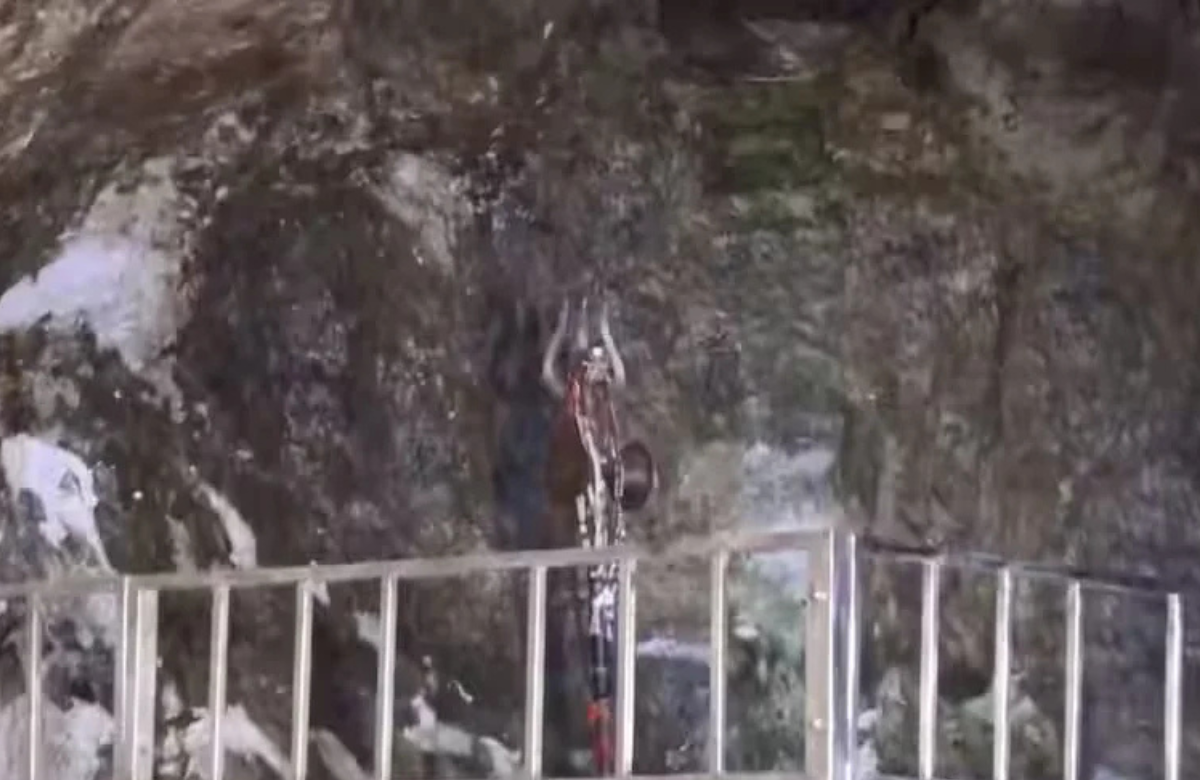
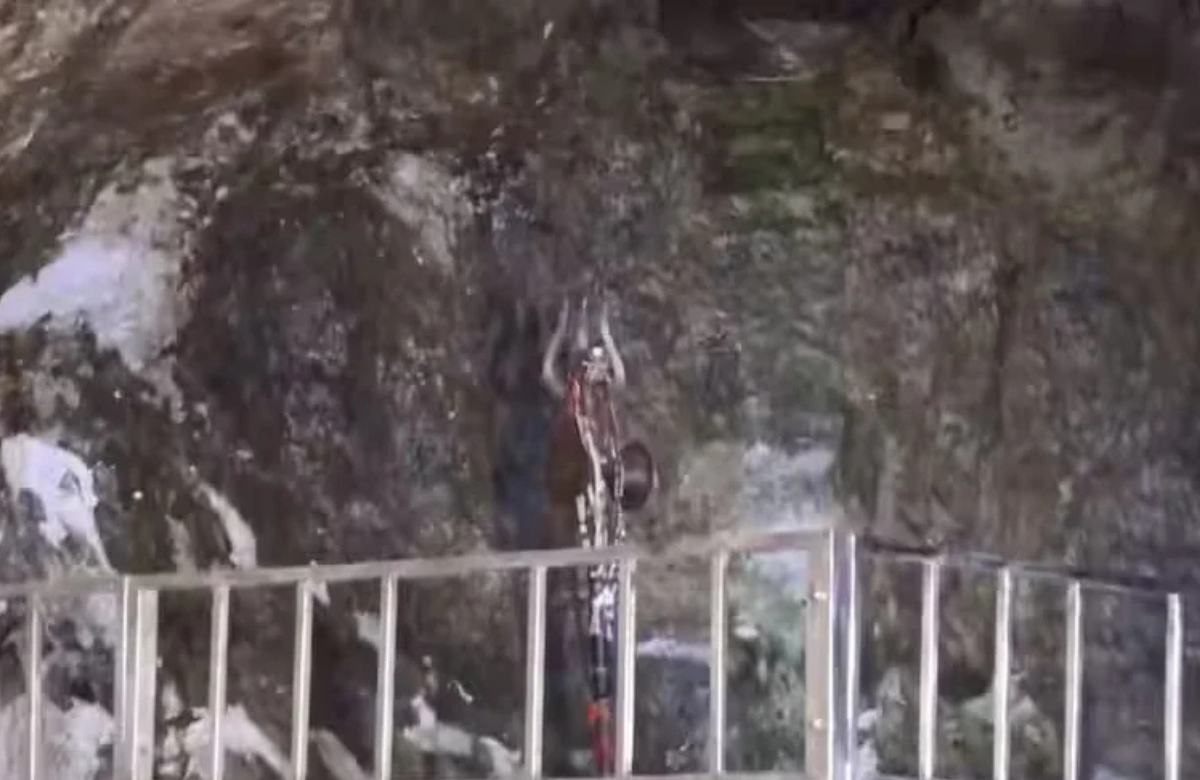
Lakhs of pilgrims spent months preparing for the Amarnath Yatra 2026 — booking registrations, arranging travel, and enduring long security queues. Many arrived at the holy cave with one singular hope: to witness Baba Barfani, the naturally formed ice Shivling, in all its divine form. For most of them, that hope was not fulfilled. The sacred ice Shivling inside the Amarnath cave had almost completely melted within just five days of the Amarnath Yatra beginning on July 3, 2026. A formation that stood seven feet tall in May 2026 had shrunk to roughly one foot by July 6 — and was gone entirely by July 7. It is the third consecutive year the Shivling has vanished within the first week of the pilgrimage. This is the full story: what exactly happened, what the science says, what the devotees felt, and what it means for the future of one of India's most sacred pilgrimages.
What Is the Amarnath Ice Shivling and Why Does It Matter?
The Amarnath cave is located at an altitude of 3,888 metres in the Anantnag district of Jammu and Kashmir. Inside this cave, a naturally formed ice stalagmite — the ice Shivling, reverently called Baba Barfani — forms each winter as water droplets from the cave roof freeze and accumulate in layers. The ice formation is worshipped by Hindu devotees as a living, self-manifesting embodiment of Lord Shiva. What makes the Shivling particularly sacred is that it forms and melts on its own, without human construction or intervention. Traditionally, its size waxed and waned in synchrony with the lunar cycle during the Hindu month of Shravan — growing larger during the waxing moon and shrinking during the waning phase. This natural rhythm was itself seen as a divine sign. It is the central object of devotion for the annual Amarnath Yatra, which draws hundreds of thousands of pilgrims each year from across India and the world.
What Happened in 2026: A Timeline of the Melting
The dissolution of the 2026 Amarnath ice Shivling was not sudden — it was a process that unfolded over weeks, accelerating sharply just before the pilgrimage began.
| Date | Ice Shivling | Significance |
| 23 May 2026 | ~7 ft tall | BSF confirmed a prominent ice formation |
| 29 June 2026 | ~5 ft | Natural melting before Yatra |
| 3 July 2026 | Yatra Begins | 57-day pilgrimage officially started |
| 6 July 2026 | ~1 ft | Over 56,000 pilgrims visited; formation nearly melted |
| 7 July 2026 | Trace remained | Over 56,000 pilgrims visited; formation nearly melted |
| 10 July 2026 onward | No visible Ice Shivling | Yatra continued; cave remained the main pilgrimage site |
The speed of the 2026 dissolution was particularly stark. By July 7 — just four days into a 57-day Amarnath Yatra — the Shivling that had taken the entire winter to form had essentially disappeared. The remaining 53 days of the pilgrimage will be completed without its visible presence.
Why Is the Amarnath Ice Shivling Melting So Early? What the Experts Say
The early melting of the Amarnath Shivling is not a one-off event — it is a pattern that has been worsening for years. Experts point to a combination of climate, environmental, and human factors.
1. Rising Regional Temperatures
Climate scientists have consistently observed that the Himalayan region is warming faster than the global average. In 2025, Srinagar recorded its highest temperature since 1953 at 37.4°C. The cave at 3,888 metres is directly affected by these rising temperatures — the sub-zero conditions required for the ice formation to persist through summer are becoming harder to sustain. Prolonged heatwaves prevent the cave from maintaining the cold microclimate needed to preserve the Shivling during the pilgrimage season.
2. Dramatic Decline in Snowfall
The Amarnath region has experienced a 60 to 70 percent decline in snowfall and rainfall over recent decades. Snow plays a critical role in the formation and preservation of the ice Shivling — it insulates the cave environment and supplies the moisture that freezes into the stalagmite. Less snow means a smaller and less durable Shivling at the start of each season. Veteran journalist Ashraf Wani, who has covered the Amarnath pilgrimage for nearly 30 years, documented the contrast starkly: trails that were snow-laden in early July in 2015 are now, in 2026, dry, dusty, and barren.
3. Human Heat from Pilgrim Crowds
Over 56,000 pilgrims visited the Amarnath cave in the first three days of the 2026 Yatra — an 18.6 percent increase on the same period in 2025. Human bodies generate significant heat, and within the enclosed cave ecosystem at high altitude, the cumulative body heat of thousands of visitors accelerates the melting of any existing ice. The Amarnath cave is not a ventilated stadium — it is a natural enclosed space where the presence of large, dense crowds creates a temperature spike that the fragile ice formation cannot withstand.
4. Infrastructure and Ecological Damage Along the Route
Former Principal Chief Conservator of Forests OP Sharma has documented biodiversity losses along the Amarnath Yatra route that contribute to the broader ecological deterioration of the area. Rare Himalayan herbs including Pleurospermum, Wintergreen, and Jogipadshah are vanishing. The mass uprooting of creeping juniper for firewood is causing soil erosion and mudslides. Road construction, plastic waste, helicopter traffic, and unregulated tourism infrastructure are all adding to the cumulative environmental burden on a fragile high-altitude ecosystem that was never designed to absorb this scale of human activity.
A Pattern Across Years
- 1998: Ice Shivling stood 12 to 13 feet tall; snow covered nearly one kilometre of the approach trail
- 2013: Shivling disappeared before the Yatra concluded
- 2016: Shivling melted within 10 days of the pilgrimage beginning
- 2025: Shivling almost disappeared simultaneously with the Yatra starting on July 3; over 3.31 lakh pilgrims visited but most could not see it
- 2026: Shivling gone within 5 days; third consecutive year the formation has not survived the first week
What Devotees Said: Faith Beyond the Ice
For many pilgrims, the news that the Shivling had melted arrived before they reached the cave — in news alerts, in fellow pilgrims' messages, in the queue conversations at Pahalgam and Baltal. Their responses reflect something profound about the nature of faith on this pilgrimage.
Voices from the Cave and the Queue
- Devotee Divyanshu Khanna, speaking at the cave: "Baba has vanished, yet faith remains. People are still coming to the cave because it is a matter of devotion. Even if the Shivling is no longer visible to some, the divine presence of Baba can still be felt in every particle of that sacred place. That spiritual bliss can only be experienced at Baba Barfani's cave."
- Devotee Shashank Gupta: "The arrangements were excellent. Baba Ji has now almost disappeared, and we could only see a faint trace. But faith remains abundant. Our main purpose was to reach Baba's darbar, offer our prayers, and seek His blessings. He will take care of the rest."
- Devotee Aman Chawla: "Baba has not disappeared; Baba resides in everyone's heart. It depends on the faith of the devotee."
- Devotee Gourav Salgotra: "Despite the fast melting of the ice lingam, faith remains. Even if the Shivling is no longer visible, the divine presence of Baba can still be felt in every particle of that sacred place."
The Spiritual View: Cave Over Shivling
A consistent thread in pilgrims' responses is the distinction between the ice formation and the sacred space itself. The Amarnath cave — the Garbha Griha, or sanctum — holds its own profound spiritual significance independent of the ice Shivling. The cave is itself considered the abode of Lord Shiva. For many devotees, the journey to this remote high-altitude sanctuary — the physical act of arriving — is itself the act of devotion. The Shivling, when present, deepens that experience; its absence, many pilgrims say, does not hollow it out.
What Experts Are Demanding: Time for a Policy Rethink
The repeated early melting of the Amarnath ice Shivling has moved from a spiritual concern to an environmental policy debate. A growing number of scientists, environmentalists, and journalists are calling for systemic changes to how the Amarnath Yatra is managed.
Shorten the Yatra Duration
Several experts have called for the 57-day pilgrimage to be shortened to correspond with the Shivling's actual lifespan. When the Shri Amarnath Shrine Board was established in 2000–2001, it progressively extended the Yatra's duration and increased the annual pilgrim quota. Critics argue this expansion has directly accelerated the cave ecosystem's deterioration. Some experts suggest a Yatra of 20 to 30 days, beginning in mid-June rather than July, would give more pilgrims the chance to see the intact Shivling while reducing peak-season pressure on the cave and its surroundings.
Environmental Impact Assessment
Climate expert Mutahara Deva and others have pointed out that the Shri Amarnath Shrine Board is currently not required to follow standard environmental laws that apply to comparable infrastructure projects in protected mountain zones. Experts are demanding mandatory environmental impact assessments, regular ecological audits of the Yatra's footprint, and legally binding limits on plastic, non-biodegradable materials, and firewood use along the route.
Start the Yatra Earlier in the Season
Several pilgrims and observers have pointed out a practical fix that does not require reducing pilgrim numbers: begin the Amarnath Yatra in mid-June rather than early July. If the Yatra had started around June 15 in 2026, the Shivling at 5 to 7 feet tall would have been accessible to significantly more pilgrims before the summer temperatures accelerated its dissolution. This proposal avoids the contentious question of pilgrim limits while addressing the core problem of timing.
The Amarnath Yatra 2026 Continues — What Pilgrims Still Going Should Know
Despite the ice Shivling's early dissolution, the 57-day Amarnath Yatra 2026 is continuing without any official interruption. The Shri Amarnath Shrine Board has confirmed the pilgrimage schedule remains unchanged, ending on August 28, 2026, coinciding with Raksha Bandhan. If you have already registered for the Yatra or are planning to go, here is what you need to know.
Registration Is Fully Booked Until July 9
The Jammu and Kashmir administration confirmed that all registration slots through July 9, 2026 are filled. Pilgrims without valid registration are not permitted beyond security checkpoints on either the Pahalgam or Baltal routes. Those who have not yet registered are being asked to postpone their journey by a few days and await available slots. Only registered pilgrims are allowed to travel toward Kashmir for the Yatra during this period.
The Two Routes: Pahalgam and Baltal
- Pahalgam (traditional route): approximately 48 km trek, 3 to 5 days, gradual ascent — recommended for most pilgrims including first-timers and families
- Baltal (shorter route): approximately 14 km trek, completed in a single day — steeper and more demanding per kilometre, recommended for physically fit pilgrims
- Security personnel, medical teams, and rescue services remain deployed along both routes throughout the Yatra season
- Queues at Baltal base camp were reported stretching 3 to 4 kilometres in length during peak arrival days of this Yatra — plan your timings accordingly
What Pilgrims Will Experience at the Cave Without the Shivling
- The sacred Amarnath cave itself remains fully accessible and its spiritual atmosphere is described by every pilgrim who has visited as profoundly powerful, with or without the ice formation
- A small trace of the Shivling base may still be visible — conditions depend on weather, temperature, and day of visit
- Prayer, aarti, and meditation inside the cave continue as normal — the cave is the sanctuary, not only the ice
- The high-altitude approach on both routes remains scenically and spiritually significant in its own right
The Bigger Picture: A Himalayan Pilgrimage at a Climate Crossroads
The Amarnath ice Shivling's early melting is not simply a pilgrimage management problem — it is a visible, measurable, and emotionally resonant signal of what climate change is doing to the high Himalayas. Over 100 glaciers in the western Himalayas are retreating. Snowfall has declined by 60 to 70 percent in the Amarnath region over recent decades. The same environmental forces that are reshaping the hydrological cycle of northern India are dissolving Baba Barfani within days of each summer's Yatra. The devotion of lakhs of pilgrims who walk hundreds of kilometres to reach this cave is genuine and moving. The tragedy is that the very intensity of that devotion — the numbers it generates, the infrastructure it demands — is now part of the mechanism that is hastening the loss of the sacred object at the journey's centre. The question facing the Shri Amarnath Shrine Board, the Jammu and Kashmir government, and India's pilgrimage community is not whether the ice Shivling will keep melting earlier each year. At current trajectories, experts suggest it will. The question is whether the institutions that manage this yatra are willing to make difficult decisions — about timing, about numbers, about environmental protection — before the cave itself is irreparably affected.
Conclusion
The Amarnath Yatra has never been only about the ice Shivling. It has always been about the journey — the faith that moves hundreds of thousands of people through mountain passes, over glacial terrain, and into a high-altitude cave in pursuit of something that cannot be weighed or measured. That faith is undimmed by the news of the Shivling's early dissolution, as the voices of pilgrims from 2026 make unmistakably clear. But the pattern is now impossible to ignore, and the conversation it demands is overdue. The sacred must be protected — not just through devotion, but through policy, science, and the willingness to make hard choices about how human activity operates in fragile Himalayan spaces. Baba Barfani has dissolved again this year. Whether the institutions responsible for his home act on that reality is the question that will define the Amarnath Yatra's future.