

- Asia Travel Blogs
- Devesh Tiwari
Why Southeast Asia's Ancient Temples Still Captivate the World
Southeast Asia is home to some of the most remarkable ancient temples on Earth. Scattered across Cambodia, Indonesia, Thailand, Myanmar, Vietnam, and Laos, these sacred monuments reflect centuries of religious devotion, artistic mastery, royal ambition, and cross-cultural exchange between India and Southeast Asia.
From the towering spires of Angkor Wat in Cambodia to the terraced Buddhist mandala of Borobudur in Indonesia, these temples are far more than tourist attractions. They were royal monuments, centers of learning, pilgrimage sites, and physical representations of the universe itself.
Today, they remain among Asia's top historical and spiritual destinations, drawing travelers, historians, archaeologists, and photographers from every corner of the globe. This guide covers the most important ancient temples in Southeast Asia, their history and symbolism, and why they continue to matter.
How Southeast Asian Temple Architecture Began
The story of Southeast Asian temples begins with maritime trade. For centuries, sea routes connected India with kingdoms across modern-day Cambodia, Indonesia, Thailand, Vietnam, Myanmar, Laos, and Malaysia. Along these routes traveled merchants, monks, and scholars — and with them came Hindu and Buddhist philosophy, Sanskrit literature, and Indian architectural ideas.
Crucially, Southeast Asian civilizations didn't just copy Indian temple design. Local rulers and craftsmen reshaped these influences using indigenous beliefs, materials, and engineering knowledge — giving rise to a temple architecture that is unmistakably Southeast Asian.
1. Angkor Wat, Cambodia — The World's Largest Religious Monument
Angkor Wat is the most iconic ancient temple in Southeast Asia and one of the greatest architectural achievements in human history.
Built near Siem Reap during the 12th-century reign of King Suryavarman II, Angkor Wat was originally dedicated to the Hindu god Vishnu before later becoming a Buddhist site. Surrounded by a vast moat and outer walls, its five central towers represent Mount Meru, the cosmic mountain of Hindu and Buddhist cosmology.
Angkor Wat is equally famous for its bas-reliefs — intricate stone carvings depicting the Ramayana, the Mahabharata, celestial dancers (apsaras), royal processions, and the legendary Churning of the Ocean of Milk.
The scale, symmetry, and symbolism of Angkor Wat make it the defining monument of the Khmer Empire.
2. Bayon Temple, Cambodia — The Temple of a Thousand Faces
Located inside the ancient city of Angkor Thom, Bayon Temple was built under King Jayavarman VII in the late 12th or early 13th century and is closely tied to Mahayana Buddhism.
Bayon's defining feature is its collection of towers carved with enormous, serene stone faces gazing in all directions — widely believed to represent Avalokiteshvara, a key Buddhist figure, possibly blended with the king's own image.
The temple's lower galleries feature detailed reliefs of warfare, markets, fishing, festivals, and daily Khmer life, making Bayon an invaluable historical record as well as a religious site.
3. Ta Prohm, Cambodia — Nature Reclaiming Stone
Ta Prohm, built during the reign of Jayavarman VII as a Buddhist monastery, is one of the most atmospheric ruins in Southeast Asia.
Unlike heavily restored monuments, Ta Prohm has been deliberately left in a semi-wild state — massive tree roots wind through collapsing galleries and stone towers, blending jungle and architecture into one striking scene.
Ta Prohm offers a rare glimpse of how many Angkor-era temples looked before modern conservation began.
4. Borobudur, Indonesia — The World's Largest Buddhist Monument
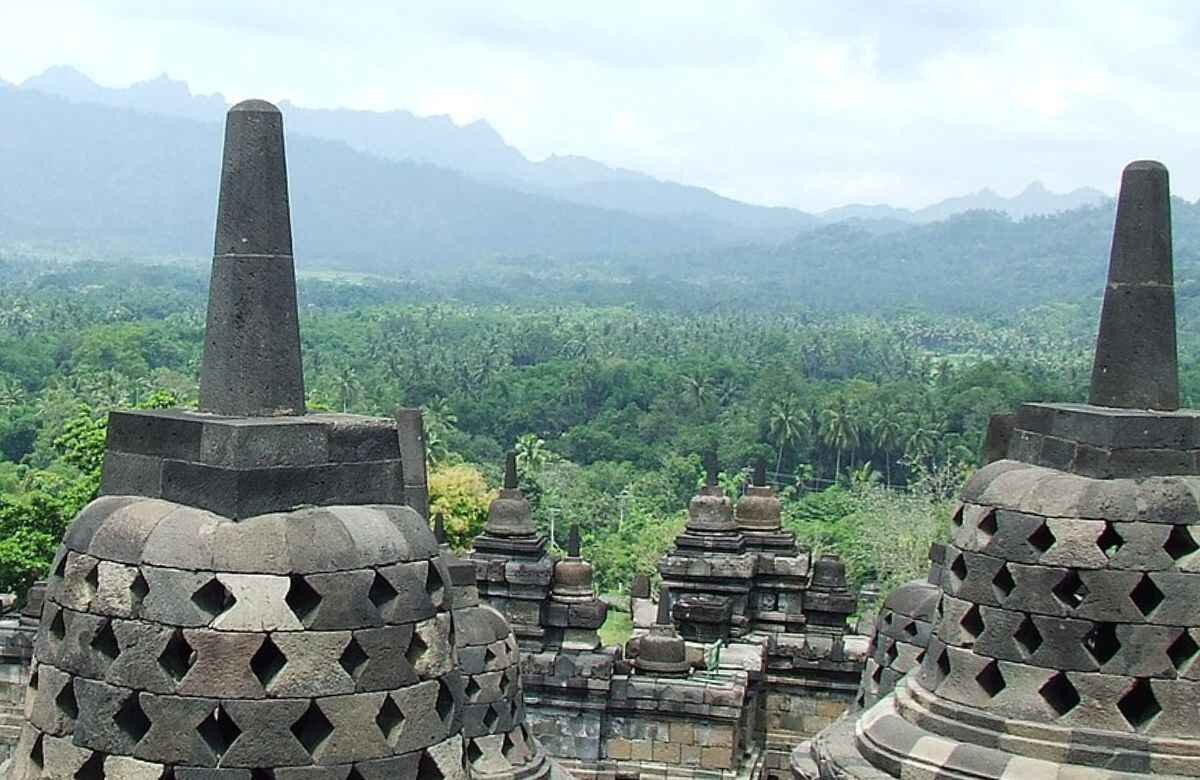
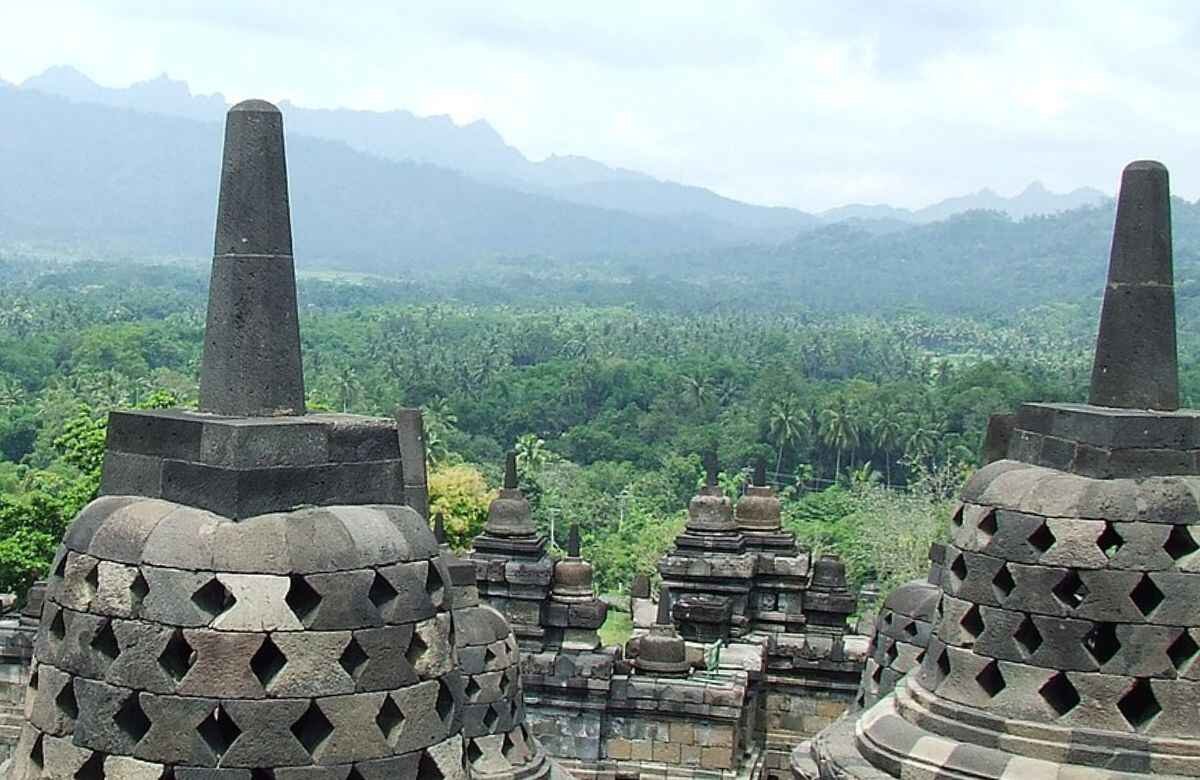
Located on the island of Java, Borobudur is one of the greatest Buddhist monuments on Earth. Built during the 8th–9th century under the Shailendra dynasty, it was designed as a three-dimensional map of Buddhist cosmology.
Rather than an enclosed temple, Borobudur rises as a series of terraces topped with bell-shaped stupas and hundreds of carved relief panels illustrating Buddhist teachings and stories. Pilgrims ascending its levels symbolically journey toward spiritual enlightenment.
Borobudur is both an architectural marvel and a physical embodiment of Buddhist philosophy.
5. Prambanan, Indonesia — Java's Great Hindu Temple Complex
Built around the 9th century, Prambanan is Indonesia's most significant Hindu temple complex, dedicated to the Trimurti — Brahma, Vishnu, and Shiva.
Its towering central Shiva temple is richly decorated, and its galleries depict scenes from the Ramayana. Prambanan's proximity to the Buddhist Borobudur illustrates how Hinduism and Buddhism coexisted within the same Javanese cultural landscape.
6. Bagan, Myanmar — A Landscape of Thousands of Temples
Between the 11th and 13th centuries, Bagan became one of the greatest centers of Buddhism in the world, with thousands of temples, stupas, and monasteries built across its plains.
Key highlights include:
- Ananda Temple — considered one of Bagan's architectural masterpieces
- Dhammayangyi Temple — famous for its massive scale and brickwork
- Shwezigon Pagoda — a model for later Burmese Buddhist architecture
Bagan remains one of the most extraordinary archaeological landscapes in the world.
7. My Son Sanctuary, Vietnam — Legacy of the Champa Civilization
Hidden in the hills of central Vietnam, My Son Sanctuary is a collection of ancient Hindu temples built by the Champa civilization, primarily dedicated to Shiva.
Constructed largely from brick, My Son's towers reflect a distinctive Cham interpretation of Hindu architecture — different from the styles of Cambodia or Java. Despite damage sustained during 20th-century conflicts, the surviving structures remain vital to understanding Cham history.
8. Wat Phu, Laos — A Temple Built for a Sacred Mountain
Wat Phu, near Champasak in southern Laos, was built into the slopes of a mountain considered sacred, with strong ties to Shiva worship. Terraces, shrines, reservoirs, and processional paths connect the natural landscape with religious meaning.
Over time, Wat Phu transitioned to Buddhist use — a clear example of how religious identity evolved across Southeast Asian history.
9. Ayutthaya, Thailand — Ruins of a Powerful Kingdom
Founded in the 14th century, the Kingdom of Ayutthaya became a major political and commercial power before its destruction in the 18th century.
Notable temples include:
- Wat Mahathat — famous for its Buddha head entwined in Bodhi tree roots
- Wat Chaiwatthanaram — a striking central prang surrounded by smaller towers
These ruins showcase the sophistication and wealth of one of Thailand's greatest kingdoms.
10. Sukhothai, Thailand — Birthplace of Thai Buddhist Art
The Sukhothai Historical Park preserves the remains of the Sukhothai Kingdom, celebrated for its elegant Buddha imagery and architectural style.
Highlights include Wat Mahathat, one of the city's most important religious centers, and Wat Si Chum, known for its colossal seated Buddha image.
11. Preah Vihear, Cambodia — A Temple on the Mountain Ridge
Preah Vihear, dedicated primarily to Shiva, is famous for its dramatic location along a mountain ridge. Rather than sitting on flat ground, the temple follows the natural slope, with long processional stairways and courtyards leading to the main sanctuary — one of the most breathtaking settings among all Khmer monuments.
12. The Temples of Bali, Indonesia — A Living Hindu Tradition
Unlike much of the region, Hinduism never declined in Bali — it remains deeply woven into daily life. The island hosts thousands of temples, from small village shrines to major complexes.
Pura Besakih, on the slopes of Mount Agung, is Bali's largest and most sacred temple. Balinese temple design emphasizes open courtyards, gateways, water features, and sacred mountains, all closely tied to community ceremonies and festivals.
The Symbolism of Mount Meru in Temple Design
Mount Meru, the mythical center of the universe in Hindu and Buddhist cosmology, shaped the design of many Southeast Asian temples. Central towers often represent Meru's summit, while surrounding structures symbolize the layers of the cosmos — most visible at Angkor Wat and across Khmer and Javanese architecture. These temples function on two levels simultaneously: as physical buildings and as symbolic models of the universe.
Why Water Matters in Southeast Asian Temples
Water — through moats, reservoirs, ponds, and channels — plays a central symbolic and practical role in temple design, representing purity, fertility, and the cosmic ocean. At Angkor, sophisticated hydraulic engineering supported both agriculture and the symbolic layout of the temple city.
Temple Walls as History Carved in Stone
Long before mass literacy, temple reliefs functioned as visual libraries, depicting the Ramayana, the Mahabharata, Buddhist Jataka tales, royal history, and everyday life. These carvings remain invaluable historical records of ancient clothing, warfare, agriculture, and social customs.
The Ramayana's Lasting Influence Across Southeast Asia
Though it originated in India, the Ramayana became deeply embedded in Southeast Asian art, dance, theatre, and royal tradition. Figures like Rama, Sita, Hanuman, and Ravana appear throughout temple carvings — a powerful example of how ideas travel across cultures and take on new local meaning.
Hinduism and Buddhism: A Shared Religious Landscape
Hinduism shaped early civilizations in Cambodia, Indonesia, Vietnam, and Thailand, while Buddhism became dominant in Myanmar, Thailand, Laos, and later Cambodia. Many temples shifted religious identity over time — some converting from Hindu to Buddhist use — illustrating the fluid, interconnected religious history of the region.
Temples as Symbols of Royal Power
Constructing a monumental temple required immense labor, resources, and engineering skill. Kings used temple-building to demonstrate wealth and legitimacy, honor the gods, and position themselves as protectors of religion — making temples as political as they were spiritual.
Temples and the Natural Landscape
Southeast Asian sacred architecture is deeply tied to nature — mountains, rivers, forests, and springs. Wat Phu, Preah Vihear, Borobudur, Ta Prohm, and Bali's temples all demonstrate this powerful relationship between the built and natural world.
Living Heritage: Temples That Are Still Sacred Today
Many of these sites remain active places of worship. Monks, pilgrims, and local communities continue ceremonies, offerings, and festivals — meaning these monuments are not frozen relics but living religious spaces whose meaning continues to evolve.
Preserving Ancient Temples for Future Generations
Tropical climates, mass tourism, natural disasters, and historical conflict all threaten these fragile sites. Conservation groups and governments must balance protection with public access, making sustainable tourism essential to preserving these monuments for future generations.
Best Ancient Temple Destinations in Southeast Asia (At a Glance)
| Ancient Site | Country | Main Religious Tradition |
|---|---|---|
| Angkor Wat | Cambodia | Hinduism / Buddhism |
| Bayon | Cambodia | Buddhism |
| Ta Prohm | Cambodia | Buddhism |
| Preah Vihear | Cambodia | Hinduism |
| Borobudur | Indonesia | Buddhism |
| Prambanan | Indonesia | Hinduism |
| My Son | Vietnam | Hinduism |
| Bagan | Myanmar | Buddhism |
| Wat Phu | Laos | Hinduism / Buddhism |
| Ayutthaya | Thailand | Buddhism |
| Sukhothai | Thailand | Buddhism |
| Besakih | Indonesia | Hinduism |
Frequently Asked Questions
What is the most famous ancient temple in Southeast Asia?
Angkor Wat in Cambodia is the most famous, and it's the largest religious monument in the world.
Which temple is the largest Buddhist monument on Earth?
Borobudur in Indonesia holds this distinction, built as a massive terraced representation of Buddhist cosmology.
Are Angkor Wat and Bayon the same temple?
No. Angkor Wat and Bayon are separate temples within the greater Angkor Archaeological Park; Bayon sits inside the walled city of Angkor Thom.
Why do trees grow through Ta Prohm?
Ta Prohm was intentionally left partially unrestored to preserve its dramatic, overgrown appearance, showing how nature reclaims ancient structures.
What religion built most Southeast Asian temples?
Both Hinduism and Buddhism shaped Southeast Asian temple architecture, often influencing the same sites at different points in history.
Final Thoughts: A Journey Through Stone and Spirit
From the towering spires of Angkor Wat to the spiritual terraces of Borobudur, from the jungle ruins of Ta Prohm to the brick temples of Bagan and My Son, Southeast Asia's ancient temples tell a story shaped by religion, trade, migration, and artistic innovation.
These monuments prove that architecture can be more than stone — it can capture an entire worldview. For history lovers, architecture enthusiasts, spiritual travelers, and adventurers alike, exploring Southeast Asia's ancient temples is a journey through some of humanity's greatest achievements — and a living connection between the present and the distant past.