

- Asia Travel Blogs
- Devesh Tiwari
Discover Vietnam's Spiritual Heritage, Beautiful Buddhist Pagodas, Ancient Temples and Sacred Religious Landmarks
Vietnam is a country where spirituality, history, culture and natural beauty come together beautifully. Beyond its bustling cities, scenic beaches, limestone mountains and vibrant markets, Vietnam is home to thousands of ancient temples, Buddhist pagodas and sacred religious sites that reflect the country's rich cultural heritage.
From peaceful lakeside pagodas in Hanoi to magnificent Buddhist complexes in Ninh Binh, historic temples in Hue and colourful religious landmarks in Ho Chi Minh City, every sacred destination has a unique story to tell.
The temples in Vietnam are not just places of worship; they are important cultural landmarks that preserve centuries of Vietnamese traditions, architectural excellence and religious beliefs. Buddhism, Taoism, Confucianism, Hinduism and local spiritual traditions have all influenced the country's religious landscape.
Whether you are a spiritual traveller, history enthusiast, architecture lover or someone planning a Vietnam holiday, visiting these sacred places offers a deeper understanding of the country's identity.
In this guide, we explore 13 famous temples in Vietnam that deserve a place on your travel itinerary, including their history, location, religious significance and what makes each destination special.
1. Tran Quoc Pagoda – Hanoi
Tran Quoc Pagoda is one of the oldest and most beautiful Buddhist pagodas in Vietnam. Located on a small island along the eastern shore of West Lake in Hanoi, this historic religious landmark is known for its peaceful surroundings, traditional architecture and spiritual importance.
The pagoda dates back to the 6th century, during the reign of Emperor Ly Nam De. Originally known as Khai Quoc Pagoda, it was later renamed Tran Quoc, meaning Protecting the Nation.
The most recognisable feature of Tran Quoc Pagoda is its striking red-brick tower, surrounded by smaller stupas, ancient trees and beautifully maintained courtyards. The peaceful lakeside setting makes it especially attractive to visitors during sunrise and sunset.
Inside the complex, visitors can explore Buddhist shrines, statues and traditional Vietnamese religious architecture. It remains an active place of worship where local devotees come to pray and offer incense.
Location: West Lake, Hanoi, Northern Vietnam.
Why Visit: For its ancient history, peaceful atmosphere, beautiful architecture and scenic lakeside setting.
2. One Pillar Pagoda – Hanoi
One Pillar Pagoda, also known as Chua Mot Cot, is one of Vietnam's most iconic historical and religious monuments.
Built in 1049 during the Ly Dynasty, the pagoda is famous for its unusual architectural design. The main wooden structure stands on a single stone pillar rising from a small pond, creating the appearance of a lotus flower emerging from the water.
According to local legend, Emperor Ly Thai Tong dreamed of meeting the Bodhisattva Avalokiteshvara, who appeared seated on a lotus flower. Inspired by this dream, the emperor commissioned the construction of the pagoda.
The lotus is an important symbol in Buddhism, representing purity, enlightenment and spiritual awakening.
Despite its small size, One Pillar Pagoda holds immense cultural and religious significance. It is also among the most photographed historical attractions in Hanoi.
Location: Ba Dinh District, Hanoi.
Why Visit: To admire its unique lotus-inspired architecture and learn about Vietnam's Buddhist traditions and imperial history.
3. Temple of Literature – Hanoi
The Temple of Literature, known locally as Van Mieu, is one of Vietnam's most important historical and cultural landmarks.
Established in 1070 under Emperor Ly Thanh Tong, the complex was dedicated to Confucius and later became home to Vietnam's first national university, the Imperial Academy, established in 1076.
Unlike Buddhist pagodas, the Temple of Literature represents Vietnam's Confucian heritage and the traditional importance of education, scholarship and academic excellence.
The complex features traditional Vietnamese architecture, peaceful gardens, courtyards, ancient gates and stone steles carrying the names of successful scholars who passed royal examinations.
The 82 remaining doctoral steles are recognised as part of UNESCO's Memory of the World programme.
Even today, Vietnamese students visit this historic destination to pray for success in examinations and academic achievements.
Location: Dong Da District, Hanoi.
Why Visit: For its historical importance, traditional architecture and connection with Vietnam's educational heritage.
4. Perfume Pagoda – Hanoi
The Perfume Pagoda, known as Chua Huong, is one of Vietnam's most important Buddhist pilgrimage destinations.
Located in the Huong Son mountains, approximately 60 kilometres from central Hanoi, this sacred complex consists of several Buddhist temples, shrines and caves surrounded by dramatic limestone landscapes.
The journey to the Perfume Pagoda is itself a memorable experience. Visitors traditionally travel by boat along the Yen River, passing green mountains, rice fields and beautiful natural scenery before reaching the temple complex.
One of the most sacred attractions is Huong Tich Cave, which houses important Buddhist shrines and attracts thousands of pilgrims.
The annual Perfume Pagoda Festival takes place during the Vietnamese Lunar New Year period. During this time, devotees from different parts of the country visit the complex to pray for good health, prosperity and happiness.
Location: My Duc, Hanoi.
Why Visit: For its religious importance, scenic boat journey, limestone caves and traditional Buddhist pilgrimage experience.
5. Bai Dinh Pagoda – Ninh Binh
Bai Dinh Pagoda is one of the largest and most impressive Buddhist temple complexes in Vietnam. Located in the beautiful Ninh Binh region, it attracts thousands of pilgrims and international tourists every year.
The complex includes an ancient pagoda area and a much larger modern Buddhist complex developed in recent decades.
Surrounded by limestone mountains and green landscapes, Bai Dinh is famous for its magnificent Buddhist statues, enormous bronze bell, extensive corridors displaying hundreds of Arhat statues and impressive multi-storey pagoda architecture.
One of its major attractions is the giant bronze statue of Buddha Shakyamuni. The scale of the complex makes it an extraordinary destination for visitors interested in Buddhist architecture and spirituality.
Bai Dinh is also an important pilgrimage destination, particularly during the spring festival season.
Visitors can spend several hours exploring its different halls, temples, courtyards and religious monuments.
Location: Gia Vien, Ninh Binh, Northern Vietnam.
Why Visit: For its grand Buddhist architecture, enormous Buddha statues, peaceful mountain surroundings and spiritual atmosphere.
6. Yen Tu Pagoda – Quang Ninh
Yen Tu is one of the most significant Buddhist pilgrimage destinations in Vietnam, particularly for followers of Truc Lam Zen Buddhism.
Located in the Yen Tu mountain range, the religious complex is closely associated with King Tran Nhan Tong, who renounced royal life in the 13th century and became a Buddhist monk. He is traditionally credited with establishing the Truc Lam Zen school.
The mountain is home to numerous ancient pagodas, monasteries, temples and religious monuments. Visitors can explore different sacred sites while enjoying spectacular views of forest-covered mountains and misty valleys.
Dong Pagoda, located near the summit of Yen Tu Mountain, is among the most remarkable attractions. Its elevated position offers breathtaking panoramic views of the surrounding landscape.
Pilgrims traditionally visit Yen Tu to seek peace, spiritual understanding and blessings.
Location: Yen Tu Mountain, Quang Ninh Province.
Why Visit: For its connection with Vietnamese Zen Buddhism, mountain pilgrimage routes, ancient pagodas and beautiful Himalayan-like mountain scenery.
7. Thien Mu Pagoda – Hue
Thien Mu Pagoda, also known as the Pagoda of the Celestial Lady, is one of the most famous religious landmarks in central Vietnam.
Situated on Ha Khe Hill overlooking the beautiful Perfume River in Hue, the pagoda was established in 1601 under Nguyen Hoang, the first Nguyen Lord.
The most recognisable feature of this historic complex is its seven-storey Phuoc Duyen Tower, constructed in 1844. The tower has become one of the most recognisable symbols of Hue.
The pagoda includes several prayer halls, Buddhist statues, gardens and historic structures. It also preserves important elements of Vietnam's religious and political history.
Its riverside location adds to its peaceful atmosphere, making it a popular destination for visitors exploring the former imperial capital of Vietnam.
Location: Hue, Central Vietnam.
Why Visit: For its historic Buddhist architecture, seven-storey tower, river views and cultural importance.
8. Linh Ung Pagoda – Da Nang
Linh Ung Pagoda on the Son Tra Peninsula is one of the most beautiful spiritual destinations in Da Nang.
Overlooking the East Sea, the pagoda is famous for its enormous Lady Buddha statue, which stands approximately 67 metres tall. The statue represents Avalokiteshvara, the Bodhisattva of Compassion.
The complex features traditional Buddhist architecture, spacious courtyards, prayer halls, beautifully landscaped gardens and spectacular coastal views.
Visitors can enjoy panoramic views of Da Nang city, the coastline and surrounding mountains from the temple grounds.
The combination of spiritual significance and natural beauty makes Linh Ung Pagoda one of the most popular attractions in central Vietnam.
Location: Son Tra Peninsula, Da Nang.
Why Visit: For the impressive Lady Buddha statue, beautiful ocean views, Buddhist architecture and peaceful surroundings.
9. My Son Sanctuary – Quang Nam Region
My Son Sanctuary is one of the most important ancient religious and archaeological sites in Vietnam.
Located in a lush valley surrounded by mountains, this UNESCO World Heritage Site preserves the remains of Hindu temples built by the Champa civilisation between the 4th and 13th centuries.
The sanctuary was primarily dedicated to Lord Shiva, one of the principal deities in Hinduism.
The complex features ancient red-brick towers, carved stone sculptures, religious symbols and architectural remains that demonstrate the remarkable craftsmanship of the Cham people.
My Son offers a fascinating glimpse into the historical influence of Hinduism in Southeast Asia and the cultural connections between ancient Indian and Cham civilisations.
Although several structures were damaged during wartime, many important monuments remain and continue to attract visitors interested in history, archaeology and religious heritage.
Location: Near Hoi An, Central Vietnam.
Why Visit: For its ancient Hindu temples, Cham civilisation, UNESCO heritage status and remarkable historical architecture.
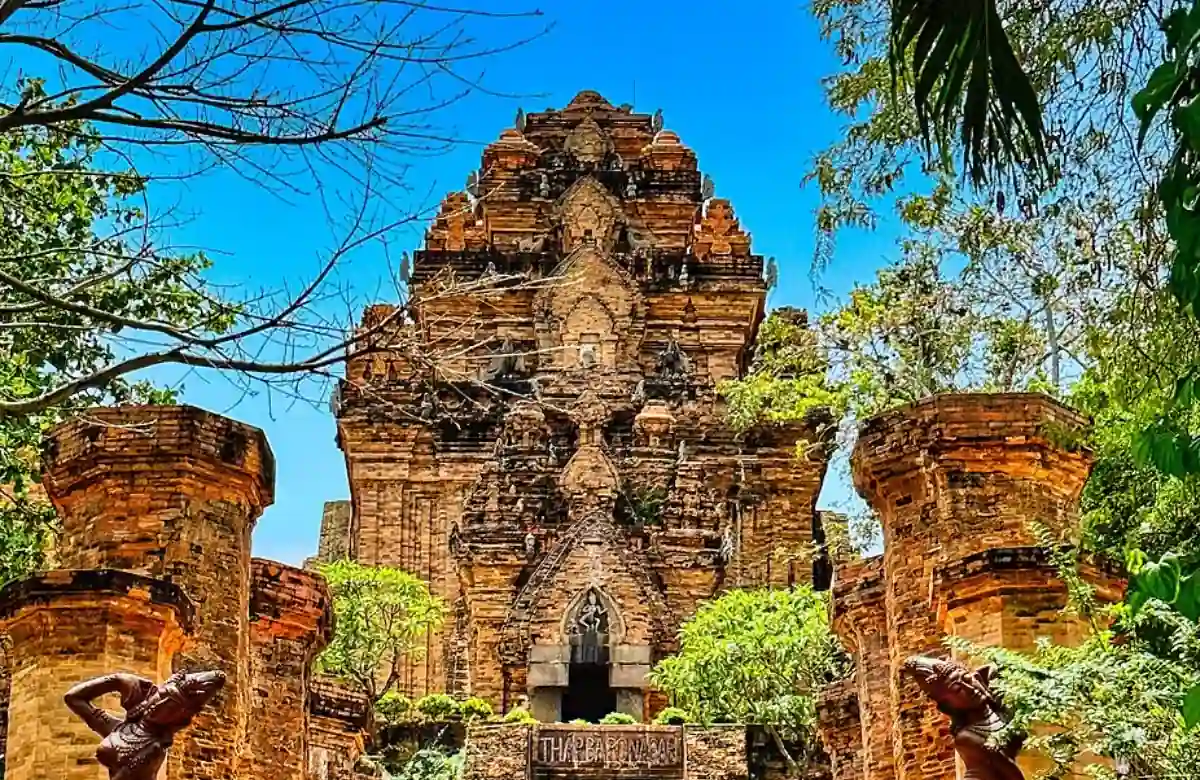
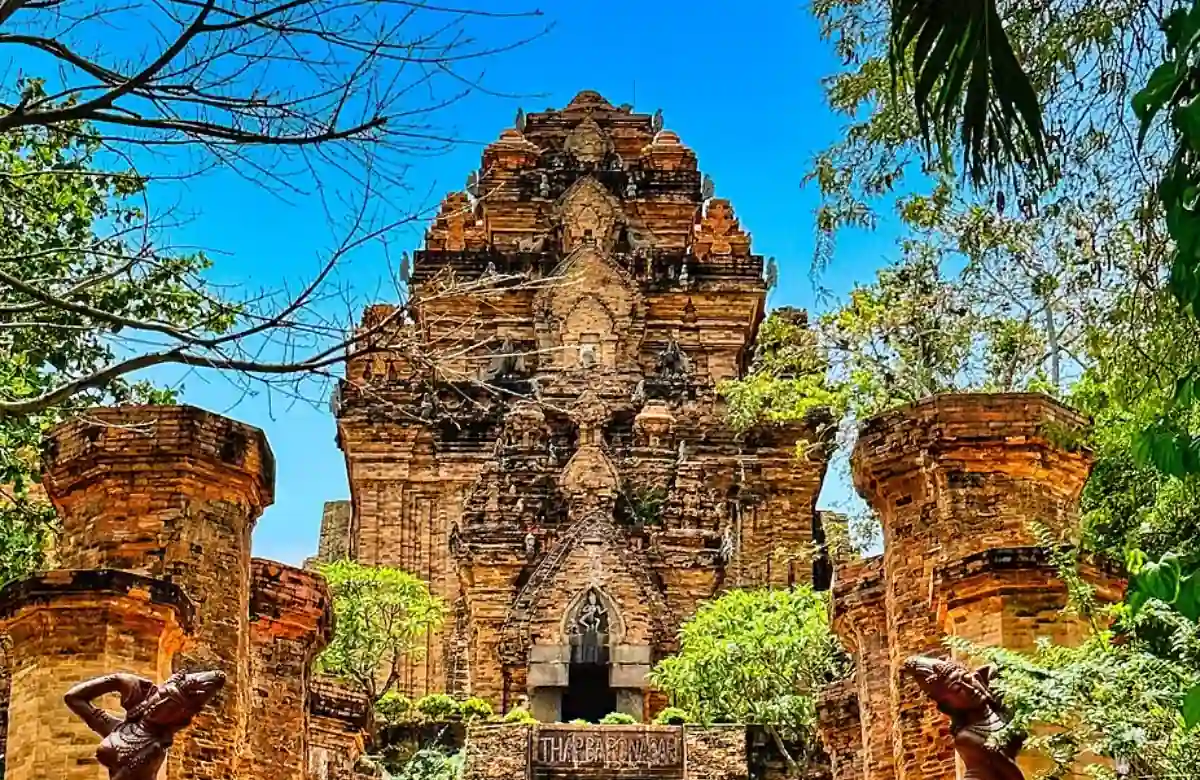
10. Po Nagar Cham Towers – Nha Trang
Po Nagar Cham Towers is one of the most remarkable ancient religious complexes in Vietnam.
Located on a hill overlooking the Cai River in Nha Trang, the complex was built by the Champa civilisation between approximately the 7th and 12th centuries.
The site is dedicated primarily to Goddess Po Nagar, a revered mother goddess associated with the Cham people.
Its impressive red-brick towers feature intricate carvings, traditional Cham architectural elements and religious sculptures. The main tower is dedicated to Po Nagar and continues to be an important place of worship.
The complex provides insight into the ancient Hindu traditions of the Champa civilisation and the cultural diversity of Vietnam.
Visitors can also enjoy beautiful views of Nha Trang city and the surrounding river landscape.
Location: Nha Trang, Central Vietnam.
Why Visit: For its ancient Cham architecture, Hindu religious heritage, historical importance and scenic location.
11. Jade Emperor Pagoda – Ho Chi Minh City
Jade Emperor Pagoda, also known as Phuoc Hai Tu, is one of the most fascinating religious sites in Ho Chi Minh City.
Built by the Cantonese Chinese community around the beginning of the 20th century, the temple is dedicated to the Jade Emperor, an important figure in Taoist belief.
The complex is famous for its traditional Chinese architecture, detailed wooden carvings, colourful decorations, incense-filled prayer halls and intricate religious sculptures.
Inside, visitors can explore several chambers dedicated to different deities and spiritual figures.
The temple provides a wonderful opportunity to understand the influence of Chinese religious traditions on southern Vietnamese culture.
Its distinctive atmosphere makes it one of the most interesting cultural attractions in Ho Chi Minh City.
Location: Ho Chi Minh City, Southern Vietnam.
Why Visit: For its Chinese religious architecture, Taoist traditions, elaborate interiors and cultural heritage.
12. Giac Lam Pagoda – Ho Chi Minh City
Giac Lam Pagoda is considered one of the oldest Buddhist pagodas in Ho Chi Minh City.
Established in 1744, this historic temple is an important centre of Vietnamese Buddhist traditions and architecture.
The complex is known for its traditional wooden structures, ancient trees, prayer halls, Buddha statues and distinctive seven-storey stupa.
Unlike some of the more modern religious complexes, Giac Lam offers a traditional atmosphere that allows visitors to experience the historical side of Vietnamese Buddhism.
Its peaceful courtyards and spiritual surroundings make it an excellent destination for travellers looking to explore the religious heritage of southern Vietnam.
Location: Tan Binh District, Ho Chi Minh City.
Why Visit: For its historical significance, traditional Buddhist architecture, ancient structures and peaceful atmosphere.
13. Cao Dai Holy See – Tay Ninh
The Cao Dai Holy See is one of the most unique religious landmarks in Vietnam.
Located in Tay Ninh, approximately 90 kilometres from Ho Chi Minh City, this extraordinary religious complex serves as the main centre of Caodaism, a Vietnamese religion officially established in 1926.
Caodaism combines elements of different religious and philosophical traditions, including Buddhism, Christianity, Taoism, Confucianism and other spiritual beliefs.
The temple is particularly famous for its colourful architecture, elaborate columns, symbolic decorations and the prominent Divine Eye symbol representing the supreme deity.
One of the most fascinating experiences for visitors is observing the traditional prayer ceremony, especially the noon service.
The colourful religious ceremonies, distinctive architecture and unique spiritual philosophy make Cao Dai Holy See unlike any other religious site in Vietnam.
Location: Tay Ninh Province, Southern Vietnam.
Why Visit: For its unique religious philosophy, colourful architecture, cultural traditions and fascinating prayer ceremonies.
Best Time to Visit Temples in Vietnam
Vietnam has a diverse climate, and the best time to visit its temples depends on the region you are planning to explore.
Northern Vietnam: October to April is generally a comfortable period for exploring Hanoi, Ninh Binh and other northern destinations. The weather is often cooler, making sightseeing and outdoor temple visits more enjoyable.
Central Vietnam: February to August is generally a favourable period for visiting Hue, Da Nang, Hoi An and Nha Trang. However, visitors should consider seasonal rainfall and local weather conditions.
Southern Vietnam: December to April is generally a good period for exploring Ho Chi Minh City, Tay Ninh and nearby cultural destinations, with relatively dry weather.
If you want to experience traditional religious celebrations, consider visiting during important Vietnamese festivals and lunar calendar celebrations. However, popular pilgrimage destinations can become extremely crowded during these periods.
Important Tips for Visiting Temples in Vietnam
When visiting religious places in Vietnam, it is important to respect local traditions and religious customs.
Dress Modestly: Wear clothes that cover your shoulders and knees when entering temples and pagodas.
Remove Your Shoes: Some prayer halls and sacred interiors require visitors to remove their footwear before entering.
Maintain Silence: Avoid loud conversations and respect people who are praying or meditating.
Photography: Always check local rules before taking photographs inside prayer halls or during religious ceremonies.
Respect Religious Traditions: Avoid touching sacred statues, altar offerings or religious objects without permission.
Visit Early: Early mornings are generally ideal for exploring temples peacefully and avoiding larger tourist crowds.
Frequently Asked Questions About Temples in Vietnam
1. What are the most famous temples in Vietnam?
Some of the most famous religious landmarks in Vietnam include Tran Quoc Pagoda, One Pillar Pagoda, Perfume Pagoda, Bai Dinh Pagoda, Thien Mu Pagoda, Linh Ung Pagoda, My Son Sanctuary and Cao Dai Holy See.
2. Which is the oldest temple or pagoda in Vietnam?
Several Vietnamese religious sites claim ancient origins. Tran Quoc Pagoda in Hanoi is traditionally recognised as one of the oldest Buddhist pagodas in Vietnam, with a history dating back to the 6th century.
3. Which is the largest Buddhist pagoda in Vietnam?
Bai Dinh Pagoda in Ninh Binh is widely recognised as one of Vietnam's largest Buddhist temple complexes, famous for its enormous statues, extensive architecture and impressive religious structures.
4. Is Vietnam a Buddhist country?
Buddhism has a major historical and cultural influence in Vietnam. However, the country's religious landscape is diverse, including Taoism, Confucianism, Christianity, Caodaism, Hindu traditions and local spiritual practices.
5. Are temples in Vietnam free to visit?
Many pagodas are free to enter, while certain historical attractions and larger temple complexes may charge admission or additional fees for transportation, guided tours and special facilities. Visitors should check local arrangements before travelling.
6. What should I wear when visiting temples in Vietnam?
Visitors should wear modest clothing covering their shoulders and knees. Comfortable footwear is also recommended, particularly when exploring large temple complexes or mountain pilgrimage destinations.
7. Which temple in Vietnam is best for spiritual travellers?
Perfume Pagoda, Bai Dinh Pagoda and Yen Tu are excellent choices for travellers interested in Buddhist pilgrimage traditions. Thien Mu Pagoda and Tran Quoc Pagoda are also wonderful destinations for experiencing Vietnam's spiritual heritage.
Conclusion: Discover the Spiritual and Cultural Beauty of Vietnam
Vietnam's temples and pagodas offer much more than beautiful architecture and historical attractions. They provide a window into the country's spiritual traditions, ancient civilisations, religious beliefs and cultural identity.
From the peaceful surroundings of Tran Quoc Pagoda in Hanoi to the magnificent Bai Dinh complex in Ninh Binh, the ancient Hindu monuments of My Son and the colourful Cao Dai Holy See in Tay Ninh, each destination offers a different experience.
Whether you are planning a cultural holiday, a spiritual journey or a complete Vietnam sightseeing tour, including these 13 famous temples in your itinerary will make your experience more meaningful and memorable.
Explore Vietnam beyond its popular tourist attractions and discover the sacred places that have shaped its history, culture and spiritual identity.