

- Mount Kailash Blogs
- @Nagarjuna_Travels
Most pilgrims who complete the Kailash Kora return home believing they have walked the full sacred circuit of Mount Kailash. They are correct — and also, unknowingly, they have walked only the outer ring. There is another circuit. The inner kora mount kailash is spoken of rarely outside experienced trekking and spiritual circles, and for good reason: it is not open to everyone, it demands far more physically and spiritually than the outer Kora, and access to it is governed by a specific tradition that most first-time pilgrims are not ready to meet. This guide explains everything about the inner kora mount kailash — what it is, how it differs from the standard outer kailash kora, who is eligible to attempt it, what the route looks like, what altitude it reaches, and how it fits into the broader mount kailash kora trek experience. Whether you are planning your first kailash kora or returning after completing thirteen outer Koras and asking what comes next — this is the complete picture.
The Two Koras of Mount Kailash: Outer and Inner
To understand the inner kora mount kailash, you first need to understand the relationship between the two sacred circuits that exist around this mountain. Most pilgrims who travel the world to complete the kailash kora are walking the outer Kora — the 52 km circumambulation around the base of Mount Kailash that takes three days, crosses the Dolma La pass at 5,630 m, and is universally recognised as one of the most sacred walks on Earth. This is the Kora that every standard mount kailash kora trek covers, the one included in every kailash mansarovar yatra package, and the one that all four sacred traditions associated with Mount Kailash consider spiritually complete in its own right.
The inner kora mount kailash is a different circuit entirely — a smaller, higher, more difficult circumambulation that circles closer to the mountain itself, within the valley system at the base of Kailash's north face. Where the outer kailash kora describes a broad path around the mountain's full perimeter, the inner kora cuts into the inner sanctum — the terrain that lies between the outer path and the mountain's actual base. It is shorter by distance but significantly more demanding by altitude, terrain, and spiritual prerequisite. The two circuits are not substitutes for each other. The inner kora mount kailash is understood in Tibetan Buddhist tradition as the advanced continuation of the outer Kora — something available only to those who have already established a deep relationship with the mountain through repeated outer circumambulations. It is not a shortcut to spiritual merit. It is the next door, which opens only after sufficient dedication has been demonstrated through the outer circuit.
Who Can Attempt the Inner Kora Mount Kailash?
This is the question that defines everything about the inner kora. The answer is rooted in Tibetan Buddhist tradition and has both a spiritual dimension and, in modern practice, a logistical one.
The Traditional Prerequisite: 13 Outer Koras
In Tibetan Buddhist tradition, the inner kora mount kailash is available to pilgrims who have completed 13 full outer Koras of Mount Kailash. This is not an arbitrary number. Tibetan Buddhist cosmology holds that completing 13 Koras of the mt kailash kora outer circuit purifies the sins of all your past lives and brings you to the threshold of liberation — the spiritual state in which the inner circuit becomes meaningful rather than premature. The number 13 specifically relates to the 13 levels of consciousness described in Vajrayana Buddhist teaching. In Hindu tradition, the associated belief is slightly different but spiritually equivalent: completing the inner kora mount kailash is said to grant moksha — liberation from the cycle of death and rebirth — in a way that the outer Kora approaches but does not fully bestow. The inner kora is the final threshold.
In practical terms for most pilgrims: completing 13 outer Koras is a lifetime undertaking. A pilgrim who completes one outer kailash kora per year would reach this threshold after 13 years of annual pilgrimages. Many devoted Tibetan Buddhists who live near the mountain walk the outer Kora multiple times per season and may reach 13 Koras over several years. For most Indian or international pilgrims, completing the inner kora in the traditional sense requires extraordinary commitment across many years of repeated Kailash yatras.
The Modern Reality: Eligibility and Access
In the contemporary context, the Chinese and Tibetan authorities who govern access to the Kailash region do not formally count outer Koras completed by individual pilgrims and issue inner kora permits based on that count. The practical situation is more complex. Inner kora access is extremely restricted — in most years, it is available only to a small number of particularly experienced and spiritually prepared pilgrims, often through specific Tibetan Buddhist teachers or monasteries who have established relationships with the relevant authorities.
Some operators who specialise in the Kailash region — with deep connections to Tibetan religious institutions and to the local administration — can occasionally arrange inner kora access for specifically qualified pilgrims. This is not a standard commercial offering. It requires verified experience with the outer kailash kora (having completed multiple outer Koras is considered an important qualifying criterion), demonstrable physical fitness for higher-altitude terrain than the outer Kora, and in many cases a recommendation from a recognised spiritual teacher. For pilgrims who are completing their first or second mt kailash kora outer circuit, the inner kora is a future aspiration — not a current option. The outer Kora itself is a complete, transformative, and deeply sacred pilgrimage. The inner kora is what it points toward.
The Inner Kora Mount Kailash Route: What the Circuit Covers
The inner kora mount kailash covers approximately 10 to 12 km in total circumference, compared to the 52 km of the outer kailash kora. Despite being dramatically shorter by distance, the inner Kora is considered more demanding because it moves through terrain at higher altitude, with less established infrastructure, across more technically challenging ground than the outer circuit's paved path.
Starting Point and General Direction
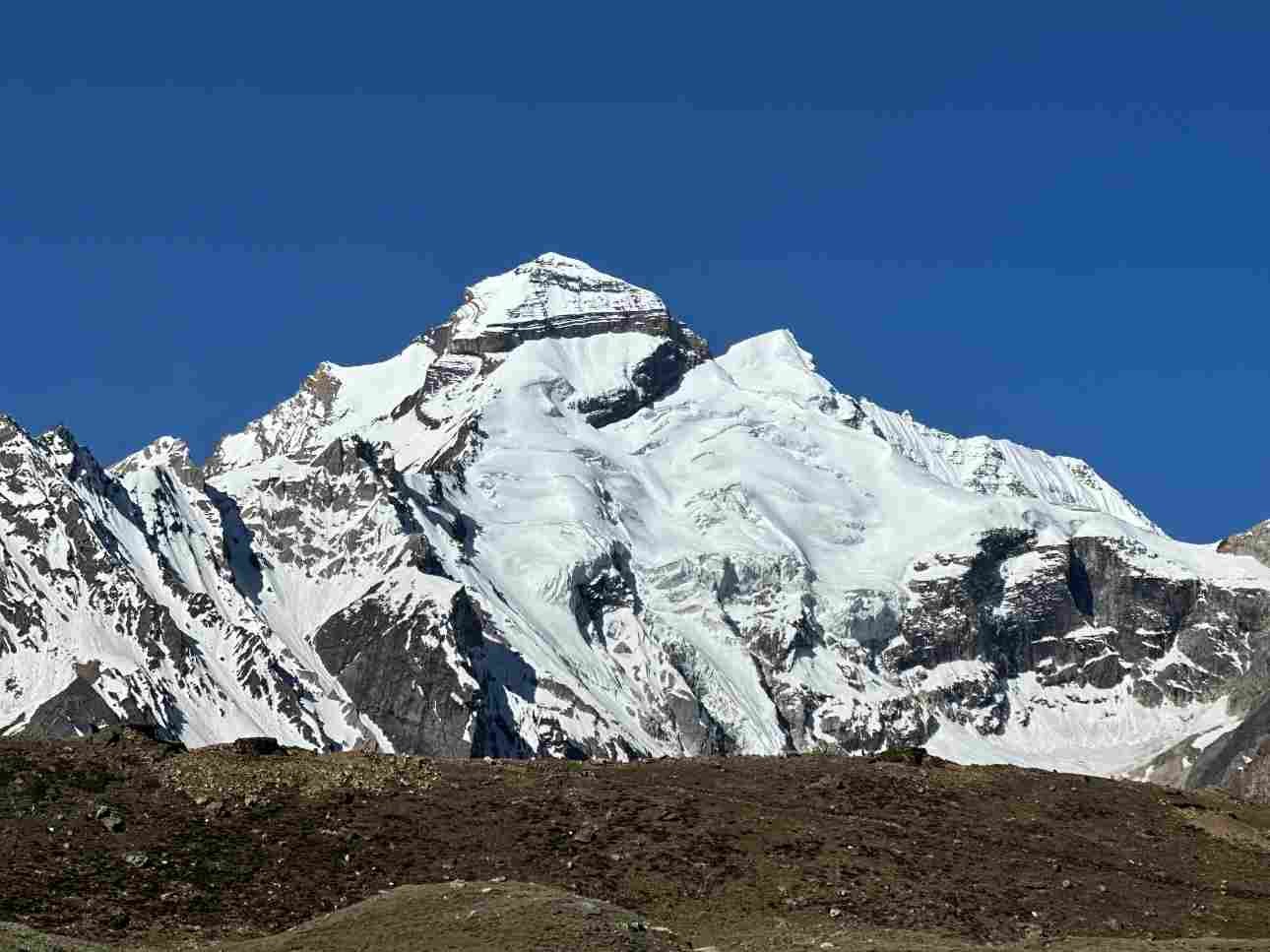
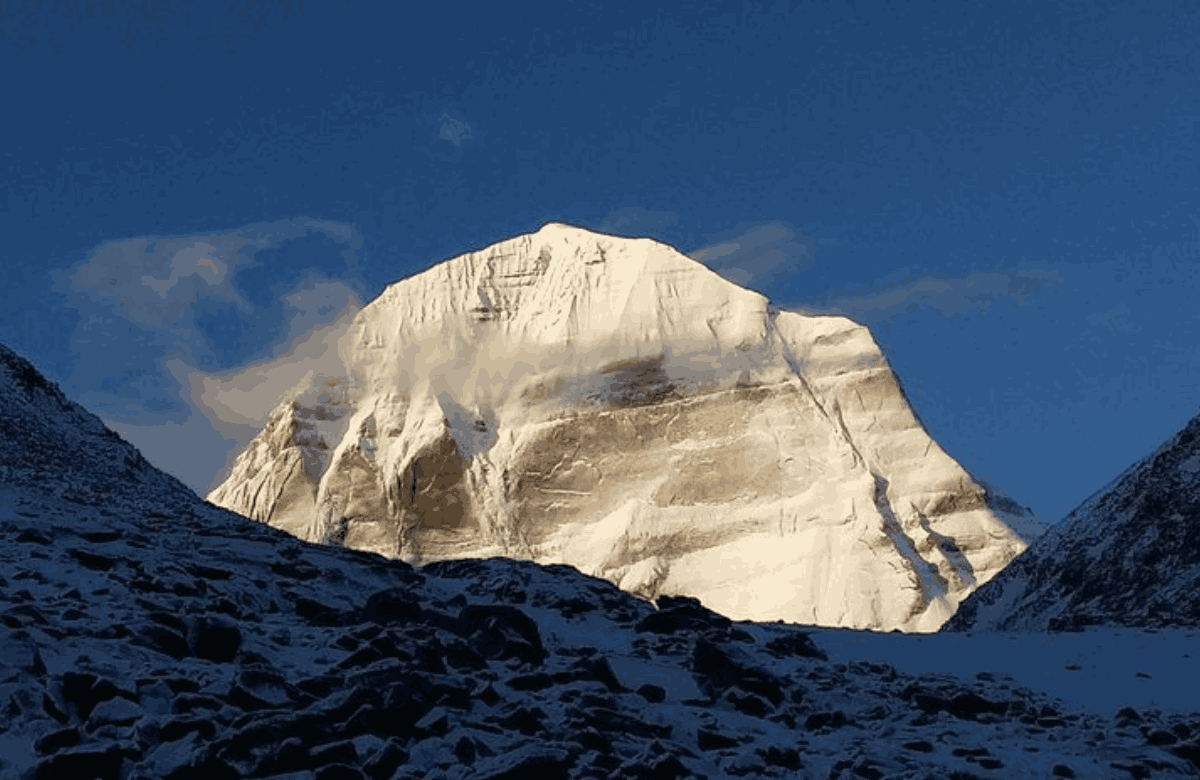
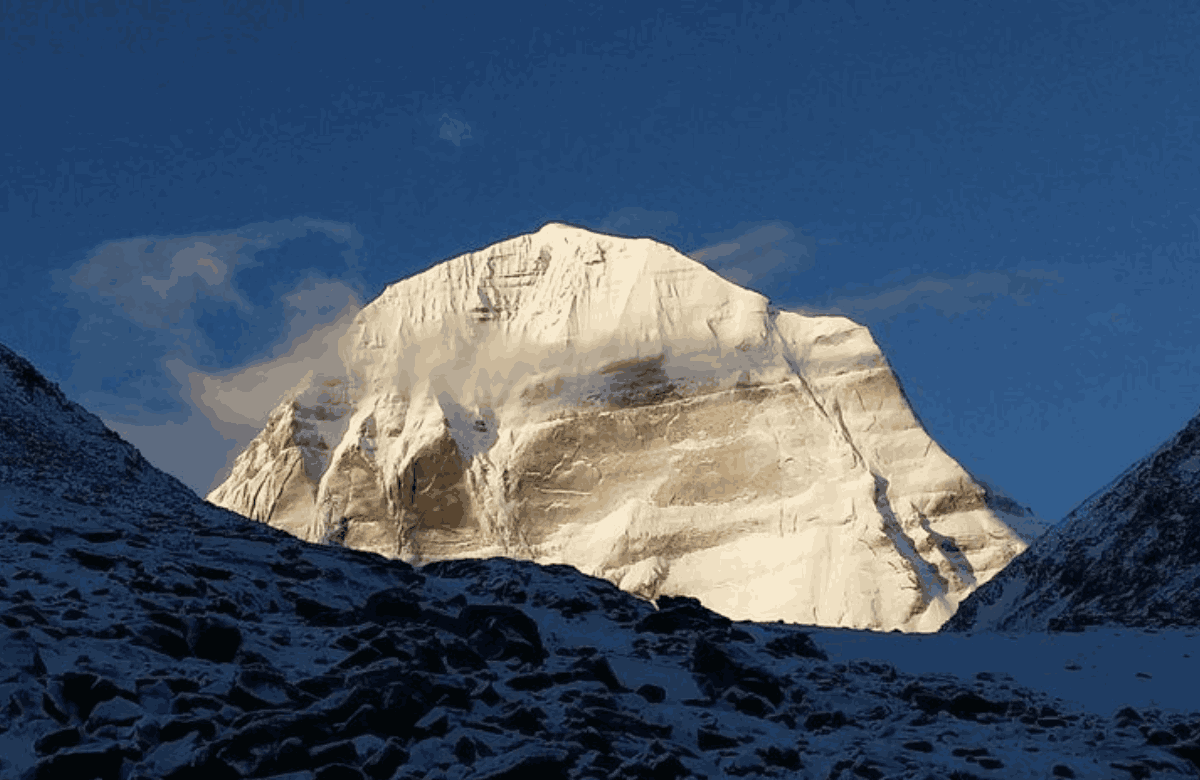
The inner kora begins from the Dira Puk monastery area on the outer Kora route — the camp point at the end of Outer Kora Day 1, on the north face of Mount Kailash. This is already at approximately 4,930 m above sea level. From Dira Puk, the inner kora mount kailash departs from the standard outer circuit path and moves closer to the actual base of the mountain's north face, ascending into the inner valley terrain that most outer Kora pilgrims only view from a distance across the glacier.
Key Sacred Points on the Inner Kora
- Nandi Parvat (Nandi Hill): The formation at the base of Kailash's north face associated with Nandi — Lord Shiva's sacred bull. In Hindu tradition, reaching Nandi Parvat on the inner kora is a profound sacred act, approaching the divine abode of Shiva more closely than the outer Kora allows. This formation is visible from the outer Kora at a distance but approached directly only on the inner circuit.
- Khandro Sangam: The 'confluence of Dakinis' — a sacred meeting point in Tibetan Buddhist tradition where celestial feminine energies converge. Khandro Sangam is located in the inner valley and is considered one of the most spiritually potent spots in the entire Kailash Mansarovar region.
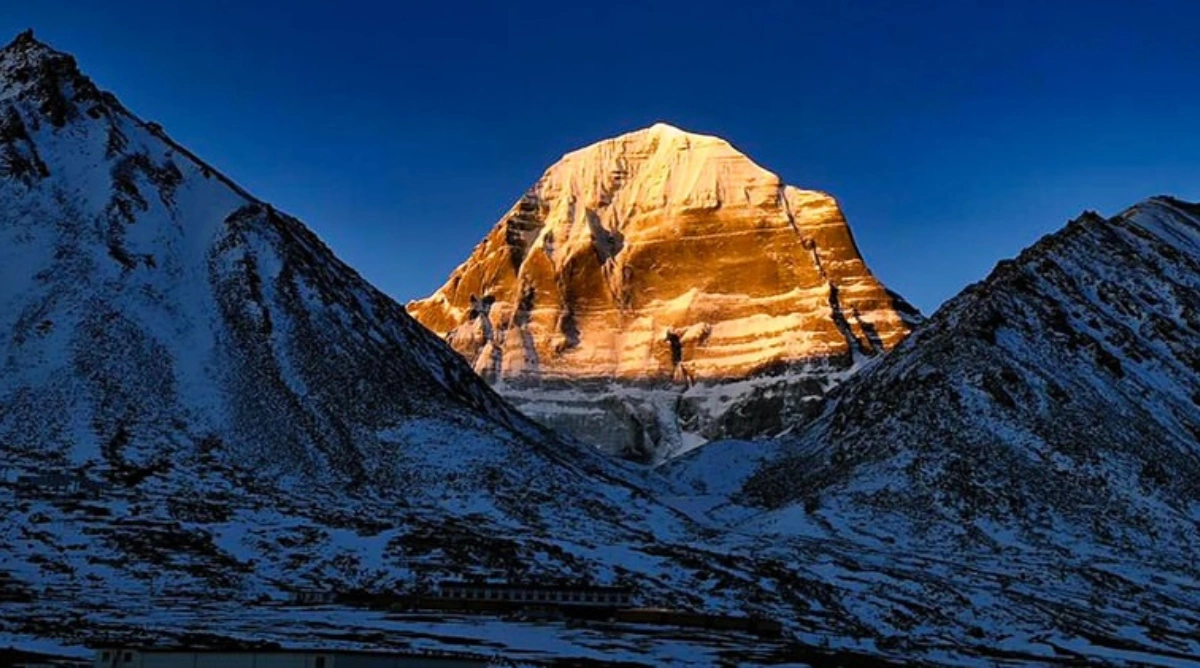
- The inner north face glacier approach: The inner kora moves through terrain that brings pilgrims to the base of the glacier descending from Kailash's north face — the face that most outer Kora pilgrims see from the Dira Puk camp. Being at the base of this glacier is an experience of the mountain's physical presence at a completely different scale from the outer Kora.
- Serdung Chuksum: The 'thirteen golden stupas' — a group of sacred stupa formations that mark an important spiritual boundary on the inner kora route in Tibetan Buddhist geography.
Altitude and Terrain of the Inner Kora
The inner kora mount kailash reaches altitudes comparable to or exceeding the Dolma La pass on the outer kailash kora (5,630 m), with sections approaching 5,800 m in some parts of the circuit depending on the exact path taken. The terrain includes moraines, glacial outwash, and unstable rocky ground that requires more careful footing than the stone-paved sections of the outer mt kailash kora. There are no established camps on the inner kora route and no commercial infrastructure — pilgrims on the inner circuit are genuinely self-sufficient in a way that outer Kora pilgrims, supported by yak trains and established tea points, are not.
Inner Kora vs Outer Kora: Side-by-Side Comparison
Here is a clear comparison of the two Kailash Kora circuits — the standard outer kailash kora that all pilgrims walk, and the advanced inner kora mount kailash.
| Feature | Outer Kailash Kora | Inner Kora |
| Distance | 52 km | 10–12 km |
| Duration | 3 Days | 1 Day |
| Start Point | Darchen (4,575 m) | Dira Puk (4,930 m) |
| Highest Point | Dolma La (5,630 m) | ~5,800 m |
| Direction | Clockwise | Clockwise |
| Access | All Pilgrims | 13+ Outer Koras |
| Permit | Standard Tibet Permit | Special Permission |
| Trail | Maintained | Rugged & Glacier |
| Key Sites | Yam Dwar, Dolma La, Dzutrulpuk | Nandi Parvat, Serdung Chuksum |
| Package | Included | Separate Arrangement |
| Best For | First-time Pilgrims | Experienced Pilgrims |
The Outer Kailash Kora: The Foundation Every Pilgrim Walks First
Before any discussion of the inner kora mount kailash becomes personally relevant, a pilgrim must deeply understand and complete the outer kailash kora — the sacred 52 km circuit that is the foundation of everything associated with this mountain. The outer kora is not a lesser experience that leads to the inner kora. It is a complete, transformative, deeply sacred pilgrimage in its own right.
What the Outer Kailash Kora Covers
The outer kailash kora begins and ends at Darchen village (4,575 m), the base camp settlement on the southern face of the mountain. The 52 km circuit is completed over three days and is walked in a clockwise direction by Hindu and Tibetan Buddhist pilgrims, or counter-clockwise by Bon practitioners. Each direction has its own sacred significance — clockwise aligns with the direction of the sun and is considered the direction of positive spiritual circulation in Hindu and Buddhist traditions.
Day 1 of the Mt Kailash Kora: Darchen to Dira Puk
The first day of the mount kailash kora trek covers approximately 19 to 20 km from Darchen along the western and northern faces of the mountain, arriving at Dira Puk monastery camp (4,930 m). This day offers the first truly close encounter with the mountain — the north face of Kailash, with its sweeping glaciers and near-perfect pyramidal shape, comes into view in the afternoon as you approach Dira Puk. Many pilgrims describe this as the most visually overwhelming moment of their entire yatra. The Yam Dwar (Gate of Death) is an important sacred landmark passed on this first day — a rock formation that is ritually significant in both Hindu and Buddhist traditions as a symbolic crossing from the ordinary world into the sacred territory of the mountain.
Day 2 of the Mt Kailash Kora: Dira Puk to Dolma La to Dzutrulpuk
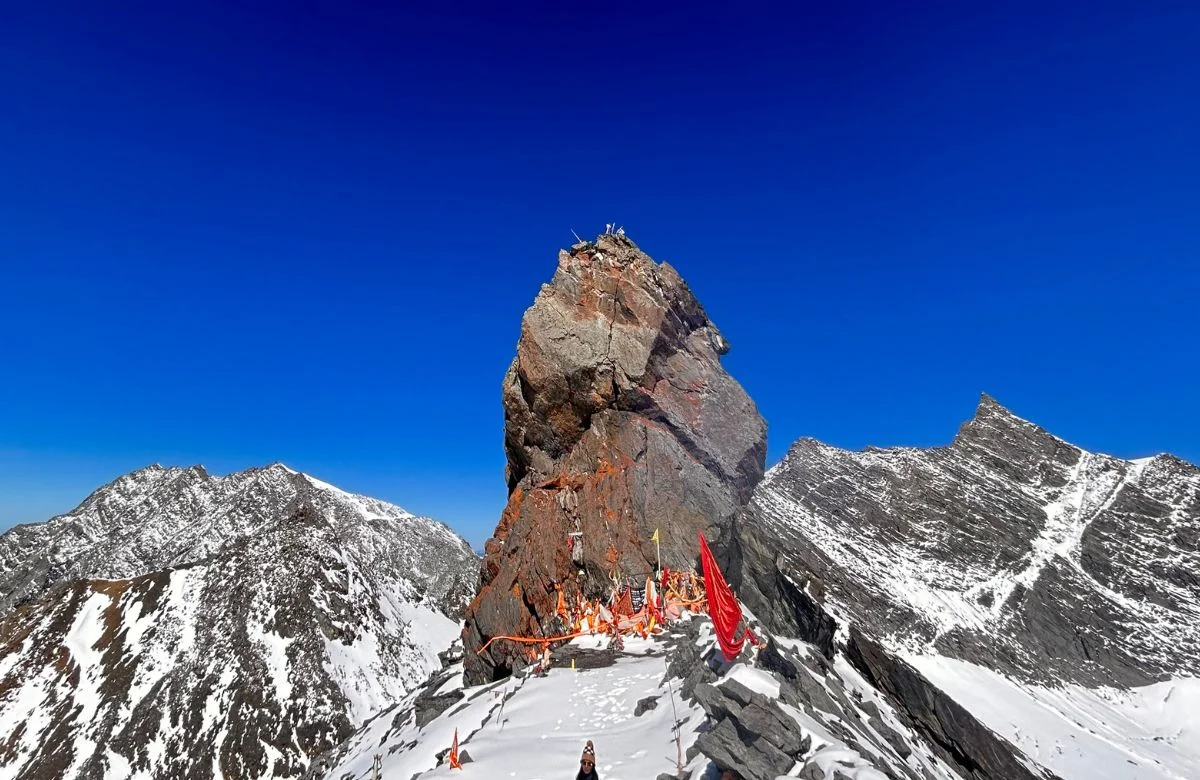
Day 2 is the spiritual and physical climax of the outer kailash kora. The trail climbs from Dira Puk (4,930 m) to the Dolma La pass at 5,630 m — the highest point of the mt kailash kora — before descending to Dzutrulpuk camp (4,820 m). The ascent to Dolma La is the steepest and most altitude-demanding section of the outer Kora. At 5,630 m, the air holds approximately 52% of sea-level oxygen. The pass is marked by a massive boulder covered in thousands of prayer flags left by pilgrims across generations. At the Dolma La, pilgrims leave behind old clothing, hair, personal objects — a symbolic act of releasing old karma. The Gauri Kund lake, just below the pass, is where pilgrims traditionally bathe in near-freezing water as an act of purification. The descent from Dolma La into the Lham Chu valley on the far side is a sustained, peaceful walk — many pilgrims describe it as the most serene walking of their lives.
Day 3 of the Mt Kailash Kora: Dzutrulpuk to Darchen
The final day covers approximately 10 to 11 km and involves a gradual descent back to Darchen, closing the circle of the outer kailash kora. The Dzutrulpuk cave — believed to be where the great Tibetan Buddhist saint Milarepa meditated in competition with the Bon master Naro Bonchung — is a significant sacred site visited on this final morning before the return to Darchen. Completing the outer Kora on Day 3 carries a profound sense of arrival — of something ancient and significant having been accomplished.
Mount Kailash Kora Trek: Outer Kora Day-by-Day Reference
For pilgrims planning the outer mount kailash kora trek — the essential foundation before any consideration of the inner kora — here is the complete day-by-day reference.
| Day | Route | Distance | Altitude |
| 1 | Darchen → Dira Puk | 19–20 km | 4,575 → 4,930 m |
| 2 | Dira Puk → Dolma La → Dzutrulpuk | 22 km | 4,930 → 5,630 → 4,820 m |
| 3 | Dzutrulpuk → Darchen | 10–11 km | 4,820 → 4,575 m |
| Total | Outer Kailash Kora | 52 km | Max: 5,630 m |
The Spiritual Significance of the Inner Kora Mount Kailash
The inner kora mount kailash carries a specific and profound spiritual significance in both Hindu and Tibetan Buddhist traditions — distinct from, and understood as the culmination of, the outer kailash kora.
In Tibetan Buddhist Tradition
Tibetan Buddhist texts describe the inner kora as the realm of the dakinis — the celestial feminine energies associated with enlightenment. The terrain of the inner kora is understood as a mandala — a sacred geometric map of enlightened mind expressed in landscape. The Khandro Sangam (confluence of dakinis) is the central sacred point of this mandala, and walking the inner circuit is understood as moving through the body of the teachings in a physical form. The 13 outer Kora prerequisite is not just a number but a statement of readiness — that the pilgrim has demonstrated sufficient dedication, accumulated sufficient merit, and cultivated sufficient awareness through repeated engagement with the mountain to approach this inner dimension appropriately. Tibetan Buddhist teachers often say that a pilgrim who attempts the inner kora before completing 13 outer Koras is not spiritually ready to receive what the inner circuit offers — not because the terrain is necessarily inaccessible, but because the inner dimension requires a prepared consciousness to be meaningful.
In Hindu Tradition
Hindu tradition associates the inner kora with the approach to Shiva's inner sanctum — the realm directly adjacent to where the supreme deity sits in eternal meditation. The outer kailash kora is described as approaching the court of the divine; the inner kora is described as entering the inner chamber. The Nandi Parvat — the formation associated with Nandi, Shiva's sacred bull who guards the threshold of his abode — marks this boundary, and approaching it on the inner circuit is understood as an act of extraordinary devotion and grace. In Shaivite theology, the inner kora mount kailash is associated with the attainment of Shiva's direct grace — mukti (liberation) granted through the act of circumambulating the innermost precinct of his earthly abode. This is why it is not available to all, and why those who undertake it typically do so with a level of spiritual preparation that goes beyond physical pilgrimage into deep inner work.
Physical Preparation for the Inner Kora Mount Kailash
The physical demands of the inner kora mount kailash exceed those of the outer kailash kora in several important ways. Understanding these demands is essential for anyone who has completed their 13 outer Koras and is genuinely considering the inner circuit.
Higher Altitude with Less Infrastructure
Where the outer kailash kora has established tea points, porter and yak services, basic food stalls, and regular camps with some shelter, the inner kora has none of these. Every person on the inner kora is fully self-sufficient for the duration of the circuit. This means carrying all water, food, emergency equipment, and shelter for a full day at altitudes between 4,930 m and approximately 5,800 m. The weight of that pack at those altitudes is a meaningful physical challenge in itself.
Technical Terrain
The inner kora moves through glacial moraine — loose, irregular rock deposited by glacial movement — and approaches sections of glacial terrain that require careful footing and some basic mountain awareness. While not a technical climb requiring ropes or crampons under normal summer conditions, the inner kora is significantly more demanding than the paved path of the outer mt kailash kora and requires genuine mountain experience beyond simple trekking fitness.
Preparation Requirements
- Multiple completed outer Koras to understand the terrain, altitude dynamics, and specific physical demands of the Kailash environment
- Strong cardiovascular fitness for sustained effort at 4,900 to 5,800 m — significantly higher base fitness than the outer Kora demands
- Experience with unmarked high-altitude terrain, glacier moraine, and self-sufficient mountain travel
- Comprehensive altitude medication — Diamox, Dexamethasone, and personal emergency supplies — in quantities appropriate for extended self-sufficiency
- Specialist guidance — an experienced Tibetan guide who has walked the inner kora themselves is non-negotiable
- Full emergency communication equipment — satellite communicator (Garmin inReach or equivalent) since mobile network does not exist in this terrain
- A current and comprehensive high-altitude medical evacuation insurance policy
The Kailash Kora for First-Time Pilgrims: Starting Where Every Journey Begins
If you are reading about the inner kora mount kailash and have never walked the outer kailash kora, the most important thing this guide can tell you is this: the outer Kora is the beginning of everything, not a stepping stone to something better. Every saint, lama, yogi, and devoted pilgrim who has ever walked the inner circuit started exactly where you are — with the outer kailash kora, in awe and wonder, asking if this mountain is real. The 52 km outer mt kailash kora, crossing the Dolma La at 5,630 m, spending three days in the presence of the world's most sacred mountain — this is one of the most profound experiences available to any human being. It is complete. It is enough. It is, for most people's entire lifetime of spiritual seeking, more than they ever expected to find. Walk the outer kailash kora first. Walk it again. Walk it thirteen times over the years if that is what your life and devotion bring you. And if, one day, the inner kora mount kailash becomes your path — you will know, because the mountain will have prepared you for it across all those outer circuits in ways that cannot be rushed or bypassed.
Conclusion
The inner kora mount kailash is one of the most sacred and least-known advanced pilgrimage routes in the world. It sits at the far end of a long spiritual journey that begins with a single outer kailash kora — one circumambulation of the world's most sacred mountain, crossing the Dolma La at 5,630 m, spending three days in the presence of the divine. The inner kora is not a shortcut to that divine presence. It is the destination that years of outer Koras slowly reveal. For most pilgrims reading this — whether you are planning your first or your fifth outer kailash kora — the outer mt kailash kora is where your attention belongs. Walk it completely. Walk it reverently. Walk it with everything you have. And if the mountain calls you back thirteen times, you will find yourself standing at Dira Puk one day, looking inward toward the north face glacier, and understanding at last what all those outer circuits were preparing you for.