

- India Travelogue
- @Nagarjuna_Travels
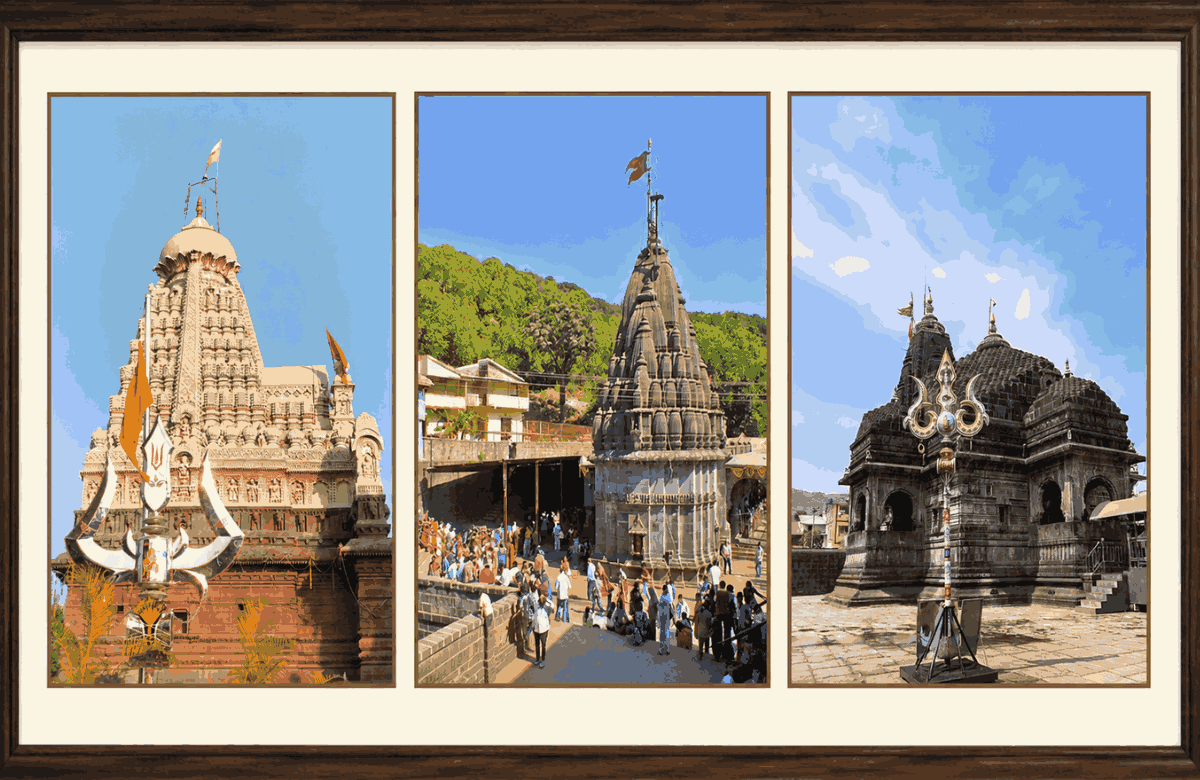
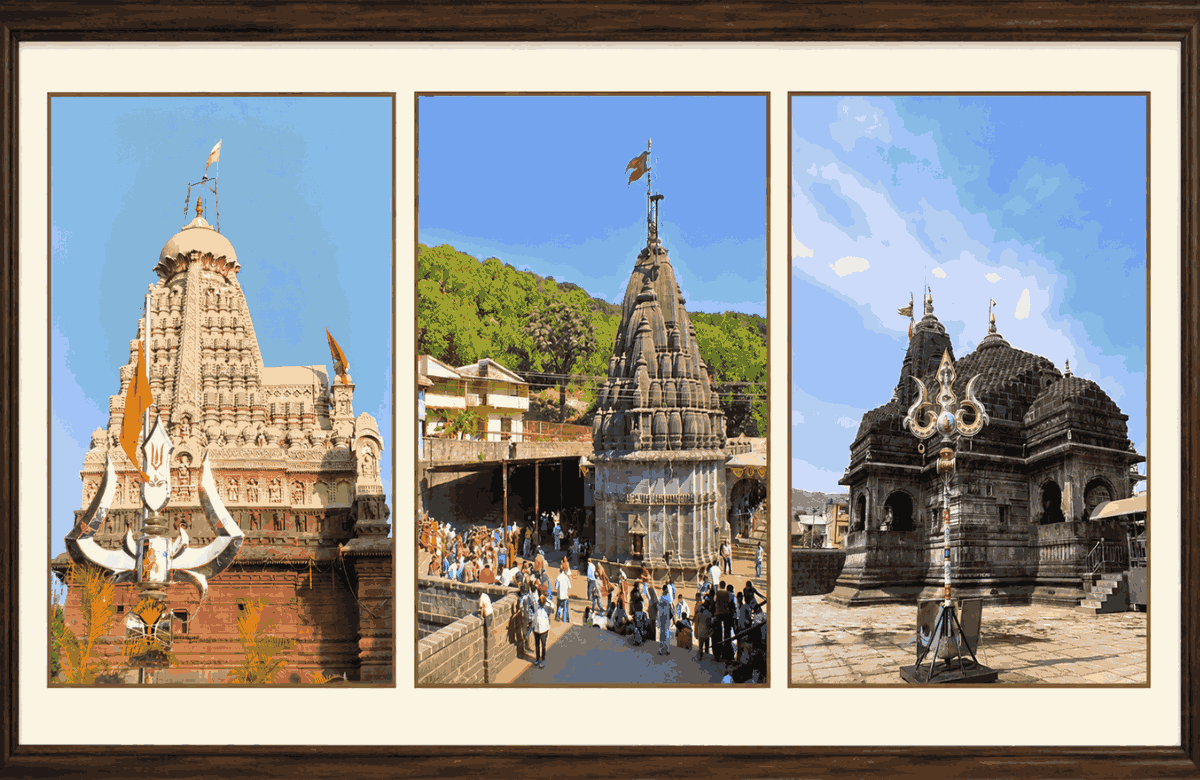
if you search for 'jyotirlinga in Maharashtra' — one of the most searched spiritual travel queries in India with over 90,000 monthly searches — you probably already know that Maharashtra is special. But do you know exactly how many Jyotirlingas Maharashtra has? Where they are located? What makes each one unique? And how to plan a single circuit that covers all three in one seamless pilgrimage? Most people are surprised to learn that Maharashtra — not Uttarakhand, not Gujarat, not any other state — holds the highest concentration of Jyotirlingas in India. Three of the twelve most sacred Shiva temples on earth are located within this single state. And all three are within a 450 km radius of Mumbai — meaning every Mumbaikar and Maharashtra resident has three Jyotirlingas practically in their backyard. This guide is the most complete resource on Maharashtra Jyotirlinga temples available. You will find the names and exact locations of all 3 Maharashtra Jyotirlingas, their historical and mythological significance, what makes each unique, how to reach them, the best time to visit, distances from Mumbai and Pune, and a complete 3-day circuit itinerary. Whether you are a first-time pilgrim or a seasoned Shiva devotee — this is your definitive guide.
How Many Jyotirlingas Are in Maharashtra Out of 12?
There are exactly 3 Jyotirlingas in Maharashtra out of the 12 sacred Jyotirlingas of Lord Shiva that are spread across India. Maharashtra is the only Indian state with 3 Jyotirlingas — no other state has more than 2. Gujarat and Madhya Pradesh each have 2, while Andhra Pradesh, Tamil Nadu, Uttar Pradesh, Uttarakhand, and Jharkhand each have 1.
| State | Number of Jyotirlingas | Temple Names |
| Maharashtra | 3 | Trimbakeshwar, Bhimashankar, Grishneshwar |
| Gujarat | 1 | Somnath, Nageshwar |
| Madhya Pradesh | 1 | Mahakaleshwar, Omkareshwar |
| Andhra Pradesh | 1 | Mallikarjuna (Srisailam) |
| Tamil Nadu | 1 | Rameshwaram |
| Uttar Pradesh | 1 | Kashi Vishwanath (Varanasi) |
| Uttarakhand | 1 | Kedarnath |
| Jharkhand | 1 | Vaidyanath (Deoghar) |
Why Does Maharashtra Have the Most Jyotirlingas? Maharashtra sits at the geographic heart of peninsular India, spanning both the Western Ghats (Sahyadri range) and the Deccan plateau — two of India's most ancient and sacred landscapes. The Narmada, Godavari, Krishna, and Bhima rivers all have their origins or significant passages through Maharashtra, making it a land of extraordinary sacred geography. Ancient Hindu sages identified this land as a region of exceptional spiritual energy — a claim supported by the three Jyotirlinga manifestations here.
Maharashtra Jyotirlinga Name and Place: Complete Reference Table
Here is the definitive Maharashtra Jyotirlinga name and place table — the single most useful reference for planning your pilgrimage. All three names, locations, Jyotirlinga numbers, and key facts are captured below.
| Maharashtra Jyotirlinga Name | Location | District | Nearest City | Altitude | Jyotirlinga No. |
| Trimbakeshwar Jyotirlinga | Trimbak town, Nasik district | Nashik | Nashik (28 km) | 950 m | 6th of 12 |
| Bhimashankar Jyotirlinga | Sahyadri Hills, Pune district | Pune | Pune (110 km) | 1,050 m | 8th of 12 |
| Grishneshwar Jyotirlinga | Verul (Ellora), Aurangabad | Chhatrapati Sambhajinagar (Aurangabad) | Aurangabad (29 km) | 626 m | 12th of 12 |
Trimbakeshwar Jyotirlinga: The Three-Faced Shiva
Trimbakeshwar Jyotirlinga is the 6th among the 12 Jyotirlingas and is located in the ancient town of Trimbak, 28 km from Nashik in Maharashtra. It sits at the foot of the Brahmagiri mountain at an altitude of 950 m — one of the highest Jyotirlingas accessible by road.
What Makes Trimbakeshwar Unique
- Three-Faced Linga (Trimurti): Trimbakeshwar is the ONLY Jyotirlinga in India where the sacred linga has three faces — representing Lord Brahma (the Creator), Lord Vishnu (the Preserver), and Lord Shiva (the Destroyer). This triple manifestation — the Trimurti — makes Trimbakeshwar theologically unique among all 12 Jyotirlingas. The three-faced linga is kept inside a golden crown called a mukhalinga and is only visible to devotees at certain specific times of the year.
- Source of the Sacred Godavari River: Trimbakeshwar is located at the origin point of the Godavari River — India's second-longest river and one of the seven most sacred rivers of Hinduism. The Kushavarta Kund (sacred tank) at the temple complex is considered the true source of the Godavari. Taking a ritual bath here is considered equivalent to bathing at all sacred rivers combined.
- Kumbh Mela Nashik: Every 12 years, Nashik hosts one of the four Kumbh Mela gatherings — the largest religious gathering on earth. The bathing ghat at Trimbakeshwar and the Ram Kund in Nashik city are the primary pilgrimage points during this event. Millions of pilgrims attend, making Nashik's Kumbh Mela one of the most spiritually charged events in Indian religious life.
- Brahmagiri Hill Trek: The Brahmagiri mountain above Trimbakeshwar offers a 3-hour return trek to the original source of the Godavari at its summit. The trek passes through the Anjaneri Hills — believed to be the birthplace of Lord Hanuman — and offers stunning views of the Nashik valley and the Sahyadri range.
Trimbakeshwar Temple: Historical Background
The existing Trimbakeshwar Temple was built in the 18th century CE under the patronage of Peshwa Nana Saheb Peshwa (Balaji Baji Rao) between 1755 and 1786. The original ancient temple at this site was said to have been damaged during the Mughal era. The current structure is built in the Hemadpanthi style of Maharashtra temple architecture — using black stone (basalt) without the use of lime or mortar. The nagara-style shikhara and the intricately carved exterior walls make it one of the finest examples of Maratha-era temple architecture.
Trimbakeshwar Temple: Darshan & Practical Info
| Detail | Information |
| Temple Location | Trimbak town, Nashik district, Maharashtra |
| Nearest City | Nashik (28 km / 40 mins by road) |
| Distance from Mumbai | ~170 km (3 hours by road via NH 160) |
| Distance from Pune | ~155 km (3 hours via Mumbai-Pune Expressway) |
| Temple Open Hours | 5:30 AM to 9:00 PM daily |
| Key Aartis | Kakad Aarti 5:30 AM | Mahapooja 12:00 PM | Shej Aarti 9:00 PM |
| Entry Fee | Free (special darshan: nominal fee) |
| Dress Code | Traditional attire mandatory — dhoti for men inside sanctum |
| Architecture Style | Hemadpanthi / Nagara (black basalt stone, Peshwa era) |
| Sacred Feature | Three-faced linga (Trimurti) — Brahma, Vishnu, Shiva faces |
| River Origin | Source of the Godavari River (Kushavarta Kund) |
| Best Season | October to March (Nashik Kumbh: every 12 years) |
Bhimashankar Jyotirlinga: The Shiva of the Sahyadri Forest
Bhimashankar Jyotirlinga is the 8th among the 12 Jyotirlingas. It is located deep within the Bhimashankar Wildlife Sanctuary in the Sahyadri (Western Ghats) mountain range, in the Pune district of Maharashtra. At an altitude of 1,050 m, Bhimashankar is the highest of the three Maharashtra Jyotirlingas and sits within one of the richest biodiversity hotspots in peninsular India.
What Makes Bhimashankar Unique
- Wildlife Sanctuary Setting: Bhimashankar is the only Jyotirlinga in India located inside a designated wildlife sanctuary. The Bhimashankar Wildlife Sanctuary (120 sq km) is a protected forest that forms part of the Western Ghats biodiversity hotspot — a UNESCO World Heritage Natural Site. The dense forest surrounding the temple creates an atmosphere of profound natural sanctity.
- Home of the Giant Indian Squirrel: Bhimashankar Wildlife Sanctuary is the primary habitat of the Giant Indian Squirrel (Ratufa indica) — locally called Shekaru — which is the State Animal of Maharashtra. These large, colourful squirrels can frequently be spotted in the treetops around the temple complex, especially in the early morning hours.
- Source of the Bhima River: The Bhima River — a major tributary of the Krishna River — originates at Bhimashankar. The river flows through Pune district before eventually merging with the Krishna River. The water that begins its journey at this sacred mountain flows through some of Maharashtra's most agriculturally vital regions.
- Ancient Hemadpanthi Architecture: The main Bhimashankar temple structure is built in the Hemadpanthi style — similar to Trimbakeshwar — using locally quarried stone without the use of lime mortar. The temple features a single tall shikhara tower with intricate carvings. The Shiva Sabha Mandapa (adjacent hall) was added in the 18th century.
- Monsoon Spectacle: Bhimashankar is uniquely beautiful during the monsoon season (July–September) when the Sahyadri Ghats are cloaked in lush green forest and the waterfalls around the sanctuary roar to life. While access can be challenging in peak monsoon, the spiritual and natural experience is extraordinary for those who manage the road.
Bhimashankar Temple: Darshan & Practical Info
| Detail | Information |
| Temple Location | Bhimashankar Wildlife Sanctuary, Pune district, Maharashtra |
| Nearest City | Pune (110 km / 2.5–3 hours by road) |
| Distance from Mumbai | ~200 km (4 hours via NH 48 + Ghat road) |
| Distance from Nashik | ~185 km (3.5–4 hours via Nashik–Pune highway) |
| Temple Open Hours | 4:30 AM to 9:30 PM daily |
| Key Aartis | Kakad Aarti 4:30 AM | Madhyan Pooja 12:00 PM | Shej Aarti 9:00 PM |
| Entry Fee | Free (Forest Sanctuary entry: nominal fee per vehicle) |
| Dress Code | Modest dress required — traditional attire preferred |
| Architecture Style | Hemadpanthi (Nagara style, black basalt stone) |
| Sacred Feature | Source of the Bhima River; forest setting unique among Jyotirlingas |
| Wildlife | Giant Indian Squirrel, leopard, barking deer, Indian giant squirrel |
| Best Season | October to June (road access; monsoon — verify road conditions) |
Grishneshwar Jyotirlinga: The Last of the Twelve Sacred Shiva Shrines
Shrines Grishneshwar Jyotirlinga is the 12th and final among the 12 sacred Jyotirlingas of Lord Shiva. It is located in the village of Verul (also called Ellora), approximately 29 km from Aurangabad city in the Chhatrapati Sambhajinagar district of Maharashtra. Its proximity to the UNESCO World Heritage Ellora Caves makes it one of the most culturally layered pilgrimage destinations in India.
What Makes Bhimashankar Unique
- Wildlife Sanctuary Setting: Bhimashankar is the only Jyotirlinga in India located inside a designated wildlife sanctuary. The Bhimashankar Wildlife Sanctuary (120 sq km) is a protected forest that forms part of the Western Ghats biodiversity hotspot — a UNESCO World Heritage Natural Site. The dense forest surrounding the temple creates an atmosphere of profound natural sanctity.
- Home of the Giant Indian Squirrel: Bhimashankar Wildlife Sanctuary is the primary habitat of the Giant Indian Squirrel (Ratufa indica) — locally called Shekaru — which is the State Animal of Maharashtra. These large, colourful squirrels can frequently be spotted in the treetops around the temple complex, especially in the early morning hours.
- Source of the Bhima River: The Bhima River — a major tributary of the Krishna River — originates at Bhimashankar. The river flows through Pune district before eventually merging with the Krishna River. The water that begins its journey at this sacred mountain flows through some of Maharashtra's most agriculturally vital regions.
- Ancient Hemadpanthi Architecture: The main Bhimashankar temple structure is built in the Hemadpanthi style — similar to Trimbakeshwar — using locally quarried stone without the use of lime mortar. The temple features a single tall shikhara tower with intricate carvings. The Shiva Sabha Mandapa (adjacent hall) was added in the 18th century.
- Monsoon Spectacle: Bhimashankar is uniquely beautiful during the monsoon season (July–September) when the Sahyadri Ghats are cloaked in lush green forest and the waterfalls around the sanctuary roar to life. While access can be challenging in peak monsoon, the spiritual and natural experience is extraordinary for those who manage the road.
Grishneshwar Temple: Darshan & Practical Info
| Detail | Information |
| Temple Location | Verul village (Ellora), Aurangabad district, Maharashtra |
| Nearest City | Aurangabad (29 km / 45 mins by road) |
| Distance from Mumbai | ~335 km (5.5 hours via NH 160 or Pune-Aurangabad highway) |
| Distance from Pune | ~240 km (4–4.5 hours via NH 552) |
| Distance from Nashik | ~165 km (2.5–3 hours via NH 160) |
| Temple Open Hours | 5:00 AM to 9:30 PM daily |
| Key Aartis | Kakad Aarti 5:00 AM | Madhyan Aarti 12:00 PM | Shej Aarti 9:30 PM |
| Entry Fee | Free (VIP darshan: nominal fee) |
| Dress Code | Traditional attire required; men must enter sanctum in dhoti |
| Architecture Style | Hemadpanthi / Nagara, red Deccan stone; Maratha renovation (18th c) |
| Sacred Feature | 12th and last Jyotirlinga; 1 km from Ellora Caves (UNESCO) |
| Nearby Attraction | Ellora Caves (1 km), Ajanta Caves (100 km), Aurangabad Fort |
| Best Season | October to March (combine with Ellora Caves visit) |
Nearest Jyotirlinga to Mumbai: Which One Should You Visit First?
Mumbai is the most populous city in Maharashtra and the starting point for millions of pilgrims planning the Maharashtra Jyotirlinga circuit. Here are the distances from Mumbai to all three Maharashtra Jyotirlingas:
| Jyotirlinga | Distance from Mumbai | Travel Time | Best Route | Recommended For |
| Trimbakeshwar (Nashik) | ~170 km | 3 hours (via NH 160) | Mumbai–Nashik Expressway (NH 160) | First-time visitors; weekend pilgrimage from Mumbai |
| Bhimashankar (Pune district) | ~200 km | 4 hours (via NH 48 + Ghats) | Mumbai–Pune Expressway + Ghat road via Khed | Nature lovers; Sahyadri trek enthusiasts |
| Grishneshwar (Aurangabad) | ~335 km | 5.5 hours (via Nashik / Pune) | NH 160 via Nashik or NH 48 + NH 552 via Pune | Combined Ellora Caves pilgrimage + heritage visit |
Nearest Jyotirlinga to Mumbai: The nearest Jyotirlinga to Mumbai is Trimbakeshwar (170 km, 3 hours via NH 160 — Mumbai–Nashik Expressway). It is the most popular weekend pilgrimage destination from Mumbai. Bhimashankar at ~200 km (4 hours) is a close second, offering the added appeal of the Sahyadri forest and wildlife sanctuary.
Essential Travel Tips for the Maharashtra Jyotirlinga Pilgrimage
- Pre-book your cab for the full circuit: A multi-day outstation cab covering all 3 Maharashtra Jyotirlingas from a single pickup point (Mumbai or Pune) is cheaper and more convenient than booking individual legs separately. Reputed operators include Savaari, IndiaCabs, and local Nashik/Pune temple tour operators. Confirm that the cab driver is experienced with Ghat roads — essential for the Bhimashankar leg.
- Arrive at each temple before 10:00 AM: All three temples have significant crowd build-up from mid-morning onward. Arriving before 10:00 AM gives you shorter queue times, cooler temperatures, and the spiritual stillness of early morning darshan. The Kakad (dawn) Aarti at each temple is the most auspicious daily ritual.
- Dress code is strictly enforced at all three temples: Men entering the main sanctum at Trimbakeshwar and Grishneshwar are required to wear a dhoti (traditional lower garment). Shirts may need to be removed inside the sanctum at some temples. Women should wear saree or salwar-kameez. Shorts and sleeveless attire are not permitted at any of the three Maharashtra Jyotirlinga temples.
- Add Ellora Caves to your Grishneshwar visit: Grishneshwar and Ellora Caves are 1 km apart. Combining both in a single day is one of the most enriching cultural-spiritual experiences available anywhere in India. The Kailasa Temple (Cave 16) at Ellora is a rock-cut Shiva temple carved from a single mountain — plan at least 2–3 hours for Ellora after the Grishneshwar darshan.
- Carry cash for the entire circuit: ATMs are reliable in Nashik and Aurangabad city but become scarce at Trimbak town, the Bhimashankar sanctuary area, and Verul village. Withdraw sufficient cash in the nearest city before proceeding to each temple. Carry separate amounts for prasad, sanctuary entry fees, parking, and boat rides (if applicable).
- Best months for the complete circuit: October to February is the ideal window for all three temples. Nashik's weather is pleasant, Bhimashankar's Ghat road is clear and safe, and Aurangabad's dry heat is manageable. Mahashivratri (February or March) sees massive crowds at all three temples simultaneously — book accommodation months in advance if planning a Mahashivratri circuit.
Final Thoughts: Maharashtra — The Land of Three Jyotirlingas
No other state in India offers what Maharashtra offers to a Shiva devotee: three Jyotirlingas within a single state, each radically different in its landscape, architecture, mythology, and spiritual character. Trimbakeshwar at the source of the Godavari. Bhimashankar in the heart of the Sahyadri forest. Grishneshwar beside the greatest rock-cut temples on earth. Three temples. Three distinct encounters with Lord Shiva. Three chapters of a pilgrimage that builds toward something greater than the sum of its parts. Whether you visit them one at a time over years or in a single three-day circuit — each darshan is complete, each experience is transformative. Maharashtra's Jyotirlinga circuit is one of the most accessible and spiritually rewarding pilgrimages available to anyone living in or travelling to western India. Start planning. Pick your nearest temple. And let the three sacred presences of Lord Shiva in Maharashtra guide your journey.