

- India Travelogue
- @Nagarjuna_Travels
You have heard the name Omkareshwar. You know it is one of the 12 sacred Jyotirlingas of Lord Shiva. But when you actually try to plan a visit — where exactly is it, how do you get there, what are the darshan timings, and is it worth a separate trip or can it be combined with Ujjain — the answers are scattered across a dozen incomplete travel blogs. That frustration ends here. Omkareshwar Temple Jyotirlinga is one of the most sacred and visually stunning pilgrimage sites in India. It sits on a river island in Madhya Pradesh, surrounded on all sides by the holy Narmada River, and its very shape from above forms the sacred Sanskrit symbol 'Om.' This is not just a temple — it is a living island of faith that has drawn saints, scholars, and seekers for over two thousand years. This guide gives you everything in one place: the exact location, how to reach Omkareshwar by train, road, and air, darshan timings, best time to visit, what to see on the island, nearby attractions, and practical travel tips for a smooth and spiritually fulfilling visit.
Where Is Omkareshwar Temple Jyotirlinga?
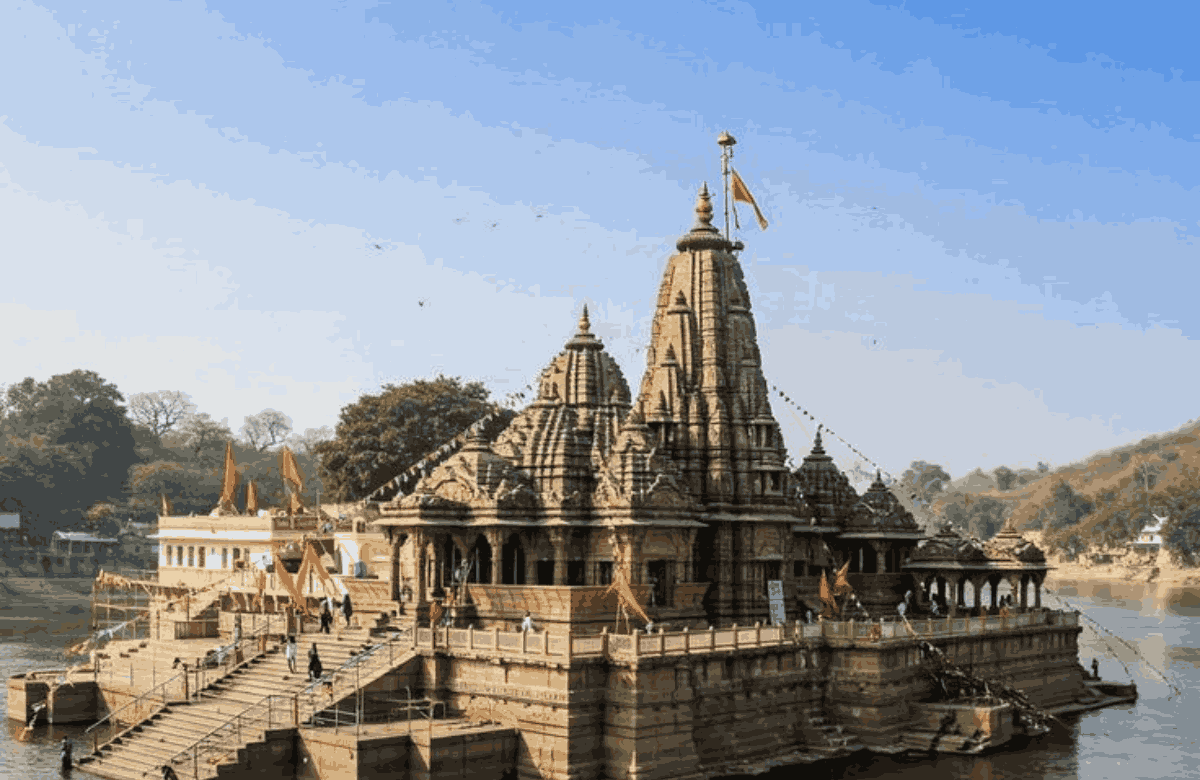
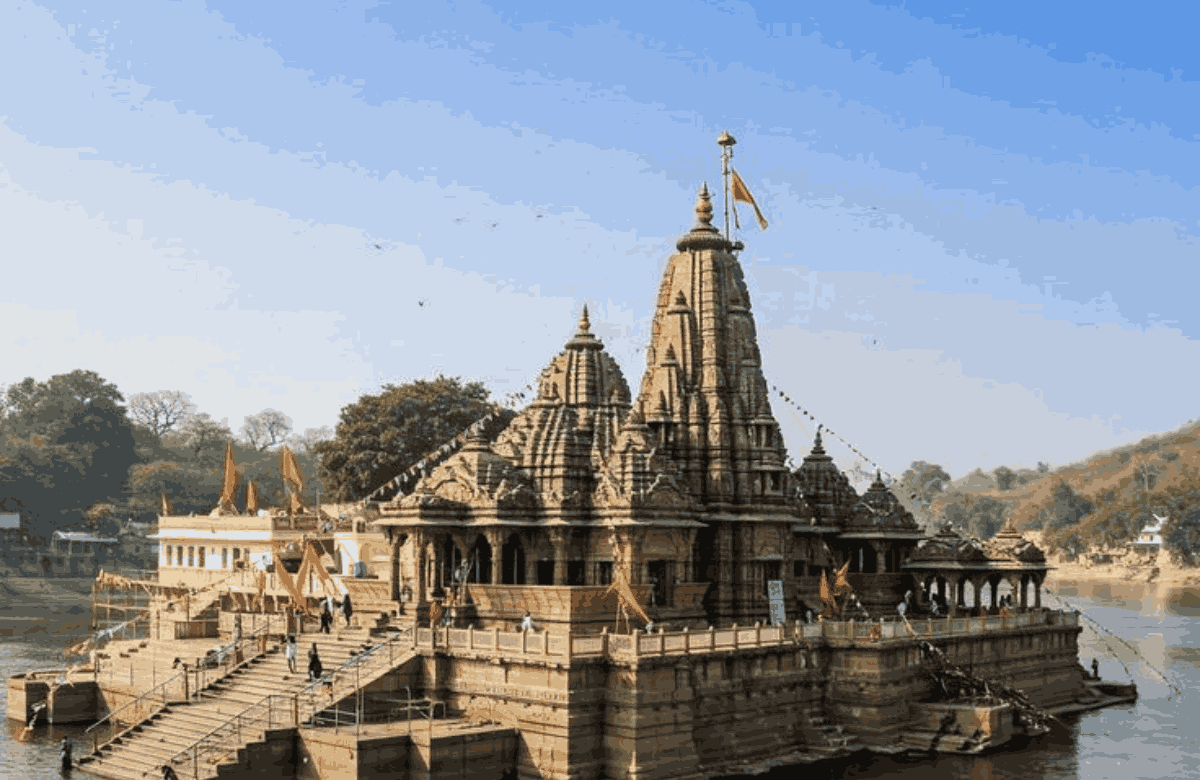
Omkareshwar Temple Jyotirlinga is located in the town of Omkareshwar, in the Khandwa district of Madhya Pradesh, central India. The temple does not sit on the mainland — it occupies Mandhata Island, a naturally formed river island in the sacred Narmada River. The island is connected to the mainland by a suspension footbridge and a boat service. What makes this location extraordinary is its geography. When viewed from above, Mandhata Island is shaped exactly like the Sanskrit symbol 'Om' — a fact that ancient sages described in the Skanda Purana and that modern satellite imagery has confirmed. The confluence of the Narmada and Kaveri rivers at the island's eastern tip — called the Sangam — adds further sanctity to the site.
Exact Location Details
| Detail | Information |
| Temple Name | Shri Omkareshwar Jyotirlinga Temple |
| Also Known As | Omkareshwar, Mandhata, Shivapuri |
| Island Name | Mandhata Island (Shivapuri) |
| River | Narmada River (with Kaveri tributary) |
| District | Khandwa, Madhya Pradesh |
| State | Madhya Pradesh, India |
| Nearest City | Indore (~77 km) |
| Nearest Town | Mortakka (~12 km) |
| Coordinates | 22.2439 N, 76.1503 E |
| Elevation Approx. | 190 m (623 ft) above sea level |
| Jyotirlinga Number | 4th among the 12 Jyotirlingas |
Spiritual and Historical Significance of Omkareshwar Jyotirlinga
Omkareshwar holds a position of extraordinary importance in the Hindu tradition. It is not merely one of the 12 Jyotirlingas — it is the only Jyotirlinga site where two separate lingas are worshipped and together counted as a single Jyotirlinga among the sacred twelve.
The Two Jyotirlingas at Omkareshwar
- Omkareshwar (Shri Omkar Mandhata): The primary Jyotirlinga located on Mandhata Island. The shivalinga here is considered swayambhu — self-manifested — and is enshrined in the main temple complex on the island's summit. The five-storey temple tower with its intricately carved exterior is one of the finest examples of North Indian Nagara-style temple architecture in Madhya Pradesh.
- Mamleshwar (Amareshwar): The second Jyotirlinga located on the mainland bank of the Narmada, directly opposite Mandhata Island. Ancient Puranic texts specify that a pilgrimage to Omkareshwar is incomplete without darshan at Mamleshwar. Both lingas are worshipped as one divine entity — the Omkareshwar Jyotirlinga.
Mythological Origin
According to the Shiva Purana, the Vindhya mountain range — which forms the central spine of India — once engaged in deep penance and worship of Lord Shiva at this very spot on the Narmada banks. Pleased by the devotion, Lord Shiva appeared and manifested as the Omkareshwar Jyotirlinga at the pilgrim's request. The divine syllable 'Om' — the primordial sound of creation — is said to resonate eternally from this sacred island.
Connection to Adi Shankaracharya
Omkareshwar holds a special place in the life of Adi Shankaracharya — the 8th-century Hindu philosopher and theologian who revived Advaita Vedanta across India. According to tradition, the young Shankaracharya — on his way from Kerala to the Himalayas — paused at Omkareshwar and received the initiation of sannyasa (renunciation) from his guru Govinda Bhagavatpada, who meditated in a cave on Mandhata Island. A temple marking this cave — Govindapada Cave — still exists on the island and is a key pilgrimage stop.
How to Reach Omkareshwar Temple Jyotirlinga
Omkareshwar is well-connected to major cities of Madhya Pradesh and can be reached by rail, road, or air. The most common entry point is Indore, from where the temple is approximately 77 km via NH 52.
BY ROAD — Most Flexible Option
Road travel is the most popular way to reach Omkareshwar. The NH 52 highway connects Indore to Omkareshwar with a smooth, well-maintained drive of approximately 1.5–2 hours.
- From Indore (77 km): State buses, private taxis, and shared cabs operate regularly from Indore's Sarwate Bus Stand to Omkareshwar. Journey time: 1.5–2 hours. This is the most common route for pilgrims.
- From Ujjain (133 km): Many pilgrims combine Mahakaleshwar Jyotirlinga at Ujjain with Omkareshwar in a single trip. Taxis and private buses connect the two temples. Journey time: approximately 3 hours. [Internal Link Placeholder: Mahakaleshwar to Omkareshwar Road Trip Guide]
- From Bhopal (260 km): Bhopal to Omkareshwar via NH 46 and NH 52 takes approximately 5 hours by road. Private cabs are available from Bhopal airport and railway station.
- From Khandwa (70 km): The district headquarters is well-connected to Omkareshwar by state buses and taxis. Journey time: 1.5 hours.
BY TRAIN — Most Economical Option
Omkareshwar Road Railway Station is the dedicated railhead for the temple, located approximately 12 km from the temple town. From the station, auto-rickshaws and taxis ferry pilgrims to the Narmada ghat.
- Omkareshwar Road Station (OMK): Trains from Indore, Khandwa, and Bhopal stop here. The station is on the Ratlam-Khandwa railway line. Check current IRCTC schedules as direct trains are limited.
- From Indore (Indore Junction — ABR): Indore has excellent rail connectivity to major Indian cities. From Indore Junction, take a local train to Omkareshwar Road station or hire a taxi directly.
- From Khandwa Junction (KNW): Khandwa is a major junction on the Mumbai-Delhi and Howrah-Mumbai Central railway lines. From Khandwa, Omkareshwar is 70 km by road (approx. 1.5 hours by taxi).
BY AIR — For Long-Distance Travellers
There is no airport at Omkareshwar. The two nearest airports are both well-served by domestic flights from Mumbai, Delhi, Bangalore, Hyderabad, and other major cities.
- Devi Ahilya Bai Holkar Airport, Indore (IDR) — 77 km: The closest and most convenient airport for Omkareshwar. Daily flights connect Indore to Delhi, Mumbai, Bangalore, Hyderabad, Pune, Ahmedabad, and more. From the airport, hire a prepaid taxi or cab directly to Omkareshwar (~1.5–2 hours).
- Raja Bhoj Airport, Bhopal (BHO) — 260 km: Bhopal airport is an option for travellers combining Omkareshwar with the state capital. Road journey from Bhopal to Omkareshwar takes approximately 4.5–5 hours.
Distance from Major Cities to Omkareshwar
| City | Distance | Mode | Approx. Travel Time |
| Indore | 77 km | Road / Taxi / Bus | 1.5 – 2 hours |
| Ujjain | 133 km | Road / Taxi | 2.5 – 3 hours |
| Khandwa | 70 km | Road / Taxi / Train | 1.5 hours |
| Bhopal | 260 km | Road / Train | 4.5 – 5 hours |
| Mumbai | ~570 km | Train to Khandwa + Road | 10 – 12 hours |
| Delhi | ~750 km | Train to Indore + Road | 12 – 14 hours |
| Nagpur | ~380 km | Road / Train to Khandwa | 6 – 7 hours |
Omkareshwar Temple Darshan Timings and Aarti Schedule
The Omkareshwar Temple is open every day of the year, including all festivals and public holidays. Below are the standard darshan timings and the key aarti sessions that devotees should plan their visit around.
Daily Darshan Timings
| Session | Timings | Notes |
| Morning Opening | 5:00 AM | Temple opens for darshan |
| Bhasm Aarti | 5:30 AM – 6:30 AM | First and most auspicious aarti of the day |
| Morning Darshan | 6:30 AM – 12:00 PM | Open darshan for all devotees |
| Afternoon Closure | 12:00 PM – 4:00 PM | Temple closed for afternoon prayers & rest |
| Evening Darshan | 4:00 PM – 9:00 PM | Open darshan resumes |
| Sandhya Aarti | 7:30 PM – 8:00 PM | Evening lamp aarti — highly recommended |
| Shayan Aarti | 9:30 PM – 10:00 PM | Final aarti before the deity retires |
| Temple Closing | 10:00 PM | Temple closes for the night |
What to See at Omkareshwar: Complete Island Guide
Mandhata Island is more than a single temple — it is a complete pilgrimage circuit with multiple shrines, ghats, sacred sites, and spiritual landmarks spread across its 4 km parikrama (circumambulation) path. A proper visit takes 4–6 hours at minimum.
Primary Pilgrimage Sites
- Shri Omkareshwar Jyotirlinga Temple: The main temple complex rising five storeys above the island, housing the swayambhu Jyotirlinga. The architecture spans multiple centuries, with the oldest sections dating to the 9th century CE. The lingam is black granite and is adorned daily with fresh flowers, bhasma (sacred ash), and bilva leaves by the temple priests. Queue early during peak season — darshan wait times can reach 2–3 hours on weekends.
- Mamleshwar Temple (Amareshwar): Located on the south bank of the Narmada on the mainland, this is the second Jyotirlinga associated with Omkareshwar. The temple is calmer and less crowded than the main island shrine — an ideal complementary stop. Do not leave Omkareshwar without visiting both.
- Govindapada Cave (Shankaracharya Cave): The cave on Mandhata Island where Adi Shankaracharya received spiritual initiation from Govinda Bhagavatpada. A small shrine inside the cave marks the exact meditation seat of the sage. Entry requires removing footwear and the path involves steep stone steps.
- Siddhanath Temple: A beautifully preserved 11th-century Shiva temple on the island with exquisite Paramara-style sculptural decoration on its exterior walls. Art historians and photographers consider this one of the finest temple sculptures in Madhya Pradesh.
- 24 Avatars Temple: A unique temple complex featuring carved depictions of the 24 avatars of Lord Vishnu — a rare iconographic programme. Located on the island's southern edge.
Sacred Ghats and River Experience
- Narmada Ghat (Main Ghat): The primary bathing ghat where pilgrims take a holy dip in the Narmada before proceeding to the temple. The ghat is busiest at sunrise and sunset. Boat rides from this ghat circle Mandhata Island — the recommended way to appreciate its Om shape from the water.
- Sangam Ghat: The confluence of the Narmada and Kaveri rivers at the eastern tip of Mandhata Island is one of the most sacred spots in Omkareshwar. Ritual offerings and ancestor prayers (pitra tarpan) are performed here daily.
- Kedareshwar Temple: A riverside cave shrine dedicated to Lord Shiva, partially submerged during monsoon season when the Narmada rises. Accessible only in the dry season (October–May).
- Satmatrika Temple: An ancient temple dedicated to the seven divine mother goddesses, located near the river's edge on the island's western side.
Island Parikrama (Circumambulation)
The Omkareshwar Parikrama is a 4 km clockwise circuit of Mandhata Island that devotees undertake barefoot as an act of devotion. The route passes through all major shrines, ghats, and sacred sites on the island. At a comfortable pace with stops for darshan at each temple, the parikrama takes approximately 3–4 hours. The path is stone-paved and manageable for most fitness levels. Start early to avoid the midday heat, especially between March and June.
Final Thoughts: Why Omkareshwar Is Worth Every Step
Omkareshwar Temple Jyotirlinga is not simply a stop on a pilgrimage checklist. It is a living sacred island where the river wraps around a mountain of temples in the shape of the universe's most primal sound. Whether you arrive as a devotee seeking Shiva's blessings, a traveller chasing India's spiritual soul, or a historian drawn to centuries of temple architecture — Omkareshwar will exceed your expectations. The Bhasm Aarti at dawn, the echo of conch shells across the Narmada at sunset, the barefoot parikrama around the island, the silent prayer at Govindapada Cave — these are the moments that Omkareshwar offers and that no travel brochure can fully capture. Plan well. Arrive early. Move slowly. And let the sacred island of Mandhata do what it has done for pilgrims for two thousand years.