

- India Travelogue
- @Nagarjuna_Travels
Ask ten different people what the Panch Kailash is and you will get ten different answers — some partially right, most mixing up individual peaks, some confusing the Panch Kailash with the Panch Kedar, and a few who have never heard the term at all despite having visited one of the five sacred summits. The confusion is understandable. The panch kailash is not a single pilgrimage circuit like the Chardham or the Panch Kedar. It is a collective concept — five Himalayan peaks, located across three different countries, each independently considered a sacred form of Lord Shiva or a divine abode, and each carrying its own mythology, its own access conditions, and its own very different journey. Online information about the panch kailash is scattered, often contradictory, and frequently mixes up which peaks are included, where exactly they are located on the panch kailash map, and what it actually takes to visit each one. This guide answers the most common questions clearly and honestly — what the panch kailash story is, where each peak is located, what the panch kailash trek distance looks like for each yatra, which myths need correcting, and what current package options are available for those wanting to visit one or more of these sacred summits.
What Is the Panch Kailash? The Story Behind the Five Sacred Peaks
The panch kailash story begins with the Shaivite understanding of sacred geography — the idea that divine energy concentrates at specific points on the Earth's surface, and that mountains are among the most powerful of these concentrations. Just as the Panch Kedar (Kedarnath, Tungnath, Rudranath, Madhyamaheshwar, and Kalpeshwar) identifies five sacred sites associated with Lord Shiva's body after the Kurukshetra war, the Panch Kailash identifies five sacred peaks — each considered a form, manifestation, or earthly replica of the supreme divine mountain. The concept places Mount Kailash in Tibet at the apex — the original, supreme abode of Lord Shiva, the cosmic mountain around which the universe revolves according to multiple ancient traditions. The other four peaks are understood as its earthly reflections or manifestations — placed at different points across the Himalayan arc as if the sacred energy of Kailash has been mirrored into the landscape at multiple locations, making the divine presence accessible to pilgrims who cannot reach Tibet. Importantly, the panch kailash is not a formally codified pilgrimage circuit with a fixed scriptural source the way the Chardham or Panch Kedar are. It is more accurately understood as a collective devotional concept that has developed across different regional traditions of the western Himalayas — each peak having its own independent local mythology, pilgrimage tradition, and spiritual significance that predates the collective Panch Kailash framing.
Panch Kailash Name and Location: All Five Sacred Peaks Explained
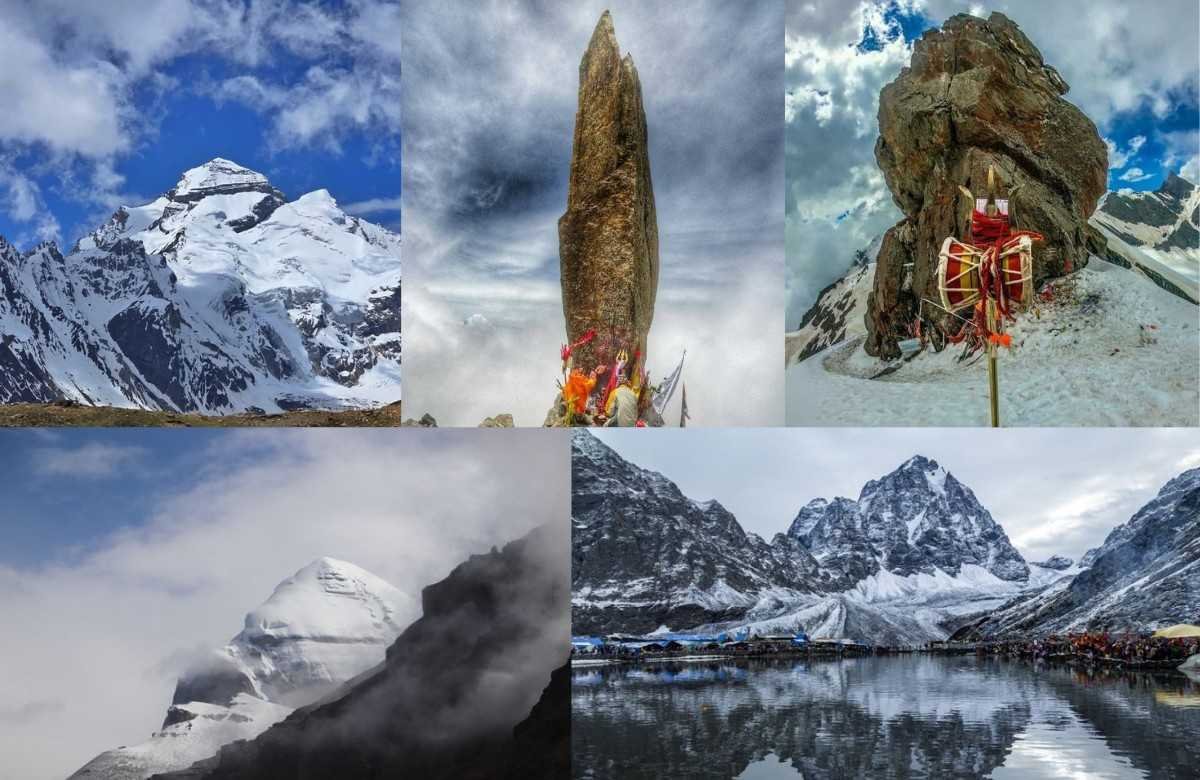
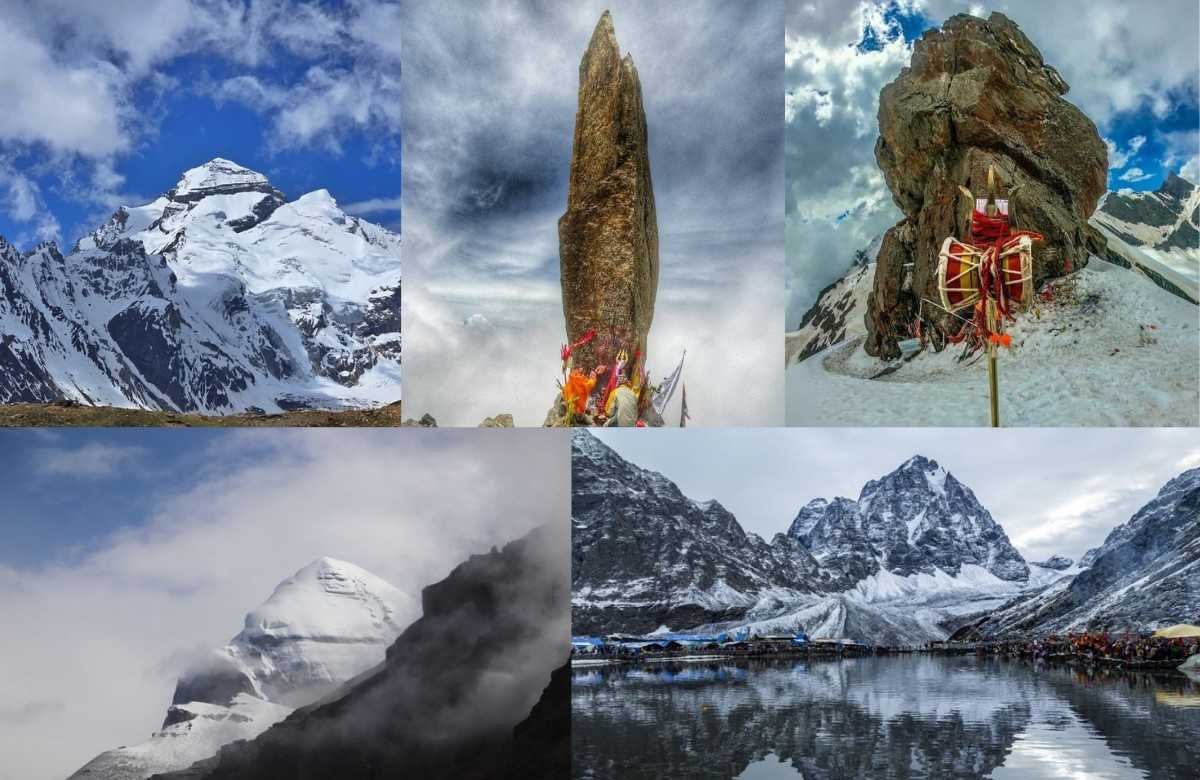
1. Kailash (Mount Kailash) — Tibet Autonomous Region, China
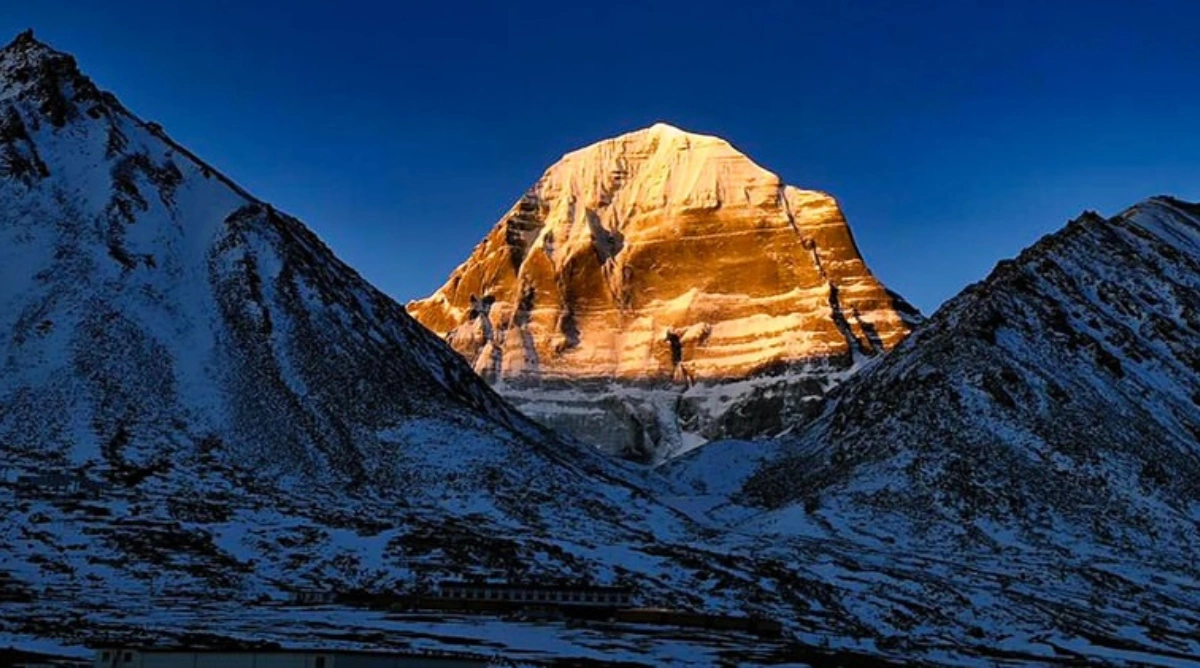
The original and supreme of the five. Mount Kailash (6,638 m) sits in the Ngari prefecture of the Tibet Autonomous Region, approximately 100 km from the Nepal border at Hilsa. It is the most sacred mountain in Hinduism, Tibetan Buddhism, Jainism, and the ancient Bon religion of Tibet. The panch kailash story holds that this is Lord Shiva's eternal abode — the cosmic mountain from which the four great rivers of the Indian subcontinent flow: the Indus, Brahmaputra, Sutlej, and Karnali. The mountain has never been summited. The 52 km Kora (circumambulation) around its base is one of the most sacred walks on Earth.
2. Adi Kailash (Chota Kailash) — Pithoragarh, Uttarakhand, India
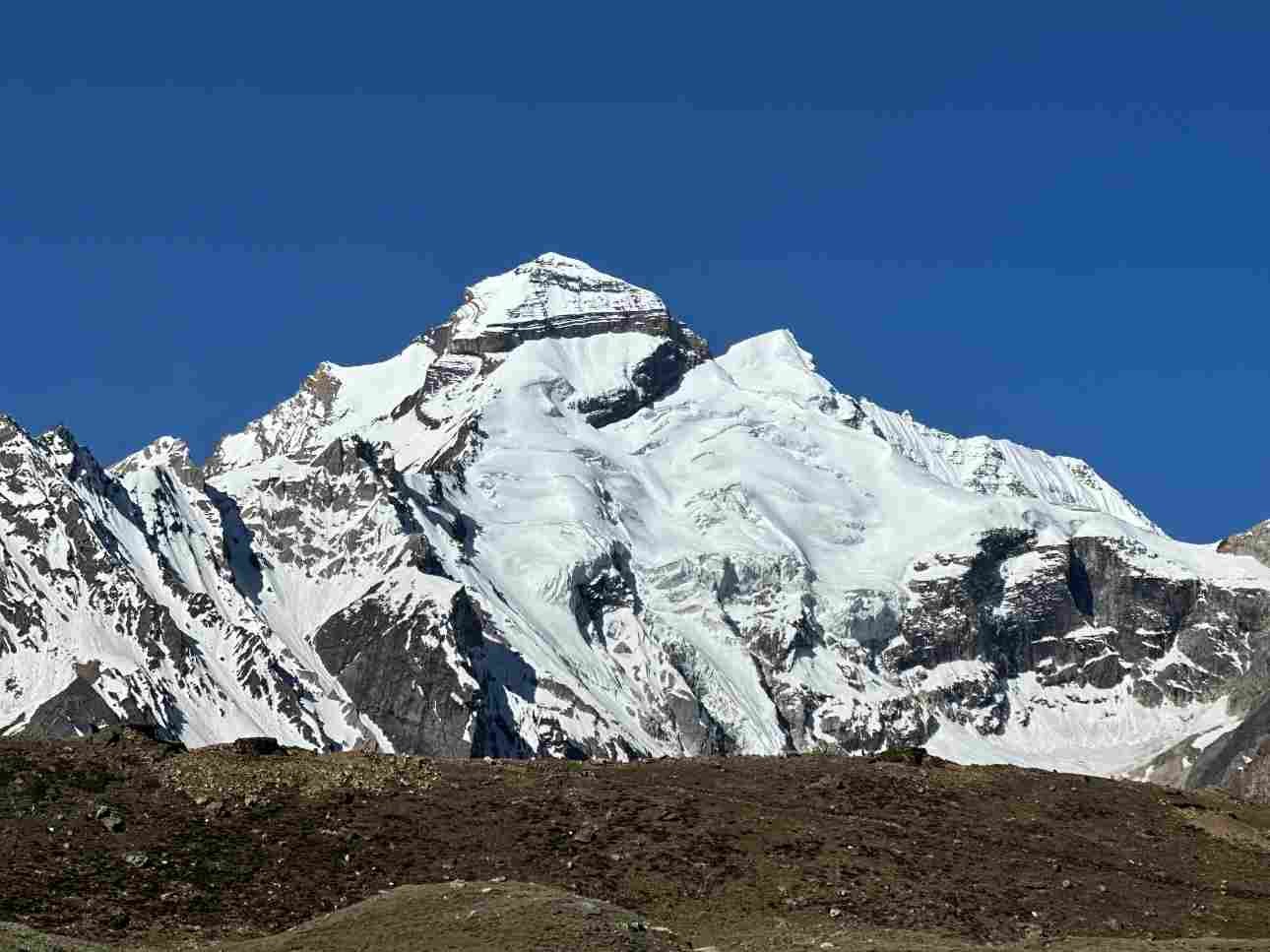
Adi Kailash (5,945 m), also known as Chota Kailash or Baba Kailash, is located in the Pithoragarh district of Uttarakhand, near the India–Tibet border in the Vyans Valley. It is the most accessible of the Panch Kailash for Indian pilgrims and closely resembles Mount Kailash in its shape and the surrounding landscape — the Parvati Sarovar lake at its base mirrors Lake Mansarovar. The Adi Kailash panch kailash yatra is the most commonly undertaken Panch Kailash pilgrimage for those who cannot travel to Tibet. The base camp can be reached by road and a short walk, with darshan of the peak available without a formal summit attempt.
3. Shrikhand Mahadev — Kullu, Himachal Pradesh, India
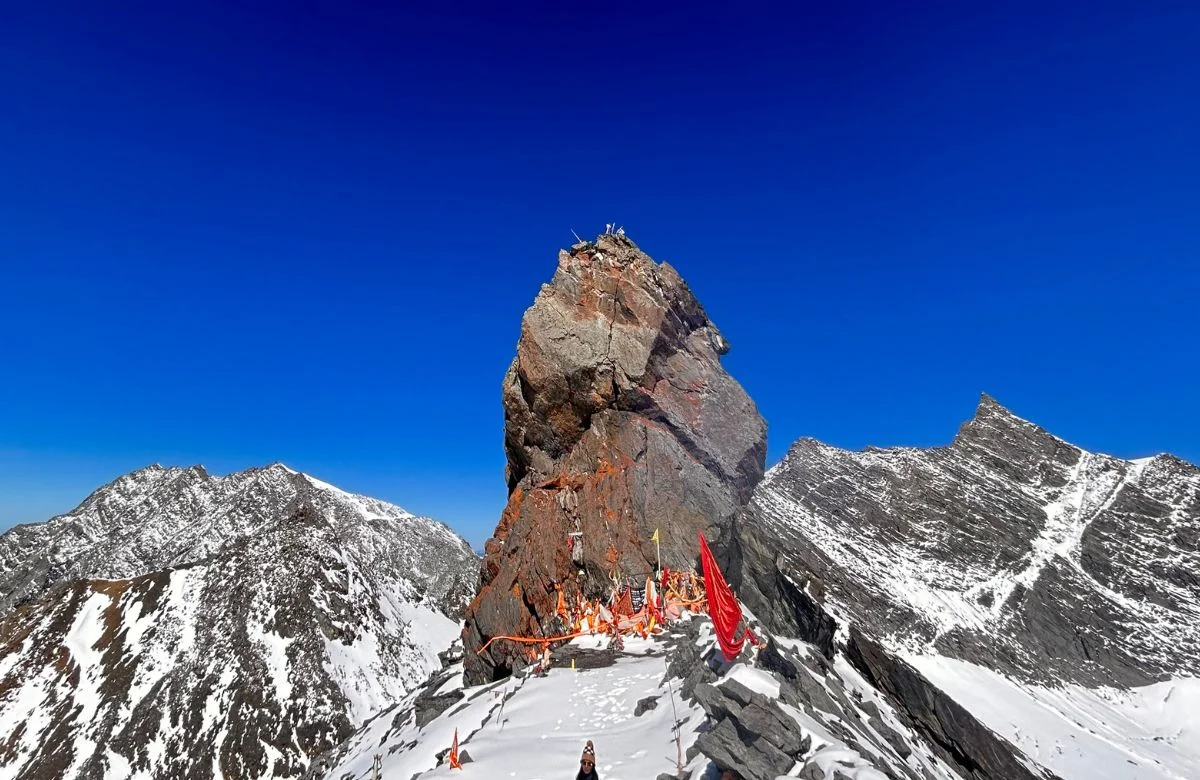
Shrikhand Mahadev (5,227 m) is a rocky peak in the Kullu district of Himachal Pradesh, revered as a natural Shiva lingam and considered one of the most physically demanding of the five panch kailash locations. The panch kailash trek distance for Shrikhand Mahadev is approximately 32 km one way from Jaon village, climbing from 2,200 m to 5,227 m in a single extended trek typically spread across three to four days. The yatra season is July to August, around the Shravan month. The summit is marked by a towering rock formation believed to be a natural Shivaling and draws tens of thousands of pilgrims annually despite the extreme altitude and difficulty.
4. Kinnaur Kailash — Kinnaur, Himachal Pradesh, India
Kinnaur Kailash (6,050 m) is a sacred peak in the Kinnaur district of Himachal Pradesh, revered by both Hindu and Buddhist communities in the region. A natural rock pillar at approximately 79 metres height on the mountain is considered a Shivaling. The Kinnaur Kailash Parikrama (circumambulation) is a 3 to 5 day trek through dramatic high-altitude terrain. The route passes through Kalpa — one of the most scenic apple-orchard villages in Himachal — and offers views of some of the most dramatic Himalayan peaks in this range. The trek is classified as moderate to difficult.
5. Manimahesh Kailash — Chamba, Himachal Pradesh, India
Manimahesh Kailash (5,653 m) is a sacred peak in the Chamba district of Himachal Pradesh, whose summit is said to bear a gem (mani) that reflects light like a jewel in certain weather conditions — the origin of its name. The associated Manimahesh Lake (Dal Lake of Chamba) at 4,080 m is considered as sacred to this region as Mansarovar is to Kailash. The annual Manimahesh Yatra, timed around the Radhashtami full moon in August–September, is the most significant pilgrimage in the Chamba region and draws hundreds of thousands of pilgrims from across Himachal Pradesh and beyond.
Panch Kailash Map: All Five Peaks at a Glance
Here is the complete panch kailash name and location reference — covering all five sacred peaks with their altitude, state/country, key associated water body, and yatra season.
| Kailash Peak | Location | Height | Sacred Site | Best Season |
| Mount Kailash | Tibet, China | 6638 m | Lake Mansarovar | May–Sept |
| Adi Kailash | Uttarakhand, India | 5945 m | Parvati Sarovar | May–Oct |
| Shrikhand Mahadev | Himachal Pradesh, India | 5227 m | Natural Shivling | Jul–Aug |
| Kinner Kailash | Himachal Pradesh, India | 6050 m | Kinner Kailash Parikrama | Jun–Oct |
| Manimahesh Kailash | Himachal Pradesh, India | 5653 m | Manimahesh Lake | Aug–Sept |
Panch Kailash Myths vs Facts: Setting the Record Straight
The panch kailash concept generates significant mythological confusion online and in travel planning circles. Here are the most commonly held misconceptions — and the real answers.
Myth 1: The Panch Kailash is the Same as the Panch Kedar
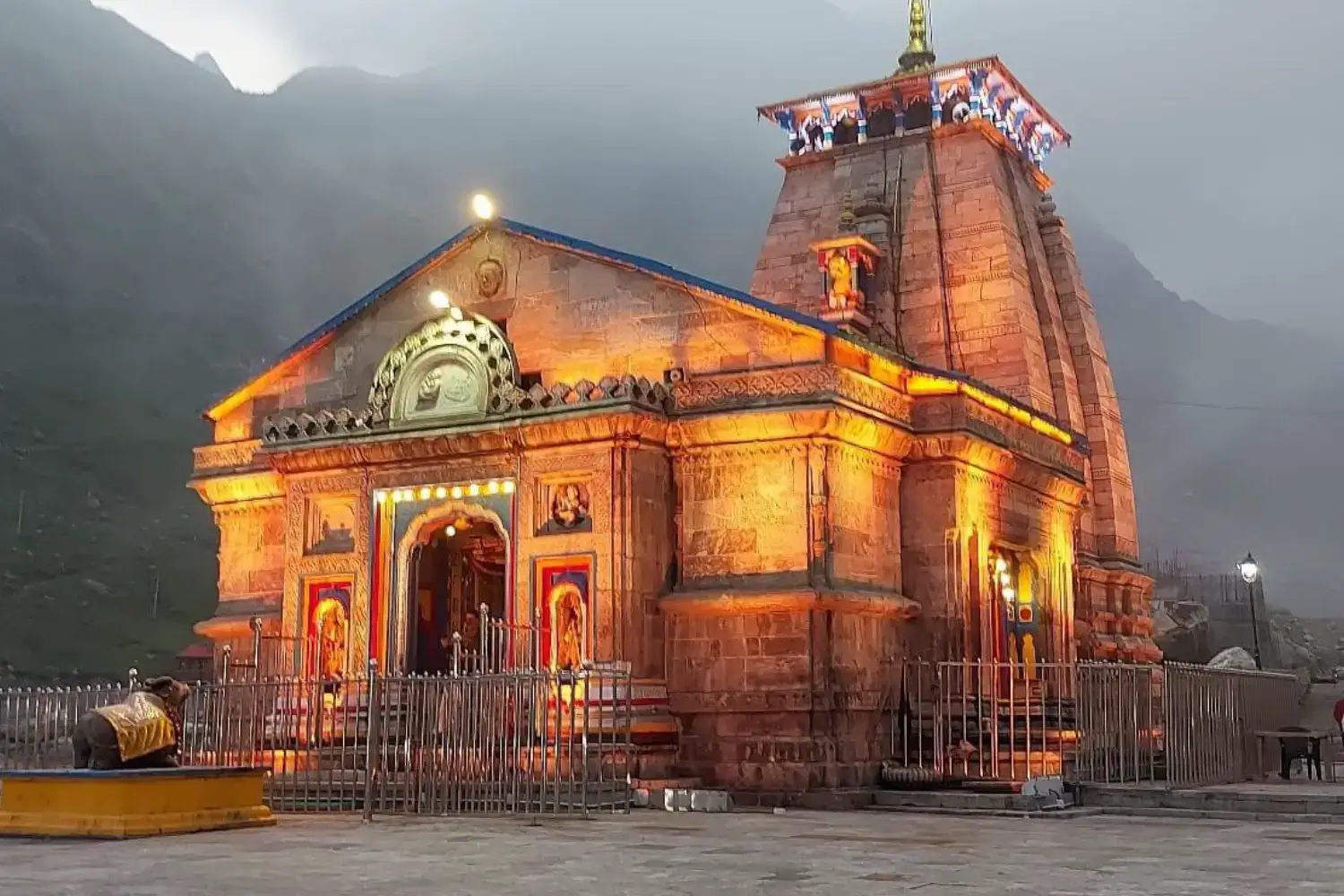
Fact: These are entirely separate pilgrimage concepts. The Panch Kedar (Kedarnath, Tungnath, Rudranath, Madhyamaheshwar, and Kalpeshwar) are five temple shrines in the Garhwal Himalayas of Uttarakhand, all within a relatively compact geographic area and all accessible in a single multi-week circuit. The Panch Kailash, by contrast, are five sacred mountain peaks spread across Uttarakhand, three districts of Himachal Pradesh, and Tibet — separated by hundreds of kilometres and requiring completely different routes, seasons, and logistics for each visit. Confusing the two leads to serious planning errors.
Myth 2: You Can Visit All Five Panch Kailash in a Single Trip
Fact: A complete Panch Kailash Yatra — visiting all five sacred peaks — is an extraordinary multi-month undertaking. Mount Kailash in Tibet alone requires a Tibet Travel Permit, specific visa arrangements, and careful seasonal planning. The Himachal peaks (Shrikhand Mahadev, Kinnaur Kailash, and Manimahesh) each have different seasons, some of which overlap and some of which do not. Adi Kailash in Uttarakhand has its own separate season and route. Completing all five in a single trip is possible in theory — requiring approximately 30 to 40 days minimum — but logistically extremely complex and undertaken only by a very small number of dedicated pilgrims each year.
Myth 3: Adi Kailash Is Just a Smaller, Inferior Version of Mount Kailash
Fact: While 'Chota Kailash' literally means 'small Kailash,' Adi Kailash is not positioned in devotional tradition as inferior to Mount Kailash — it is considered an earthly manifestation of the same divine presence. The word 'Adi' means original or primordial, and some traditions hold that Adi Kailash was the original site of Shiva's earthly abode before the sacred geography shifted to Tibet. For Indian pilgrims who cannot access Tibet, Adi Kailash is considered fully equivalent in spiritual merit. The Parvati Sarovar at its base, the Om Parvat peak nearby (where a natural snow formation resembling the Om symbol appears), and the overall landscape of the Vyans Valley are in many ways as visually dramatic as the Kailash-Mansarovar landscape.
Myth 4: Shrikhand Mahadev Is an Easy Yatra Because It Is in India
Fact: Shrikhand Mahadev is arguably the hardest of the five panch kailash treks available in India. The panch kailash trek distance of approximately 32 km one way from Jaon village climbs over 3,000 metres of altitude from 2,200 m to 5,227 m. The trail passes through snow fields, glacial streams, and exposed rocky terrain that can be treacherous even in the designated July–August season. Multiple fatalities have occurred on this route. It should not be attempted without prior high-altitude trekking experience, proper preparation, and ideally a local guide.
Myth 5: The Panch Kailash Peaks Can Be Summited by Pilgrims
Fact: None of the Panch Kailash peaks is open to summit climbing by pilgrims — and in most cases, the summit is not the pilgrimage destination anyway. Mount Kailash has no climbing permits and has never been summited. Adi Kailash is viewed from the base camp, not climbed. Shrikhand Mahadev's pilgrimage destination is the summit rock formation believed to be a Shivaling — reaching the summit area is part of the yatra but is not a technical mountaineering climb. Kinnaur Kailash and Manimahesh are similarly revered and circumambulated rather than climbed. The sacred nature of all five peaks places them outside the scope of recreational mountaineering.
Panch Kailash Trek Distance: What Each Yatra Actually Involves
One of the most practically important questions about the panch kailash is how far each yatra actually requires you to walk. Here is an honest picture of the panch kailash trek distance for each of the five peaks.
Mount Kailash — The 52 km Kora
The Mount Kailash pilgrimage is not a summit attempt — it is the Kora (circumambulation) around the mountain's base. The Kora is 52 km, completed over three days, with the highest point at the Dolma La pass at 5,630 m. Day 1 covers approximately 20 km from Darchen to Dira Puk camp; Day 2 crosses Dolma La to Dzutrulpuk camp (approximately 22 km, the hardest day); Day 3 returns to Darchen (approximately 10 km). The altitude and remoteness make this the most demanding of the five panch kailash yatra options.
Adi Kailash — Road-Accessible with Short Treks
Adi Kailash is the most accessible of the five for Indian pilgrims. The base camp at Jolingkong (Om Parvat Lake area) is now partially road-accessible — the government road from Dharchula via Gunji reaches close to the base camp area. A short walk of 1 to 3 km from the road-head brings pilgrims to darshan viewpoints for both Adi Kailash (5,945 m) and Om Parvat (6,191 m) — where the natural snow formation of the Om symbol appears on the peak's face. For Parvati Sarovar (the lake at the base of Adi Kailash), the walk from the road is approximately 2 to 5 km depending on where vehicles park.
Shrikhand Mahadev — 32 km Each Way, 5,227 m Summit
The Shrikhand Mahadev panch kailash trek distance is approximately 32 km one way from Jaon village (2,200 m) to the summit area (5,227 m). The trek is typically spread across three to four days in each direction. Key overnight camps are Singhad, Thachi Thatch, Bheem Dwar, and Parvati Bagh before the summit. The total round-trip trek distance is approximately 64 km over 6 to 8 days. This is classified as a strenuous to very strenuous alpine trek and is not suitable for first-time trekkers.
Kinnaur Kailash — 3 to 5 Day Parikrama
The Kinnaur Kailash Parikrama (circumambulation) is typically a 3 to 5 day trek covering approximately 80 to 90 km around the massif, though shorter darshan treks that target the base of the sacred rock pillar from Kalpa or Ribba are also common. The shorter approach trek from Chango to the rock pillar viewpoint is approximately 10 to 14 km one way. The full Parikrama crosses high passes above 5,000 m and requires experience with mountain trekking.
Manimahesh Kailash — 13 km to the Sacred Lake
The Manimahesh Yatra trek distance from the road head at Hadsar to Manimahesh Lake (4,080 m) is approximately 13 km one way, taking 5 to 7 hours on the ascent. The descent takes 3 to 4 hours. The sacred lake is the pilgrimage destination, not the summit — pilgrims bathe at its shores and offer prayers toward the Manimahesh Kailash peak above. The trek is classified as moderate and is one of the more accessible of the Panch Kailash yatras for average pilgrims.
Panch Kailash Trek Distance: Quick Reference Comparison
Use this table to compare the panch kailash trek distance, difficulty, and key facts for each yatra at a glance
| Kailash Trek | Distance | Max Altitude | Duration | Difficulty |
| Mount Kailash | 52 km (Kora) | 5630 m | 3 days | Strenuous |
| Adi Kailash | 1–5 km walk | 3750 m | 1–2 days | Easy–Moderate |
| Shrikhand Mahadev | 64 km (round trip) | 5227 m | 6–8 days | Very Strenuous |
| Kinner Kailash | 10–14 km trek | ~5000 m+ | 2–5 days | Moderate–Difficult |
| Manimahesh Kailash | 26 km (round trip) | 4080 m | 2 days | Moderate |
The Panch Kailash Story: Mythology and Spiritual Significance
Each of the five panch kailash peaks carries its own rich mythology, rooted in the Shaivite traditions of the western Himalayan communities who have lived in their shadow for generations.
Mount Kailash: The Cosmic Mountain
The panch kailash story begins with Kailash in Tibet. In Hindu cosmology, Kailash is Mount Meru — the axis mundi, the navel of the universe, the point around which all creation revolves. Lord Shiva is believed to sit in eternal meditation at its summit, with Goddess Parvati by his side. Four great rivers of Asia — the Indus, Brahmaputra, Sutlej, and Karnali — originate within 100 km of the mountain, a geographical fact that the ancients interpreted as the divine mountain literally giving life to the subcontinent. For Tibetan Buddhists, Kailash is the home of Demchok (Chakrasamvara). For Jains, it is the site of Rishabhadeva's liberation. For the Bon people of Tibet, it is the seat of all spiritual power.
Adi Kailash: The Original Abode
Local tradition in the Vyans Valley holds that Adi Kailash was the original abode of Lord Shiva before the Puranic geography established Kailash in Tibet as the supreme site. The prefix 'Adi' — meaning primordial or first — carries this meaning explicitly. The Parvati Sarovar at its base mirrors Mansarovar's sacred status. The nearby Om Parvat, where a natural snow formation creates the sacred Om symbol on the peak's face, is considered one of the most extraordinary natural manifestations of divine symbolism in the Himalayas.
Shrikhand Mahadev: The Eternal Shivaling
The mythological origin of Shrikhand Mahadev holds that the 75-foot towering rock formation at the summit is a natural Shivaling — a spontaneous manifestation of Lord Shiva in the form of the sacred symbol, untouched by human hands. Local tradition says that Shiva appeared here in this form after meditating at this location. The trek to Shrikhand Mahadev is considered an act of supreme devotion precisely because of its extreme difficulty — the hardship itself is understood as tapasya, a form of spiritual discipline.
Kinnaur Kailash: Where Two Traditions Meet
Kinnaur Kailash is unique among the panch kailash in being revered by both Hindu and Buddhist communities in equal measure. The Hindu tradition holds the 79-metre rock pillar as a manifestation of the Shivaling. The Buddhist tradition identifies the peak with the Tantric deity Demchok, the same identification made with the original Kailash in Tibet. This dual reverence reflects the syncretism of the Kinnaur valley community, which has maintained both traditions in parallel for centuries.
Manimahesh Kailash: The Jewelled Peak of Chamba
Manimahesh Kailash is believed to be Lord Shiva's retreat after his marriage to Parvati — the sacred honeymooon mountain of the gods. The name refers to the jewel (mani) that appears to flash from the summit, variously interpreted as a supernatural phenomenon or as a reflection of sunlight on glacial ice at a specific angle. The Manimahesh Lake is where Lord Shiva is said to have immersed himself in meditation after the wedding — bathing in the lake therefore carries the symbolic act of touching the water where Shiva sat.
How to Plan a Panch Kailash Yatra: Practical Guidance
Whether you are planning to visit one of the five or working toward all five, here is the practical guidance for approaching a panch kailash yatra realistically.
Start with Adi Kailash or Manimahesh — Not Shrikhand
First-time pilgrims should begin with the most accessible and spiritually complete experience — either Adi Kailash (road-accessible, full landscape experience, Om Parvat bonus) or Manimahesh (moderate 13 km trek, sacred lake, major annual yatra atmosphere). Shrikhand Mahadev is the right third or fourth peak — after you have built high-altitude trekking experience and physical conditioning at the other sites.
Plan Each Peak in Its Optimal Season
- Adi Kailash: May to October — best for clear skies in May–June and September–October.
- Shrikhand Mahadev: July to August (Shravan month) — the only practical window.
- Kinnaur Kailash Parikrama: June to October — with September being particularly clear.
- Manimahesh Kailash: August to September — timing the annual yatra around Radhashtami adds atmosphere.
- Mount Kailash (Tibet): May to September — Tibet border season; June–August is peak.
Documents and Permits
- Adi Kailash: An Inner Line Permit (ILP) is required for the Vyans Valley as it falls in a restricted border zone. This is arranged by your tour operator.
- Shrikhand Mahadev: Registration with local authorities in Kullu district; no special national permit required.
- Kinnaur Kailash: Inner Line Permit required for certain sections of the Kinnaur route.
- Manimahesh: No special permit — open pilgrimage.
- Mount Kailash: Tibet Travel Permit, Inner Tibet Permit, and Chinese Group Visa — all handled by your licensed operator.
Conclusion
The panch kailash is one of the most beautiful and least fully understood concepts in Himalayan pilgrimage geography. Five sacred peaks — spread across three countries, ranging in altitude from the 4,080 m lake at Manimahesh to the 6,638 m summit of Kailash in Tibet, accessible from a moderate two-day trek to a five-nation logistical expedition — each carrying its own mythology, its own landscape, and its own irreplaceable spiritual character. You do not have to complete all five to experience the Panch Kailash. You do not have to summit any of them. You do not need to travel to Tibet to encounter the sacred energy that the concept points toward. For many pilgrims, a single clear morning at Adi Kailash — watching the first light touch the peak while standing before the Parvati Sarovar, with Om Parvat's snow formation glowing orange above — is the most complete spiritual experience of their lives. Start there. Let the other four follow in their own time.