

- India Travelogue
- @Nagarjuna_Travels
Most people searching for the next Kumbh Mela in Nashik find one of two problems: either they cannot locate confirmed dates, or they do not realise that the Nashik Kumbh is fundamentally different from Haridwar and Prayagraj in ways that directly affect how they need to plan their visit. The Nashik Kumbh — officially called the Simhastha Kumbh — takes place on the banks of the Godavari at two different sacred locations simultaneously, follows its own distinct astrological trigger, and draws both Vaishnava and Shaiva traditions to the same event in a way no other Kumbh does. This guide gives you everything: the confirmed dates, the Amrit Snan schedule, the unique dual-location format, the spiritual significance, and the practical planning advice you need to make the most of the next kumbh mela in nashik — the Simhastha 2027.
What Is the Kumbh Mela in Nashik? Understanding the Simhastha
The kumbh mela in nashik is formally known as the Simhastha Kumbh Mela or Nashik-Trimbakeshwar Simhastha. It is one of the four principal Kumbh Melas held in India — the others being at Haridwar, Prayagraj, and Ujjain — and takes place once every twelve years. The event commemorates the legend of the Samudra Manthan, the mythological churning of the cosmic ocean, during which drops of Amrit (nectar of immortality) fell at four sacred locations across India. Nashik is one of those four. What distinguishes the Nashik Kumbh from the three others is its name and its dual geography. Unlike the Kumbhs at Haridwar and Prayagraj, the Nashik event is called Simhastha — referring to the specific planetary configuration that triggers it. And unlike any other Kumbh, it takes place simultaneously at two distinct sacred sites: Nashik city and Trimbakeshwar, 30 km away.
Why Is It Called Simhastha?
The name Simhastha derives from the Sanskrit: Simha meaning lion (the zodiac sign Leo) and Stha meaning residing or entering. The kumbh mela in nashik is triggered when the planet Jupiter (Brihaspati) enters the zodiac sign of Leo (Simha Rashi). This precise planetary alignment, occurring once every twelve years, is considered the most auspicious celestial configuration for bathing in the Godavari River at Nashik. The Godavari itself is considered so sacred during this period that it is called the Dakshina Ganga — the Ganga of the South.
Nashik Kumbh Mela 2027 Official Dates: The Complete Schedule
The nashik kumbh mela 2027 is an extended event that spans across multiple years — beginning with a formal inauguration in late 2026 and running through mid-2028. However, the spiritually most significant period — when the Amrit Snan bathing dates occur and the main religious activities concentrate — falls in 2027.
| Event | Date | Significance |
| Dhwajarohan (Flag Hoisting) — Official Start | 31 October 2026 | Traditional flag hoisting at Trimbakeshwar, Ramkund and Panchavati — marks official commencement of the Simhastha period |
| First Amrit Snan (Shahi Snan) | 2 August 2027 (Sunday) | First major royal bathing date; Akharas process to Ramkund and Kushavarta Kund; maximum spiritual merit |
| Second Amrit Snan (Shahi Snan) | 31 August 2027 (Monday) | Second royal bathing; Bhadrapada Amavasya; one of the most sacred dates of the Simhastha |
| Third Amrit Snan (Shahi Snan) — Vaishnava | 11 September 2027 (Friday) | Bhadrapada Shuddha Ekadashi; Vaishnava Akharas bathe at Ramkund, Nashik |
| Third Amrit Snan (Shahi Snan) — Shaiva | 12 September 2027 (Saturday) | Shaiva Akharas bathe at Kushavarta Kund, Trimbakeshwar; unique dual-date Amrit Snan |
| Nashik Nagarpradakshina | TBC 2027 | Sacred circumambulation of Nashik city; highly auspicious communal ritual |
| Official Conclusion | 24 July 2028 | Formal close of the Simhastha Kumbh Mela period |
Important note: The exact muhurta (auspicious timing) for each Amrit Snan is formally finalised by the Nashik-Trimbakeshwar Simhastha Kumbh Mela Committee and the Akhil Bharatiya Akhara Parishad. The dates above are based on the planetary Panchang and are consistent across multiple authoritative sources — but always verify final times with official Maharashtra government announcements before planning travel.
The Two Sacred Locations of the Nashik Kumbh: Nashik and Trimbakeshwar
The single most important thing to understand about the kumbh mela in nashik is that it actually takes place at two separate sacred sites. These are not interchangeable — each has its own distinct spiritual tradition, its own designated Akhara groups, and its own sacred bathing kund (tank). If you plan to attend, you need to know which location serves your tradition and your travel plan.
Location 1: Ramkund, Nashik (Panchavati)
Ramkund is the primary bathing ghat in Nashik city, located in the Panchavati area — the sacred forest where Lord Rama, Sita, and Lakshmana are believed to have lived during their fourteen-year exile. The kund (sacred tank) is directly on the banks of the Godavari River. Ramkund is the site where the Vaishnava Akharas (followers of Lord Vishnu) perform their Amrit Snan. The water of Ramkund is considered particularly sacred because of its association with Lord Rama — bathing here during the Simhastha is believed to wash away all accumulated sin and grant liberation.
- Primary bathing site for Vaishnava tradition pilgrims
- Akharas: Vaishnava Akharas process to Ramkund on Amrit Snan days
- Location: Panchavati area of Nashik city — easily accessible from Nashik railway station and city centre
- Nearby sacred sites: Sita Gupha, Kapaleshwar Temple, Kalaram Temple, Panchmukhi Hanuman Temple
Location 2: Kushavarta Kund, Trimbakeshwar
Trimbakeshwar, 30 km from Nashik city, is the site of one of the twelve Jyotirlingas — the twelve most sacred manifestations of Lord Shiva in India. Kushavarta Kund is the sacred bathing kund here, considered the actual source of the Godavari River. Trimbakeshwar is the site where the Shaiva Akharas (followers of Lord Shiva) perform their Amrit Snan. The combination of a Jyotirlinga and the source of the Godavari makes Trimbakeshwar one of the most spiritually potent locations in Maharashtra.
- Primary bathing site for Shaiva tradition pilgrims
- Akharas: Shaiva Akharas process to Kushavarta Kund on Amrit Snan days
- Distance from Nashik: approximately 30 km — around 45 minutes to 1 hour by road
- The Trimbakeshwar Jyotirlinga temple is one of twelve in India — darshan here during the Simhastha carries exceptional spiritual merit
- Kushavarta Kund is believed to be the origin point of the Godavari — bathing here during Simhastha is considered among the most powerful purification acts available
The Amrit Snan at Nashik Kumbh: What Happens on the Main Bathing Days
The Amrit Snan — also called Shahi Snan — is the centrepiece of the kumbh mela in nashik. These are the most spiritually significant and most logistically intense days of the entire Simhastha. Understanding what happens on these days helps pilgrims plan more effectively.
The Sequence on an Amrit Snan Day
- Before dawn, the Akharas begin their ceremonial processions from their camps toward the bathing ghats — a spectacular display of ancient monastic orders in full ceremonial regalia
- Naga Sadhus — ash-smeared, dreadlocked ascetics of the Shaiva tradition — are among the most dramatic participants; their procession to Kushavarta Kund at Trimbakeshwar is one of the most extraordinary sights in Indian pilgrimage
- Vaishnava Akharas process simultaneously to Ramkund in Nashik, creating parallel ceremonial events at two different locations 30 km apart
- Mahamandaleshwars and Peethadeeshwars are carried in elaborate palanquins or arrive on horses and elephants
- The Akharas bathe first — this is non-negotiable and the sequence of Akharas follows strict traditional precedence
- After the Akhara bathing is complete, general pilgrims take their holy dip — at both Ramkund in Nashik and Kushavarta Kund in Trimbakeshwar
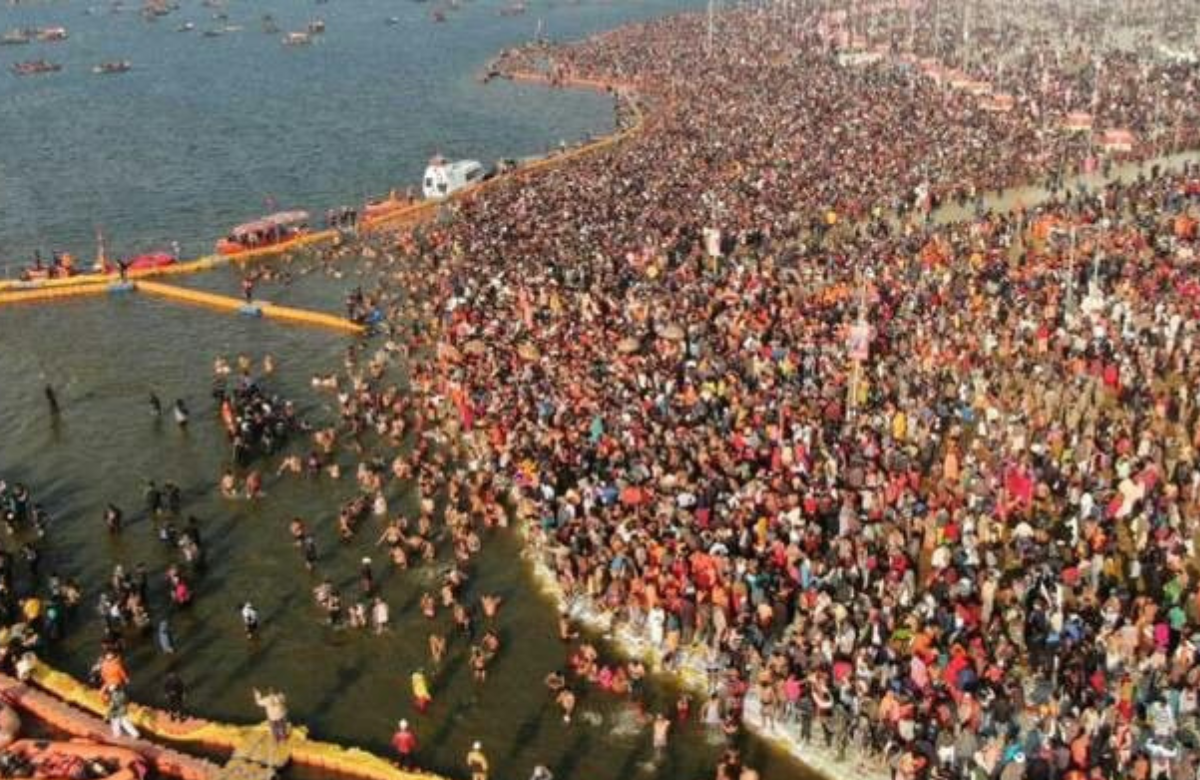
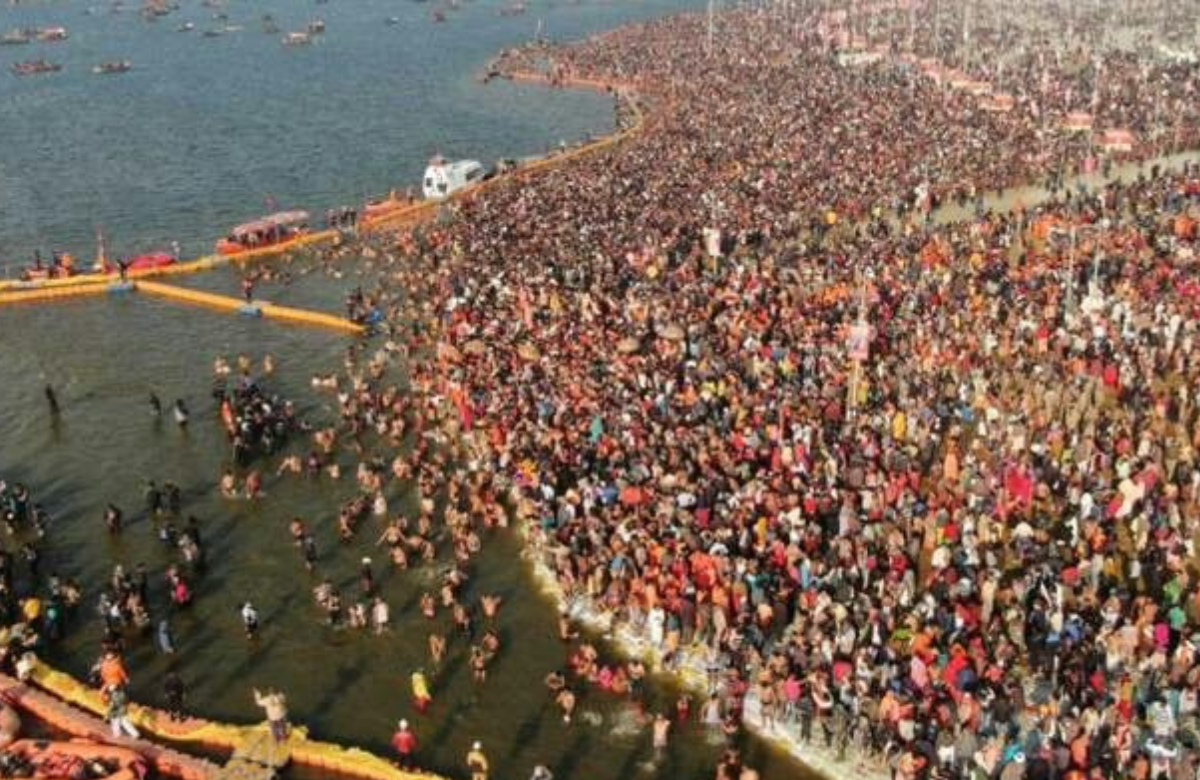
- Millions of pilgrims converge on both sites; the Godavari at Nashik and the Kushavarta Kund at Trimbakeshwar turn saffron with the sheer density of devotees
Why the September 11/12 Amrit Snan Is Unique
The third and final Amrit Snan of the nashik simhastha 2027 is particularly extraordinary. Unlike the first two dates when all Akharas bathe on the same day, the September event splits across two consecutive dates: September 11 (Vaishnava Akharas at Ramkund, Nashik) and September 12 (Shaiva Akharas at Kushavarta Kund, Trimbakeshwar). This split Amrit Snan is a unique feature of the Nashik Kumbh that highlights the event's dual nature — simultaneously honouring both the Vishnu tradition and the Shiva tradition across two sacred sites.
Spiritual Significance of the Kumbh Mela in Nashik
The kumbh mela in nashik is rooted in the same foundational legend as all four Kumbh Melas — the Samudra Manthan, the churning of the cosmic ocean. When the pot of Amrit (nectar of immortality) was finally extracted, the god Jayanta (son of Indra) flew away with it to prevent the demons from claiming it. During the chase that lasted twelve celestial days (equivalent to twelve human years), four drops of Amrit fell to earth — at Haridwar, Prayagraj, Nashik, and Ujjain. These four drops consecrated the rivers at these locations for eternity, making them conduits of divine purification at the moment when the planets recreate the original alignment.
The Godavari as Dakshina Ganga
purificatory power as the Ganga at Haridwar and Prayagraj. During the Simhastha, when the planetary configuration amplifies the river's sacred energy to its maximum, bathing in the Godavari at Nashik is believed to cleanse all accumulated karma across multiple lifetimes and to place the soul on the path toward moksha — liberation from the cycle of birth, death, and rebirth.
Why Nashik Is Unique Among the Four Kumbh Sites
- It is the only Kumbh Mela held at two simultaneous sacred locations — Nashik city (Vaishnava) and Trimbakeshwar (Shaiva)
- It is the only Kumbh that honours both Lord Vishnu and Lord Shiva as co-presiding deities of the same event
- Trimbakeshwar is one of the twelve Jyotirlingas — attending the Simhastha here combines the merit of a Kumbh with the merit of a Jyotirlinga darshan
- Nashik is identified in Hindu tradition as a location from the Ramayana — Lord Rama bathed at Ramkund, and Panchavati is the site of Sita's kidnapping by Ravana
- The Godavari at Nashik is identified as the spot where the demon Nashaka was slain by Lord Vishnu — giving the city its name and infusing it with a specific sacred energy
Conclusion
The kumbh mela in nashik — the Simhastha 2027 — is one of the rarest and most spiritually powerful gatherings in the world. It comes once every twelve years. It spans two sacred rivers at two cities simultaneously. It honours both Shiva and Vishnu in a single sacred moment. And it takes place on the banks of the Dakshina Ganga, the river that carries the same purificatory power as the Ganga itself — at the precise celestial moment when that power is at its peak. The next opportunity after 2027 will be in 2039. For the pilgrims, travellers, and spiritual seekers who want to experience this extraordinary convergence of mythology, astronomy, and human devotion — 2027 is the moment. Plan early. Book now. And let the Godavari do the rest.