

- India Travelogue
- @Nagarjuna_Travels
You have heard of Vaishno Devi. You have probably visited Kamakhya or Kalighat. But do you know how many Shakti Peethas there are in India — and why each one exists? Most devotees are surprised to discover that the shrines they have grown up visiting are part of one of Hinduism's most ancient and extraordinary pilgrimage networks: the Shakti Peethas. The challenge is that information about Shakti Peethas is scattered, contradictory, and often incomplete. Search for 'total shakti peeth in India' and you will find answers ranging from 18 to 108 — with no explanation of why the numbers differ. Search for a 'shaktipeeth list in India' and you will find incomplete lists that omit peethas outside India entirely. This guide solves all of that. Here you will find a clear explanation of what Shakti Peethas are, the definitive answer to how many exist, the mythology that created them, the complete list of all 51 major Shakti Peethas with their names and locations, the 18 Maha Shakti Peethas, and everything you need to plan your Shakti Peeth pilgrimage.
What Is a Shakti Peeth?
A Shakti Peeth (Sanskrit: ■akti P■■ha, literally 'seat of Shakti') is a sacred Hindu shrine dedicated to the Goddess Shakti — the divine feminine energy that is the fundamental creative force of the universe. Each Shakti Peeth marks a spot where a part of the body of Goddess Sati is believed to have fallen, sanctifying that location with her divine presence for all eternity. The Shakti Peethas are not simply temples. They are considered living embodiments of the Goddess herself — points on the earth where the boundary between the divine and the material world is thinnest. For devotees of the Shakta tradition (one of the four major paths of Hinduism), visiting the Shakti Peethas is the equivalent of the Jyotirlinga yatra for Shaivites — the most sacred and complete form of pilgrimage.
The Sacred Mythology: How the Shakti Peethas Were Created
The origin story of the Shakti Peethas is one of the most profound and emotionally moving narratives in all of Hindu mythology, recorded in detail in the Devi Bhagavata Purana, the Kalika Purana, and the Shiva Purana. Sati — the daughter of King Daksha and the first wife of Lord Shiva — was deeply devoted to her husband. When Daksha organised a grand yajna (sacred fire ritual) and deliberately excluded both Sati and Shiva from the invitation list, Sati insisted on attending to confront her father's insult. Shiva warned her not to go — but Sati, wounded by her father's disrespect toward her beloved husband, went regardless. At the yajna, Daksha publicly insulted and humiliated Lord Shiva in front of all the assembled gods and sages. Unable to bear this insult to her husband, Sati immolated herself in the sacred fire — ending her life as an act of ultimate protest and devotion. When the news reached Shiva, his grief was absolute. He lifted Sati's body from the fire and began wandering the universe in inconsolable sorrow, unable to let her go. The universe itself was threatened by the intensity of Shiva's grief. Lord Vishnu — understanding that Shiva's mourning was disrupting cosmic order — used his Sudarshana Chakra (divine spinning disc) to gently sever Sati's body into pieces as Shiva carried it. As each piece fell to earth, it sanctified that location permanently. The spots where these body parts landed became the Shakti Peethas — places where the divine feminine is eternally present in the earth itself. Shiva's grief gradually transformed into acceptance. The widespread presence of Sati's body parts across the subcontinent became a sacred geography — a network of divine energy points that pilgrims have been visiting for thousands of years. At each Shakti Peeth, a Bhairava (Shiva in his protective, guardian form) is also worshipped alongside the Goddess — the eternal companion who now watches over each resting place of his beloved.
Total Shakti Peeth in India: How Many Are There?
This is the most searched question about Shakti Peethas — and the reason different sources give different answers is that different ancient scriptures count them differently. Here is the complete clarification:
Why the Numbers Differ
- 4 Shakti Peethas (Char Dham tradition): Some traditions identify only 4 supreme Shakti Peethas — Kamakhya (Assam), Vimala (Puri, Odisha), Tara Tarini (Odisha), and Dakshina Kalika (Kalighat, Kolkata). These four are considered the most ancient and foundational.
- 18 Maha Shakti Peethas: The Ashtadasha Shakti Peetha Stotram lists 18 supremely powerful Shakti Peethas. This is the most popular number among devotees who undertake dedicated pilgrimage circuits.
- 51 Major Shakti Peethas: The most widely accepted count, corresponding to the 51 letters of the Sanskrit alphabet and the 51 body parts of Goddess Sati. This is the number referenced in most modern Shakta texts and pilgrimage traditions.52 Shakti Peethas: Some texts add one additional site to arrive at 52 — accounting for a slightly different enumeration of Sati's body parts.
- 64 Shakti Peethas: The Tantric tradition recognises 64 Shakti Peethas aligned with the 64 Yoginis (divine feminine powers).
- 108 Shakti Peethas: The most expansive count includes secondary sites, associated shrines, and regional traditions. The number 108 is sacred in Hinduism and is often used to represent completeness.
The Definitive Answer: For the purpose of pilgrimage planning and mainstream Hindu tradition, the accepted total is 51 major Shakti Peethas. Of these 51, 42 are located within India across 21 states. The remaining 9 are in Nepal (4), Bangladesh (2), Pakistan (1), Sri Lanka (1), and Tibet (1).
The 18 Maha Shakti Peethas: The Most Sacred Shrines
- Hingula / Hinglaj Mata Balochistan, Pakistan BodBhramary Part: Crown of the head (Brahmarandhra) | Goddess: Hingula / Kottari — the most powerful head shrine
- Sharkara Devi (Sharkarara) Naini, Prayagraj, Uttar Pradesh Body Part: Upper teeth | Goddess: Attahasini — visited during Kumbh Mela period
- Sugandha Devi Shikarpur, Murshidabad, West Bengal Body Part: Nose (Nasika) | Goddess: Sugandha — the fragrant one
- Nirvriti / Mahishamardini Naldha village, Bangladesh Body Part: Left foot | Goddess: Mahishamardini — slayer of Mahisha demon
- Kamakhya Devi Nilachal Hill, Guwahati, Assam Body Part: Yoni (Genitals) — most sacred body part | Goddess: Kamakhya — the most powerful of all 51 Shakti Peethas
- Jwaladevi / Jwalamukhi Jwalamukhi, Himachal Pradesh Body Part: Tongue | Goddess: Ambika — flames emerge naturally from the earth
- Bhramari Devi Bhramaramba, Srisailam, Andhra Pradesh Body Part: Neck | Goddess: Bhramaramba — the bee goddess (shared with Jyotirlinga site)
- Shri Shailam (Mahalakshmi) Srisailam, Andhra Pradesh Body Part: Hands | Goddess: Mahalakshmi — located at same site as Mallikarjuna Jyotirlinga
- Ekavira Devi Mahur, Maharashtra Body Part: Left arm | Goddess: Renuka — birthplace of Parashurama's mother
- Kumari Devi / Kanyakumari Kanyakumari, Tamil Nadu Body Part: Back | Goddess: Sharvani / Sati — southernmost tip of India
- Vishalakshi Devi Varanasi, Uttar Pradesh Body Part: Earrings (Kundala) | Goddess: Vishalakshi — the wide-eyed goddess of Kashi
- Savitri Devi (Kalyani) Pushkar, Rajasthan Body Part: Wrists | Goddess: Savitri — temple atop Ratnagiri Hill above Pushkar lake
- Sri Sundari Devi Tripur Sundari, Tripura Body Part: Right foot | Goddess: Tripura Sundari — 16-armed supreme goddess
- Ambaji Devi Ambaji, Gujarat Body Part: Heart | Goddess: Ambika / Amba — one of the most visited Shakti shrines in India
- Bhavani Devi / Ashtabhuja Varanasi, Uttar Pradesh Body Part: Right hand | Goddess: Ashtabhuja — the eight-armed goddess
- Jana Sthana Devi Panchavati, Nashik, Maharashtra Body Part: Chin | Goddess: Bhramari — Panchavati is where Sita was abducted in Ramayana
- Mahishasuramardini Kankhal, Haridwar, Uttarakhand Body Part: Navel | Goddess: Sati — location of Daksha's yajna where Sati sacrificed herself
- Nanda Devi Nanda Devi, Uttarakhand Body Part: Body frame / limbs | Goddess: Nanda — sacred to Kumaoni and Garhwali mountain communities
Complete Shaktipeeth List in India: All 51 Shakti Peethas by Region
The following is the most complete Shakti Peethas list available, organised by geographical region for easy pilgrimage planning. Each entry includes the Shakti Peeth name, location, the body part of Sati that fell there, and the name of the presiding Goddess.
NORTH INDIA — Jammu & Kashmir, Himachal Pradesh, Uttarakhand, Uttar Pradesh, Rajasthan, Punjab
- Vaishno Devi Shakti Peeth — Trikuta Hills, Reasi, Jammu & Kashmir | Body Part: Right arm | Goddess: Vaishnavi / Mahakali
- Jwalamukhi Shakti Peeth — Jwalamukhi, Kangra, Himachal Pradesh | Body Part: Tongue | Goddess: Ambika / Jwaladevi
- Kangra Devi (Bajreshwari) — Kangra, Himachal Pradesh | Body Part: Right breast | Goddess: Vajreshwari
- Chamunda Devi — Chamba, Himachal Pradesh | Body Part: Feet | Goddess: Chamunda
- Naina Devi — Nainital / Bilaspur, Himachal Pradesh | Body Part: Eyes | Goddess: Naina / Mahishsuramardini
- Mansa Devi — Haridwar, Uttarakhand | Body Part: Mind (Manas) | Goddess: Mansa Devi
- Chandrabaga — Kankhal, Haridwar, Uttarakhand | Body Part: Navel | Goddess: Sati
- Nanda Devi — Nanda Devi, Uttarakhand | Body Part: Body / limbs | Goddess: Nanda
- Vishalakshi — Varanasi, Uttar Pradesh | Body Part: Earrings (Kundala) | Goddess: Vishalakshi
- Vindhyavasini — Vindhyachal, Mirzapur, Uttar Pradesh | Body Part: Left ankle | Goddess: Vindhyavasini
- Lalita Devi — Prayagraj (Allahabad), Uttar Pradesh | Body Part: Fingers | Goddess: Lalita
- Savitri / Kalyani — Pushkar, Rajasthan | Body Part: Wrists | Goddess: Savitri / Kalyani
- Ambika / Shakambhari — Sambhar, Sikar, Rajasthan | Body Part: Head | Goddess: Shakambhari
- Sheetla Mata — Gurgaon, Haryana | Body Part: Ankles | Goddess: Sheetla
EAST INDIA — West Bengal, Odisha, Bihar, Assam, Jharkhand
- Kalighat Shakti Peeth — Kalighat, Kolkata, West Bengal | Body Part: Right toes | Goddess: Kali / Dakshina Kali
- Kiriteswari — Murshidabad, West Bengal | Body Part: Crown / tiara | Goddess: Kiriteswari
- Vimala Devi — Inside Jagannath Temple, Puri, Odisha | Body Part: Navel | Goddess: Vimala
- Tara Tarini — Berhampur, Odisha | Body Part: Breasts | Goddess: Tara Tarini
- Ugratara — Mahur, Maharashtara/Odisha border | Body Part: Left arm | Goddess: Tara
- Kamakhya Devi — Nilachal Hill, Guwahati, Assam | Body Part: Yoni (genitals) | Goddess: Kamakhya — Most Powerful
- Biraja Devi — Jajpur, Odisha | Body Part: Navel (alternate) | Goddess: Biraja
- Baula / Bahula — Ketugram, Burdwan, West Bengal | Body Part: Left arm | Goddess: Bahula
- Nalhati — Nalhati, Birbhum, West Bengal | Body Part: Windpipe (Kantha) | Goddess: Kalika
- Sri Parvat — Ladakh / Kashmir (debated) | Body Part: Right ankle | Goddess: Shivani
SOUTH INDIA — Tamil Nadu, Andhra Pradesh, Telangana, Karnataka, Kerala
- Kanyakumari / Sharvani — Kanyakumari, Tamil Nadu | Body Part: Back | Goddess: Sharvani / Sati
- Ellamma / Renuka Devi — Srisailam area, Andhra Pradesh | Body Part: Neck | Goddess: Bhramaramba
- Mahalakshmi — Srisailam, Andhra Pradesh | Body Part: Hands | Goddess: Mahalakshmi
- Girija / Indrakshi — Chamarajanagar, Karnataka | Body Part: Hair | Goddess: Indrakshi
- Chamundeshwari — Mysuru, Karnataka | Body Part: Hair (alternate) | Goddess: Chamundeshwari
- Mookambika — Kollur, Karnataka | Body Part: Tongue (alternate) | Goddess: Mookambika
- Bhadrakali — Warangal, Telangana | Body Part: Left cheek | Goddess: Bhadrakali
- Alampur Navabrahma — Alampur, Telangana | Body Part: Upper teeth (alternate) | Goddess: Jogulamba
WEST INDIA — Gujarat, Maharashtra, Madhya Pradesh, Goa
- Ambaji Devi — Ambaji, Banaskantha, Gujarat | Body Part: Heart | Goddess: Ambika / Amba
- Ekavira Devi — Mahur, Nanded, Maharashtra | Body Part: Left arm | Goddess: Renuka / Ekavira
- Jana Sthana — Panchavati, Nashik, Maharashtra | Body Part: Chin | Goddess: Bhramari
- Saptashringi — Nashik district, Maharashtra | Body Part: Right arm (alternate) | Goddess: Saptashringi
- Vindhyachal — Vindhyachal, Madhya Pradesh | Body Part: Left ankle | Goddess: Vindhyavasini (alternate)
- Mahakal / Harshiddhi — Ujjain, Madhya Pradesh | Body Part: Upper lips | Goddess: Mahakali / Harshiddhi
- Puruhuta — Jashore, Bangladesh | Body Part: Left palm | Goddess: Puruhuta
NORTHEAST & OTHER STATES — Tripura, Manipur, Meghalaya & Remote Sites
- Tripura Sundari — Udaipur, Tripura | Body Part: Right foot | Goddess: Tripura Sundari
- Umananda — Peacock Island, Guwahati, Assam | Body Part: Right palm | Goddess: Umananda (Bhairava only)
- Maa Brahmari — Jalkhi, West Bengal | Body Part: Left toes | Goddess: Brahmari
SHAKTI PEETHAS OUTSIDE INDIA — Nepal, Bangladesh, Pakistan, Sri Lanka, Tibet
- Guhyeshwari — Kathmandu, Nepal | Body Part: Both knees | Goddess: Guhyeshwari (Kumari)
- Manasa / Uma — Gandaki River, Nepal | Body Part: Temple & right cheek | Goddess: Gandaki Chandi
- Ugratara (Kiratas) — Lumbini region, Nepal | Body Part: Uncertain | Goddess: Ugratara
- Kumari Pitha — Kathmandu Valley, Nepal | Body Part: Uncertain | Goddess: Kumari
- Jashoreshwari — Ishwaripur, Bangladesh | Body Part: Palms and soles | Goddess: Jashoreshwari
- Sarvani / Attahas — Attahasa, Bangladesh | Body Part: Lower lip | Goddess: Phullara
- Hinglaj Mata — Lasbela, Balochistan, Pakistan | Body Part: Crown (Brahmarandhra) | Goddess: Hingula / Kottari
- Shankari Devi — Trincomalee, Sri Lanka | Body Part: Ankle / nuchal region (debated) | Goddess: Shankari
- Kali Peeth (Mansarovar) — Tibet (Mansarovar Lake region) | Body Part: Right hand (debated) | Goddess: Mahamaya
Note on the List: The exact enumeration and body-part mapping of the 51 Shakti Peethas varies across different Puranic texts and regional traditions. The list above follows the most widely cited scholarly and traditional sources. Some peethas have disputed locations or overlapping claims between texts. Devotees are encouraged to consult local temple traditions when planning their pilgrimage.
The Most Important Shakti Peethas to Visit: A Pilgrim's Guide
While all 51 Shakti Peethas are sacred, certain shrines hold exceptional significance due to their mythological importance, the power of the body part that fell there, architectural grandeur, or the intensity of the Goddess's presence reported by devotees across millennia. Here are the most significant Shakti Peethas that every devotee should know.
Kamakhya Devi, Assam
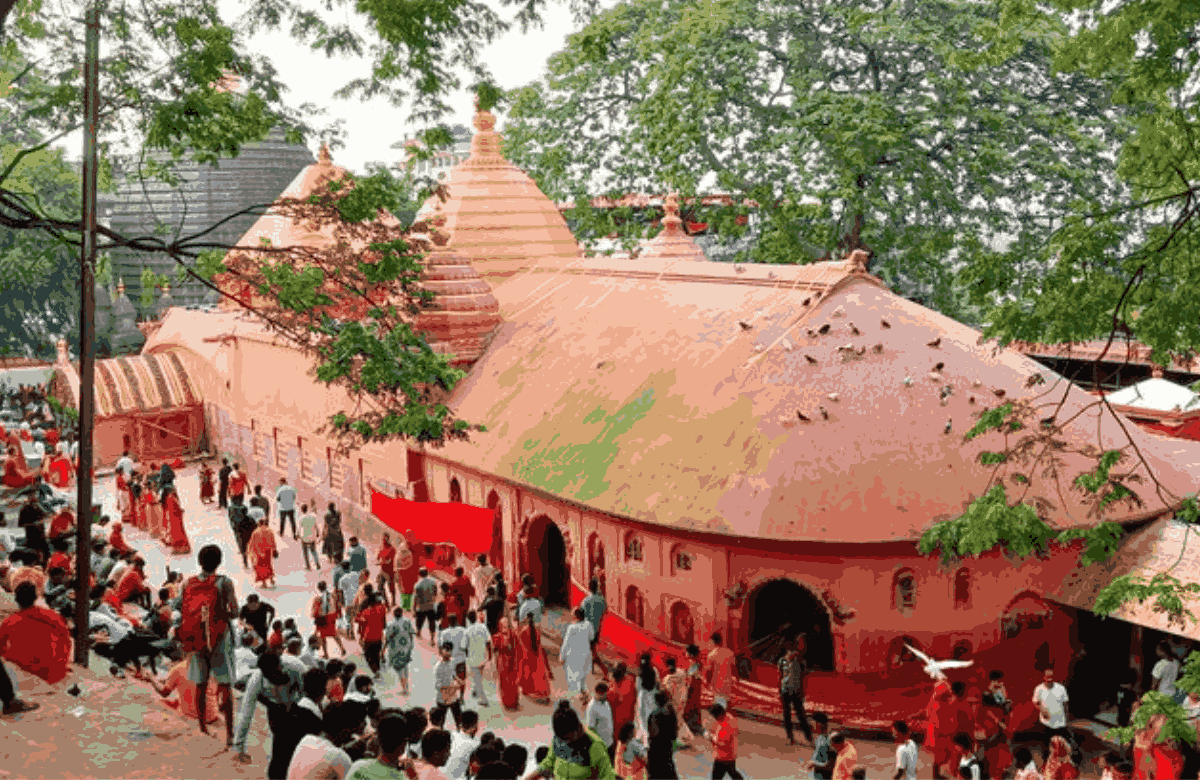
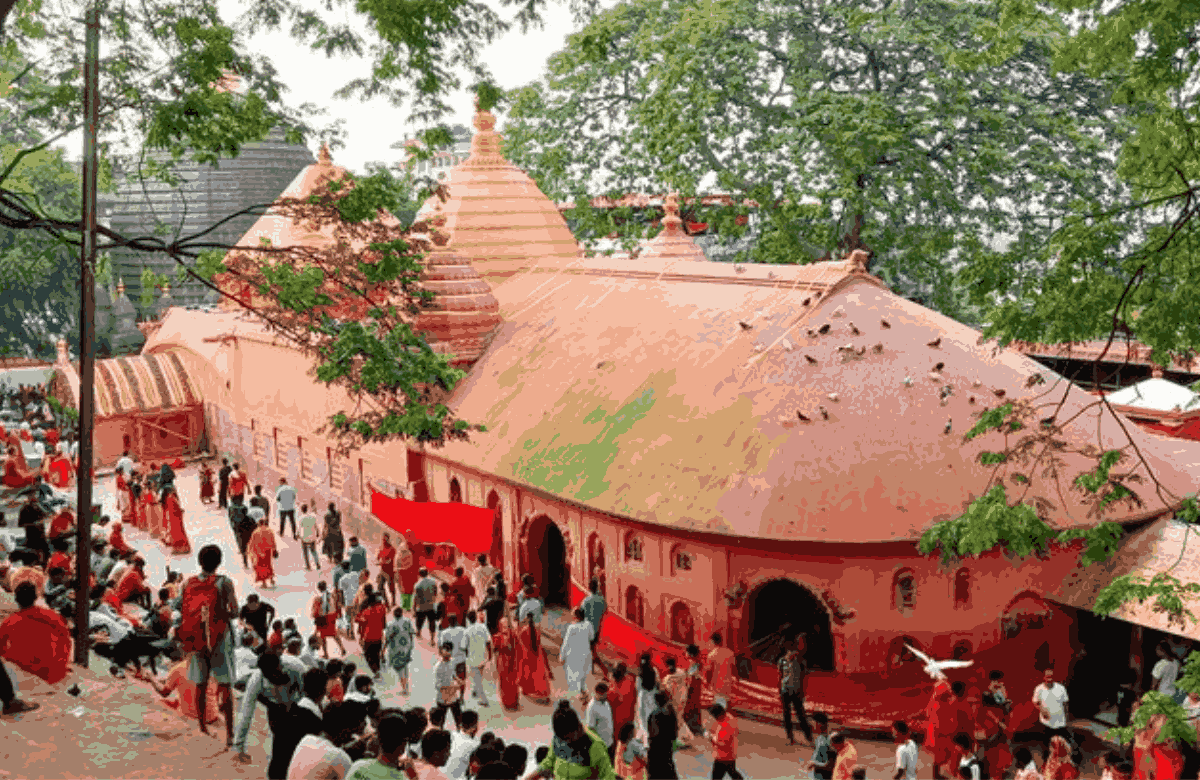
The Most Powerful Shakti Peeth Kamakhya Devi Temple on Nilachal Hill in Guwahati, Assam, is universally considered the most powerful of all 51 Shakti Peethas. The yoni (womb/genitals) of Goddess Sati fell here — the most generative and creative body part, symbolising the ultimate source of all life and power. The temple has no idol — instead, a natural rock cleft representing the yoni is worshipped, perennially moist from an underground spring. The annual Ambubachi Mela at Kamakhya — celebrating the Goddess's menstrual cycle — draws hundreds of thousands of devotees and tantric practitioners from across the world.
Vaishno Devi, Jammu
The Most Visited Shakti Peeth Vaishno Devi Temple in the Trikuta Hills of Jammu & Kashmir is the most visited Shakti Peeth and one of the most visited religious sites in the world — receiving over 8 million pilgrims annually. The right arm (or according to some texts, the right arm bone) of Sati fell here. The Goddess is worshipped in the form of three natural rock formations (pindis) representing Mahakali, Mahalakshmi, and Mahasaraswati. The 14 km trek from Katra to the cave shrine is one of India's most popular pilgrimage treks.
Kalighat, Kolkata
The Oldest Shakti Peeth The Kalighat Kali Temple in Kolkata is one of the oldest and most revered Shakti Peethas — where the right toes of Sati are believed to have fallen. The temple's Goddess Kali is one of the most intensely worshipped deities in India. Kalighat is the original source of the name 'Calcutta' (Kali-ghat). The temple receives thousands of devotees daily and is particularly thronged on Kali Puja and Durga Puja. Animal sacrifice (primarily goats) is still practiced here as part of traditional worship.
Jwalamukhi, Himachal Pradesh
The Flaming Tongue At Jwalamukhi Temple in Kangra district, Himachal Pradesh, natural flames emerge from the earth without any visible fuel — believed to be the tongue of Goddess Sati burning eternally. This phenomenon has mystified scientists for centuries. The Mughal emperor Akbar is said to have tried to extinguish these flames with a golden umbrella and a canal of water — both attempts failed, and a humbled Akbar made offerings to the Goddess. The temple is one of the most dramatic Shakti Peethas in its natural display of divine power.
Tripura Sundari, Tripura
The Sixteen-Fold Goddess The Tripura Sundari Temple in Udaipur, Tripura, is one of the four most sacred Shakti Peethas in the Tantric tradition. The Goddess here — Tripura Sundari (also called Shodashi, the sixteen-armed or sixteen-fold goddess) — is considered one of the Dasha Mahavidyas (ten great wisdom goddesses). The right foot of Sati is said to have fallen here. The temple sits on a tortoise-shaped hill — one of the most distinctive settings of any Shakti Peeth in India.
Kanyakumari, Tamil Nadu
The Southernmost Shakti Peeth At the southernmost tip of India where the Arabian Sea, Bay of Bengal, and Indian Ocean meet, Kanyakumari Shakti Peeth marks the spot where the back (or according to some texts, the shoulder blade) of Sati fell. The Devi here — Kanyakumari (Virgin Goddess) — is worshipped in the form of a young maiden. The temple is most magical at sunrise, when the first light of day catches the diamond nose-ring of the Goddess through the east-facing entrance — a sight that has drawn pilgrims for two thousand years.
Final Thoughts: The Goddess Is Everywhere, and Nowhere More Than Here
The 51 Shakti Peethas are more than a list of temples. They are the story of love, loss, grief, and transformation written across the geography of the Indian subcontinent in the body of the Goddess herself. Every Shakti Peeth you visit is a chapter of that story — a place where the Divine Mother is not represented in stone or metal but present in the very earth beneath your feet. From the natural flames of Jwalamukhi to the rock cleft at Kamakhya, from the southernmost tip of India at Kanyakumari to the caves of Vaishno Devi — each Shakti Peeth offers something that no other pilgrimage in the world quite replicates: the experience of standing at a spot where the Goddess chose to remain, forever, for you. Begin with the nearest one. Then let the Goddess guide the rest.