

- 12-Jyotirlinga-Blogs
- Chandan_singh
You have finally arrived in Varanasi — the city that Lord Shiva himself is said to carry on his trident. The most ancient continuously inhabited city on earth. The city where dying grants moksha. You are standing on the ghats of the Ganges at dawn, watching the fire of aarti rise against the mist, and your only question is: where exactly is the Kashi Vishwanath Temple, when does it open, and how do you get inside without waiting for hours? This is the pain point of every Kashi Vishwanath pilgrim. The temple is one of the most visited religious sites in India, with over 3 crore devotees annually. Information about darshan timings, aarti schedules — especially the famous Mangala Aarti and Shayan Aarti — VIP ticket prices, the new Kashi Vishwanath Corridor, and the temple's extraordinary history is scattered across dozens of incomplete sources. This guide consolidates everything. Complete darshan timings, all five aarti times, VIP ticket prices, how to book, the temple's full history and story, what changed after the 2021 Corridor opening, and practical tips that will make your Kashi Vishwanath darshan as profound and smooth as it deserves to be.
Kashi Vishwanath Temple Varanasi Timings: Complete Daily Schedule
The Kashi Vishwanath Temple follows a precise daily schedule governed by ancient Vedic custom — each ritual phase of the day timed to align with the cosmic rhythms of sunrise, midday, sunset, and midnight
Daily Temple Opening & Closing Times
| Session | Timings | Notes |
| Temple Opens | 2:30 AM | First entry for early morning devotees |
| Mangala Aarti | 3:00 AM – 4:00 AM | Most auspicious — dawn awakening of the deity |
| General Darshan | 4:00 AM – 11:00 AM | Open to all devotees — longest general darshan window |
| Bhog Aarti | 11:15 AM – 12:20 PM | Midday offering — food offering to the deity |
| Afternoon Closure | 12:00 PM – 1:00 PM | Brief closure for ceremonial rituals |
| Afternoon Darshan | 1:00 PM – 7:00 PM | Open darshan resumes |
| Sandhya Aarti | 7:00 PM – 8:15 PM | Evening lamp aarti — highly recommended for visitors |
| Sandhya Aarti | 8:15 PM – 9:00 PM | Post-sandhya open darshan |
| Shringara Aarti | 9:00 PM – 10:15 PM | Night adornment of deity — jewels and flowers |
| Shayan Aarti | 10:30 PM – 11:00 PM | Final aarti of the day — deity put to rest |
| Temple Closes | 11:00 PM | Closed for the night |
Important: Temple timings may vary during festivals such as Mahashivratri (temple stays open 24 hours), Sawan month (extended hours on Mondays), Diwali, and other major festivals. Always verify current timings on the official Shri Kashi Vishwanath Temple Trust website or helpline before your visit.
All 5 Kashi Vishwanath Aartis: Times, Significance & Tips
The Kashi Vishwanath Temple performs five distinct aarti ceremonies each day — each representing a different cosmic phase of Lord Shiva's daily divine routine. Attending at least one aarti transforms a darshan visit from a queue-and-bow experience into an encounter with living Vedic worship tradition.
3:00 AM – 4:00 AM Mangala Aarti —
The Dawn Awakening The Mangala Aarti is the first and most auspicious aarti of the day — the ceremonial awakening of Lord Vishwanath from his divine sleep. Vedic hymns and the blowing of conch shells precede the lamp offering. The priests remove the night garments of the deity, bathe the linga with Ganga water, and dress it with new garments and fresh flowers. The atmosphere at 3:00 AM in Kashi — with the entire city still dark and quiet — is transcendent beyond description. Pre-registration is required for Mangala Aarti attendance. Dress code strictly enforced.
11:15 AM – 12:20 PM Bhog Aarti —
The Midday Offering The Bhog Aarti marks the ceremonial offering of food (bhog) to Lord Vishwanath at midday. The deity is offered a range of sacred foods — Panchamrit (milk, curd, honey, ghee, sugar), fruits, sweets, and cooked food as prasad. This aarti represents the midday phase of Shiva's daily cosmic rhythm and is less crowded than the dawn or evening ceremonies. Visitors who arrive at the temple between 11:00 AM and noon often experience this aarti as part of the regular darshan flow.
7:00 PM – 8:15 PM Sandhya Aarti —
The Sacred Evening Lamp The Sandhya (twilight) Aarti is the most visually spectacular of the five ceremonies and the one most accessible to general visitors. Multiple priests perform synchronised lamp offerings with large camphor lamps, accompanied by the chanting of the Rudrashtadhyayi, blowing of conch shells, and ringing of bells. The temple is fully illuminated. This aarti draws the largest crowd of the evening and is the ideal ceremony for first-time visitors to attend.
9:00 PM – 10:15 PM Shringara Aarti —
The Night Adornment The Shringara (adornment) Aarti is the ceremonial decoration of Lord Vishwanath for the night — the deity is adorned with precious jewellery, special garments, and fragrant flowers for the night hours. This intimate ceremony represents the loving care that devotees extend to the deity as one would to a honoured guest or beloved family member preparing for rest. The Shringara Aarti is less crowded than Sandhya and offers a more intimate darshan experience.
10:30 PM – 11:00 PM Shayan Aarti —
The Final Rest The Shayan (sleeping) Aarti is the final ceremony of the day — the ceremonial putting to rest of Lord Vishwanath for the night. The deity's lamp offerings are completed, the temple bells are rung in a final benediction, and the sanctum is formally closed for the night. Attending Shayan Aarti is a rare experience — the temple at 10:30 PM is quieter, more intimate, and carries an extraordinary quality of charged stillness. After the Shayan Aarti, the Lord of Kashi 'rests' — and the sacred city itself enters its most mystical nocturnal phase.
Kashi Vishwanath Temple VIP Ticket Price & Darshan Options
Kashi Vishwanath Temple offers multiple darshan categories to manage the enormous daily visitor volume. Understanding which option suits your schedule and budget saves considerable time — and sometimes the difference between a 20-minute darshan and a 4-hour queue.
| Darshan Type | Price | Benefits | Booking |
| Free / General Darshan | FREE | Open queue — no time guarantee. Wait time: 1–5 hour | on weekdays, 3–8 hours on weekends and festivals. |
| VIP Darshan (Shighradarshan) | ■300 per person | Fast-track queue. Estimated wait: 30–90 mins. Separate entry point. | Access to a closer darshan position. Online: shrikashivishwanath.in or on-site counter |
| Abhishek Puja (Scheduled) | ■500– ■5,000+ | Personal puja by temple priest with direct access to linga. | Includes Ganga water, bilva leaves, and personalised |
| Rudrabhishek (Special Puja) | ■2,000– ■11,000 | Elaborate 1-hour Rudra puja with full Vedic mantras. | most comprehensive personal puja option. Online or temple counter (advance booking essential) |
| Mangala Aarti (Special Entry) | ■100– ■500 | Registered entry to Mangala Aarti at 3:00 AM. Limited seats. | Most auspicious experience available at the temple. |
How to Book Online: Visit the official temple website: shrikashivishwanath.in — select your preferred darshan type, date, and time slot. Payment via UPI, debit/credit card, or net banking. You receive a QR code confirmation — present it at the designated entry gate. Book at least 3–7 days in advance during peak season (October–March, Navratri, Mahashivratri).
Kashi Vishwanath Temple History: A Story of Destruction, Devotion & Resurrection
The history of Kashi Vishwanath Temple is not a single narrative — it is a saga of repeated destruction and resurrection that spans over three thousand years. Every stone of the present temple carries the weight of this extraordinary history.
Ancient Origins: Kashi as the First City
Varanasi (Kashi) is described in the Skanda Purana, Mahabharata, and Ramayana as one of the oldest cities on earth — a city that Lord Shiva himself founded and chose as his earthly residence. The original Kashi Vishwanath temple — dedicated to Shiva as Vishwanath (Lord of the Universe) — is believed to have stood on the site of the current temple since at least 2000 BCE, though precise archaeological dating of the original structure is not possible. The Kashi Khanda section of the Skanda Purana is the most detailed ancient source on the temple — describing the sacred geography of Kashi, the powers of the Vishwanath linga, and the tradition of Taraka Mantra (the liberation mantra whispered by Shiva to the dying at Kashi). This text establishes Kashi Vishwanath as the supreme Jyotirlinga among the 12 in terms of its moksha-granting power.
The Destructions: 1194, 1447, 1669 CE
The documented history of the Kashi Vishwanath temple complex is marked by three major destructions:
- 1194 CE — Muhammad of Ghor: The first confirmed destruction of the Kashi Vishwanath temple occurred when Qutb-ud-din Aibak's forces, operating under Muhammad of Ghor, sacked Varanasi and destroyed the temple along with thousands of others in the Ganges valley.
- 1447 CE — Hussain Shah Sharqi: A rebuilt temple was again destroyed during the reign of the Sultan of Jaunpur, Hussain Shah Sharqi. The temple was reconstructed shortly thereafter under Hindu patronage.
- 1669 CE — Aurangzeb: The most infamous destruction occurred when Mughal Emperor Aurangzeb issued a farman (imperial order) for the demolition of the Kashi Vishwanath temple and ordered the construction of the Gyanvapi Mosque on the same site. The mosque stands adjacent to the current temple to this day — the Gyanvapi well (which priests used to hide the linga from Aurangzeb's soldiers) is visible within the mosque's courtyard.
Ahilyabai Holkar's Temple — 1780 CE
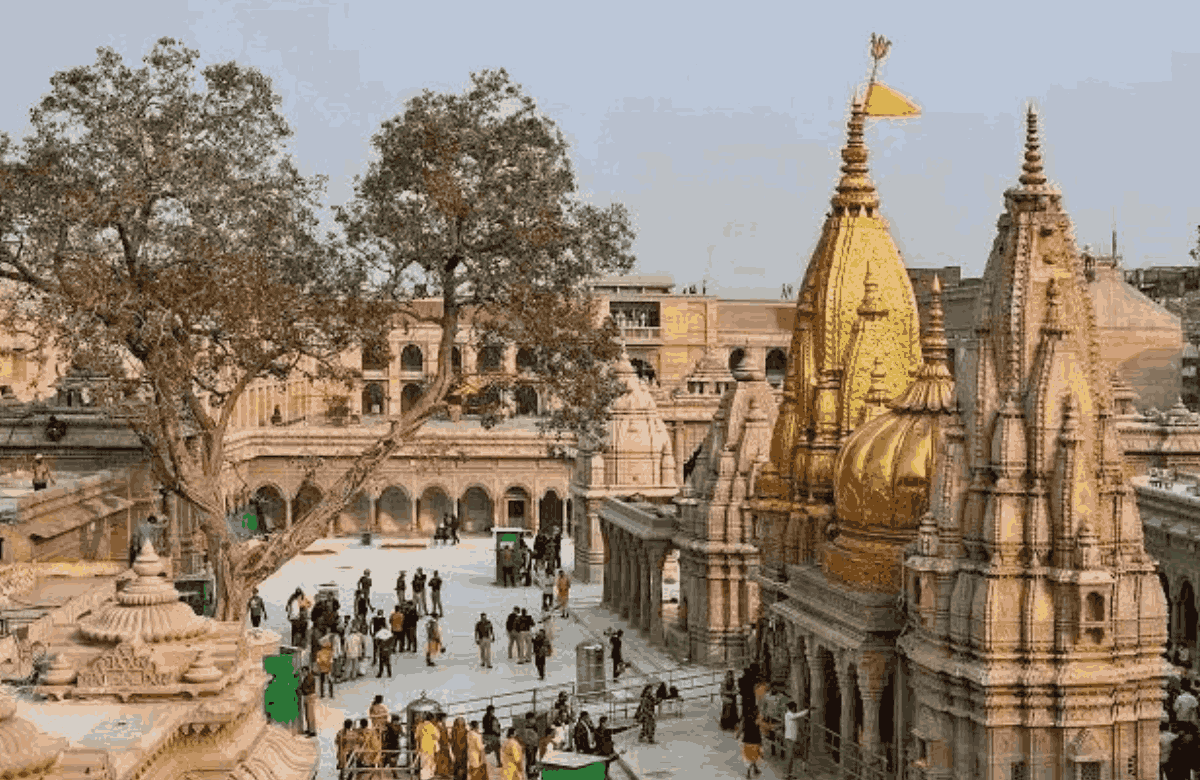
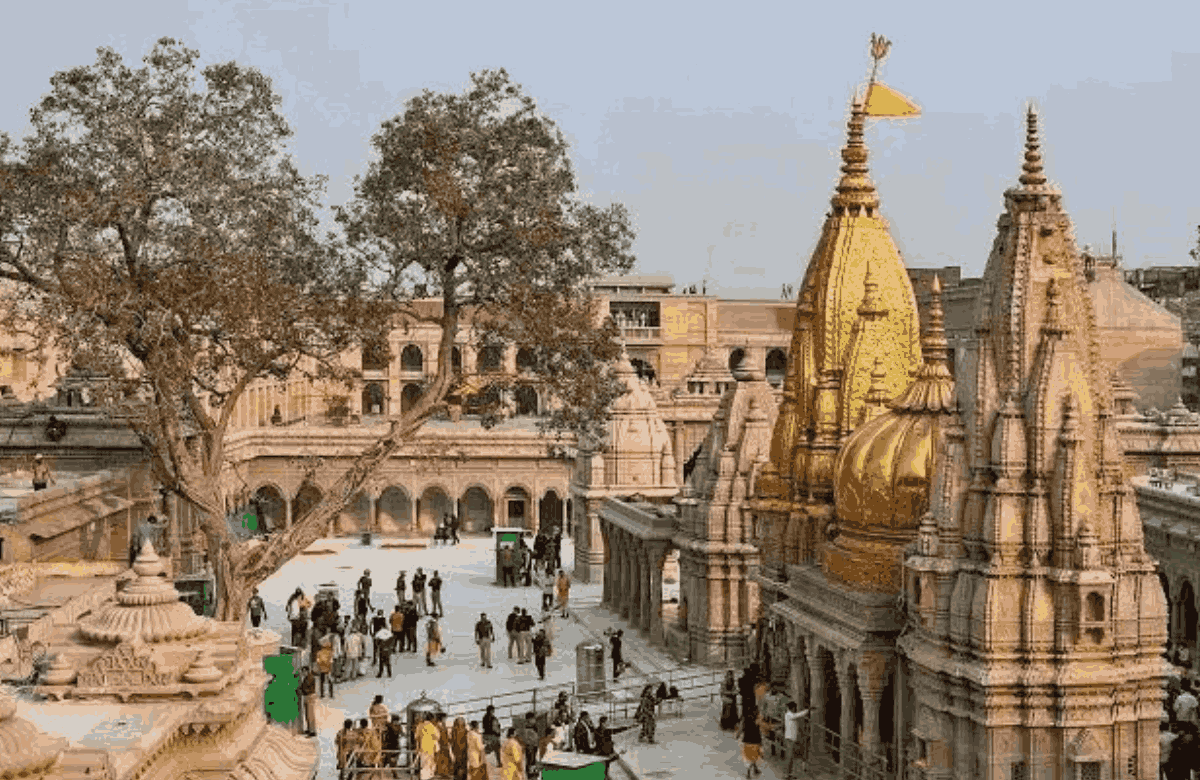
The Kashi Vishwanath Temple as it stands today was built in 1780 CE by Queen Ahilyabai Holkar — the legendary Maratha queen of Indore who is celebrated across India for restoring temples that had been destroyed during the Mughal era. Unable to rebuild on the exact original site (which the Gyanvapi Mosque occupied), Ahilyabai built the new temple on an adjacent plot — adjacent enough to be on the same sacred ground as the original Jyotirlinga. The architecture is in the North Indian Nagara style with a distinctive three-spired shikhara (tower). In 1839 CE, Maharaja Ranjit Singh of the Sikh Empire donated 1,000 kg of pure gold to cover the twin towers and spires of the temple — creating the iconic gold-domed skyline that earned Kashi Vishwanath the popular name 'The Golden Temple of Varanasi.'
The Kashi Vishwanath Corridor — 2021 CE
The most significant transformation of the Kashi Vishwanath temple in modern history was the Kashi Vishwanath Corridor, inaugurated by Prime Minister Narendra Modi on 13 December 2021. The project, developed at a cost of approximately ■900 crore, demolished 296 buildings surrounding the temple to create a 5.4-lakh square foot pilgrim complex — the largest at any temple in India. The corridor now provides a direct visual and physical connection between the Kashi Vishwanath Temple and the Ganges — for the first time in centuries, pilgrims can bathe at the Lalita Ghat and walk directly to the temple through an open promenade lined with 24 buildings housing facilities for pilgrims. The demolition also revealed the ancient Mandodar Temple, Adi Vishweshwar Temple, and several buried medieval structures that had been obscured by the surrounding buildings for hundreds of years.
Kashi Vishwanath Temple Story: The Sacred Mythology
Beyond its architectural and political history, the Kashi Vishwanath Temple carries a mythological story of extraordinary depth — one that explains why Kashi is considered the most sacred city on earth and why dying here is believed to grant instant liberation.
The Origin of the Vishwanath Jyotirlinga
According to the Skanda Purana, when the cosmic dispute arose between Lord Brahma and Lord Vishnu about who was supreme, Lord Shiva manifested as an infinite pillar of light — the primordial Jyotirlinga. This pillar had no beginning and no end. Brahma flew upward as a swan for thousands of years and could not find its top; Vishnu dug downward as a boar for an equal period and could not find its base. Shiva revealed himself as Vishwanath — the Lord of the Universe — the one who encompasses all creation.
Kashi as Shiva's Personal Kingdom
Hindu cosmology holds that Kashi is not part of the ordinary earth — it exists on Shiva's trident, slightly elevated above the physical world, and therefore not subject to the ordinary laws of creation and destruction that govern the rest of existence. When the universe is dissolved at the end of each cosmic cycle (Mahapralaya), Kashi is lifted up by Shiva and preserved — to be set down again as the first city of the new creation. This is why dying in Kashi grants moksha — not because of any mechanical spiritual rule, but because at the moment of death in Kashi, Lord Shiva himself whispers the Taraka Mantra (liberation mantra) into the ear of the dying person. This mantra dissolves all accumulated karma and releases the soul from the cycle of rebirth. Kashi is not merely a pilgrimage destination — it is the place where the boundary between life, death, and liberation is thinnest on earth.
Visiting Kashi Vishwanath Temple: Complete Practical Guide
How to Reach Kashi Vishwanath Temple
The temple is located in the Vishwanath Gali area of Varanasi's old city. After the corridor's opening, it is now also accessible directly from Lalita Ghat.
- From Varanasi Railway Station (Varanasi Junction): ~4 km. Auto-rickshaw: ■60–■100. Cycle-rickshaw: ■40–■70. You will need to walk the last 500m–1 km through the narrow lanes of Vishwanath Gali.
- By Boat via the Ganges: Take a boat from any Varanasi ghat to Lalita Ghat and walk through the new Kashi Vishwanath Corridor directly to the temple — the most scenic approach. Recommended for first-time visitors.
- From Varanasi Airport (Lal Bahadur Shastri International): ~25 km from the airport. Cab: ■400–■600 (45–60 mins).
Temple Dress Code
- Traditional attire is strongly recommended and may be required for certain darshan categories.
- Men: Dhoti and upper cloth (or kurta-pyjama) are ideal. Jeans and T-shirts are permitted for general darshan but not for special puja bookings.
- Women: Saree or salwar-kameez with dupatta. Shorts, sleeveless tops, and revealing clothing are not permitted.
- Footwear: Remove outside the designated areas — cloak rooms are available near temple gates for depositing footwear, bags, and mobile phones.
- Mobile phones and cameras: Strictly prohibited inside the sanctum.
What to See in the Kashi Vishwanath Corridor Complex
- Kashi Vishwanath Jyotirlinga Sanctum: The primary goal of every visit — the ancient Jyotirlinga housed in the inner sanctum. The linga is adorned daily with fresh flowers, bilva leaves, and Ganga water by the temple priests.
- Gyanvapi Well: The ancient well located within the Gyanvapi Mosque complex (adjacent to the temple) where priests allegedly hid the sacred linga from Aurangzeb's soldiers. The well is a powerful symbol of the temple's survival through adversity.
- The Gold Towers (Shikharas): The two gold-covered towers visible from the Ganges ghats — donated by Maharaja Ranjit Singh in 1839 CE. Best viewed from a boat on the Ganges or from the Lalita Ghat.
- The 24 Corridor Buildings: The new corridor buildings house a Vedic centre, a gallery of Kashi's history, a Mumukshu Bhavan (facility for the dying who come to Kashi for a conscious death), tourist information centres, and facilities for pilgrims.
- Lalita Ghat: The ghat directly connected to the Kashi Vishwanath Corridor — ideal for the sacred Ganges bath before temple darshan. Also hosts the Nepalese-style Pashupatinath temple.
Practical Travel Tips for Kashi Vishwanath Darshan
- Book VIP darshan at least 7 days in advance: During peak seasons (October–March, Navratri, Sawan, Mahashivratri), VIP darshan slots sell out days in advance. Log onto shrikashivishwanath.in early and book your preferred time slot. For Mangala Aarti at 3:00 AM, booking 2–3 weeks in advance is essential.
- Arrive 30 minutes before your booked slot: Even with VIP tickets, the temple security and check-in process takes time. Arrive at least 30 minutes before your designated entry time. Carry a printed or digital copy of your booking confirmation.
- Use the Ganges approach for the spiritual experience: Rather than approaching through the narrow lanes of Vishwanath Gali, take a boat to Lalita Ghat, bathe in the Ganges, and walk through the Kashi Vishwanath Corridor to the temple. This approach follows the traditional pilgrimage sequence — sacred bath first, then darshan — and reveals the extraordinary scale of the new complex.
- Plan your visit around the Sandhya Aarti: For first-time visitors who cannot attend the pre-dawn Mangala Aarti, the Sandhya Aarti at 7:00 PM is the next most powerful experience. It is visually spectacular, logistically accessible, and represents Kashi Vishwanath at the peak of its daily ceremonial beauty.
- Combine with Dashashwamedh Ghat Ganga Aarti: The famous Dashashwamedh Ghat Ganga Aarti takes place every evening at approximately 7:00 PM — the same time as the Kashi Vishwanath Sandhya Aarti. Attend one (Vishwanath first is recommended) and then walk the 10 minutes to the other. This evening combines two of Varanasi's most powerful ceremonial experiences in a single night.
- Stay in the old city for the full Kashi experience: Staying in a guesthouse or boutique hotel in the Assi Ghat, Dashashwamedh, or Bhelupura area gives you walking access to the temple at any hour — including the pre-dawn Mangala Aarti and the post-midnight atmosphere of Kashi that no day visitor ever experiences.
Final Thoughts: Kashi Is Not a Place You Visit — It Is a Place That Visits You
There is a saying in the Shaivite tradition: 'You do not choose to go to Kashi — Kashi calls you when you are ready.' If you are reading this guide, you have already been called. The Kashi Vishwanath Temple does not simply offer darshan — it offers a direct encounter with the Lord of the Universe in his most accessible, most intimate, most charged form. Book the VIP darshan. Arrive for the Mangala Aarti if you can. Walk the Ganges approach through the new Corridor. Sit at the Arya Ghat and watch the sacred fires. Be at Dashashwamedh for the evening Ganga Aarti. Stay overnight in the old city and be awake when Kashi crosses the threshold into its most sacred hours between midnight and dawn.