

- Mount Kailash Blogs
- @nagarjuna_travels
There is a mountain in western Tibet that has never been climbed. Not because it is technically impossible — mountaineers have conquered far harder peaks — but because no government has ever granted permission to summit it, and because the mountain itself seems, to those who have come close, to resist the attempt. Mount Kailash stands at 6,638 metres and has been the most sacred peak on Earth for at least four major world religions for thousands of years. And at the centre of all the devotion, all the mythology, and all the modern fascination is one question that refuses to go away: what is actually inside it?
This is not a frivolous question. Mount Kailash has drawn some of the most serious scientific, archaeological, and spiritual inquiry of the past century — and the answers that have emerged are stranger and more compelling than most people expect. From ancient texts describing a hidden city within the mountain, to Russian scientists claiming the peak is a man-made pyramid, to the documented phenomenon of accelerated aging near its base, to the astronomical alignment of its four faces with the cardinal directions — the mount kailash mystery is one of the most layered and genuinely unresolved questions in the world. This guide takes you through everything that is known, everything that is believed, and everything that science has so far been unable to explain about what lies inside and around this extraordinary mountain — and how you can plan your own kailash mansarovar yatra package to experience it for yourself.
Mount Kailash: The Mountain That the World Has Never Climbed
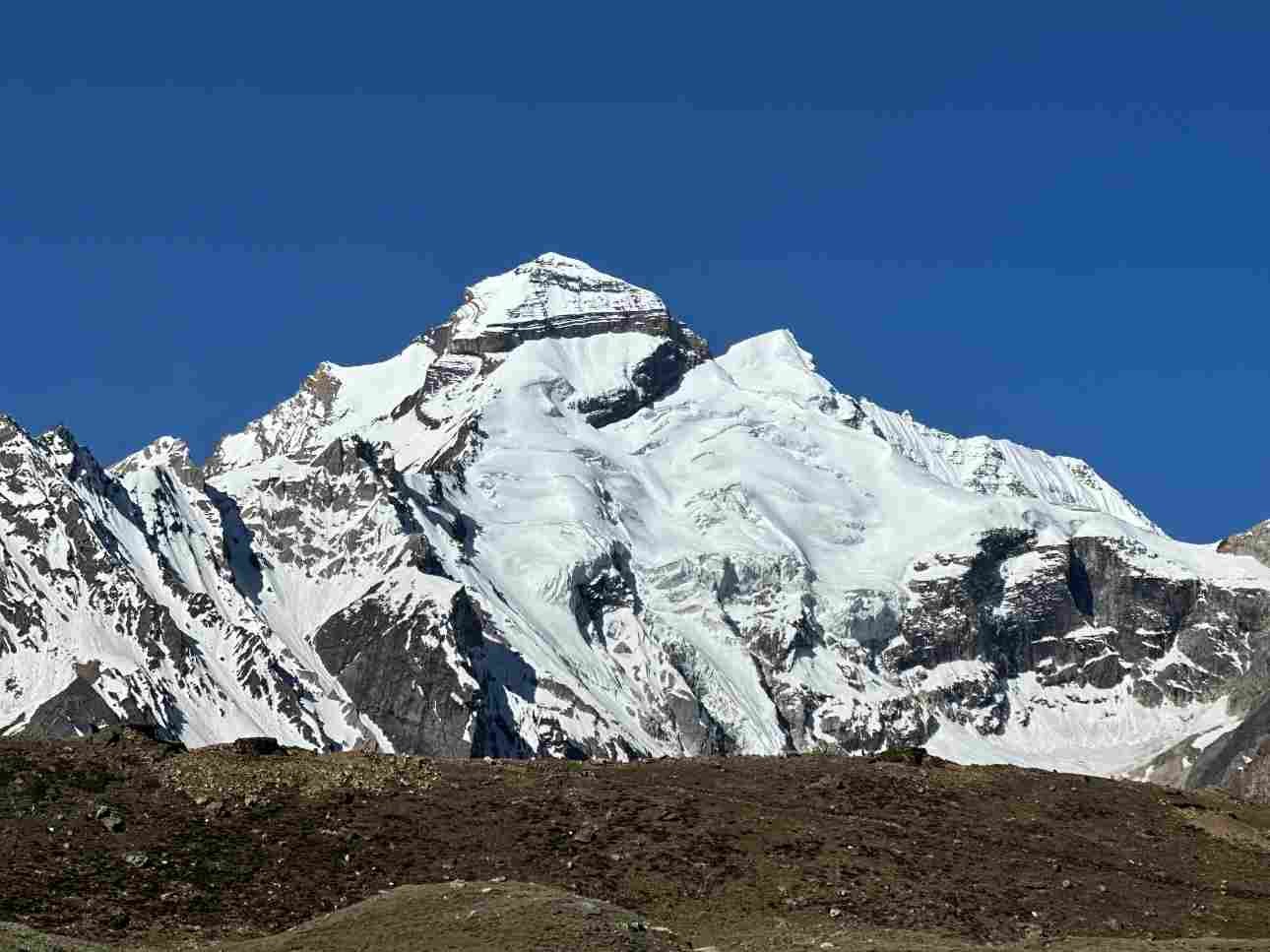
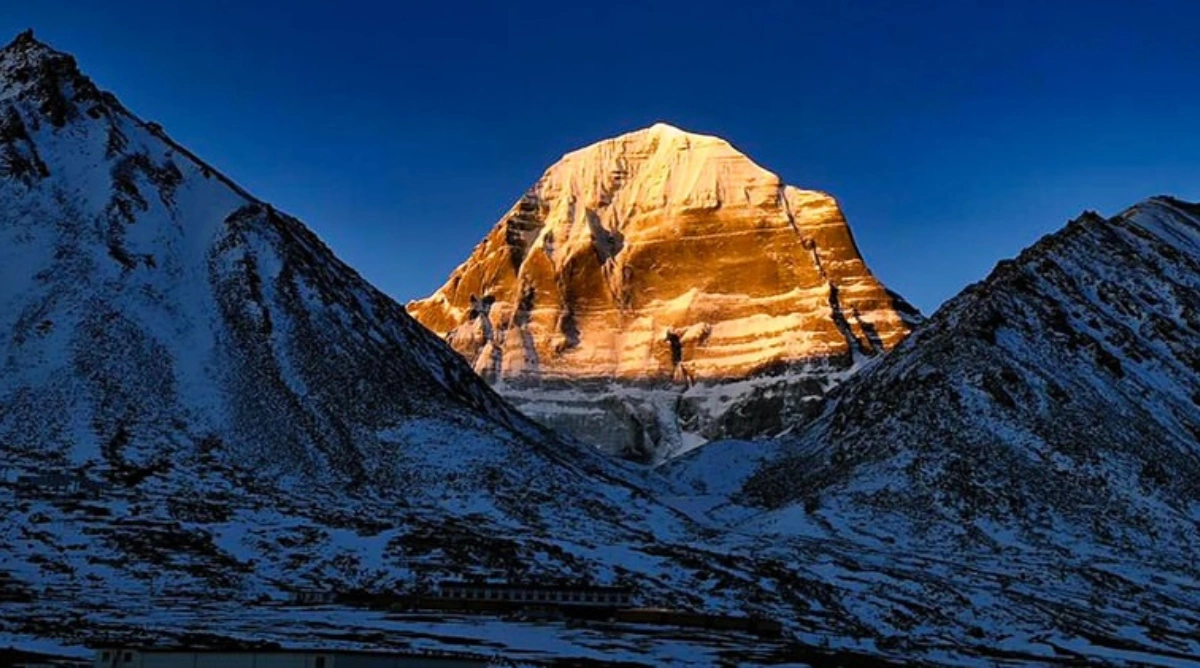
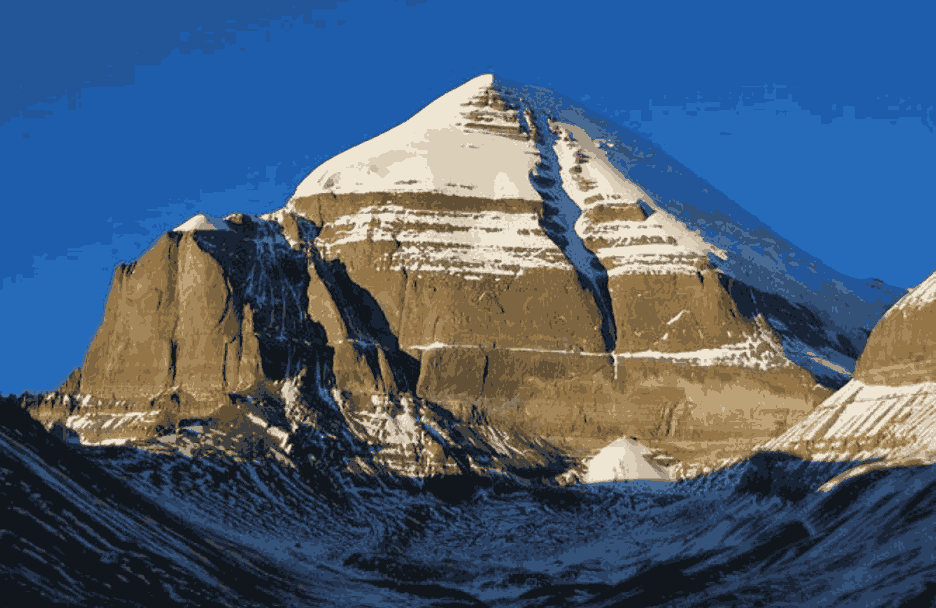
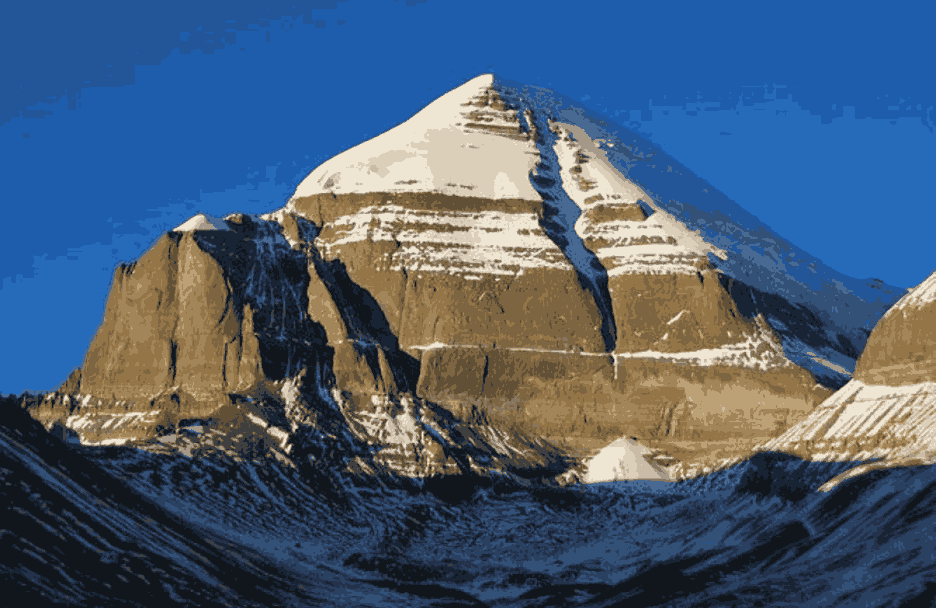
Mount Kailash does not look like the tallest mountain in Tibet — it is not. It does not have the dramatic technical difficulty of the nearby Himalayan giants. What it has is something more difficult to quantify: a presence. Travellers who have approached the mountain across the Tibetan plateau describe the first sighting as a physical event — a shift in the quality of the air, a sudden silence in whatever internal conversation had been running, a feeling of having arrived somewhere that was expecting you. The mountain rises from the Transhimalayan range in the Ngari prefecture of the Tibet Autonomous Region. Its four near-symmetrical faces — dark rock streaked with snow — align almost precisely with the four cardinal directions. Its south face, the one most visible to pilgrims approaching from Nepal and India, has a deep vertical cleft running from the snow cap to the base that creates, in certain lights, what appears to be a natural swastika — an ancient symbol of cosmic order in both Hindu and Buddhist tradition. This symmetry is one of the reasons some researchers believe the mountain is not entirely natural.
No one has ever stood on the summit. A Spanish climbing expedition received permission from China in 2001 but withdrew after an international outcry led by the Dalai Lama and Hindu religious authorities. Reinhold Messner — the man who has climbed all fourteen of the world's 8,000-metre peaks — was reportedly offered permission at one point and declined, saying that some mountains deserve to remain unclimbed. The mountain remains intact. Untouched from above. And the question of what is inside it remains open.
Why Four World Religions Call Mount Kailash the Centre of the Universe
The convergence of four major world religions on a single mountain is, by itself, one of the most remarkable facts about mount kailash. Hinduism, Tibetan Buddhism, Jainism, and the ancient Bon religion of Tibet each have independent traditions identifying this specific peak as the most sacred place on Earth — traditions that developed separately, across centuries, in different languages and theological frameworks, and yet arrived at the same conclusion.

Hinduism: The Abode of Shiva
In Hindu cosmology, Mount Kailash is the earthly home of Lord Shiva — the destroyer and transformer, one of the three principal deities of the Hindu trinity. Shiva is believed to sit in eternal meditation at the summit, and the mountain is described in the Puranas as the axis mundi — the cosmic pillar around which the entire universe revolves. The Kailash Mansarovar region is mentioned extensively in the Ramayana, the Mahabharata, and the Shiva Purana. For hundreds of millions of Hindus, a yatra to mount kailash is the most sacred pilgrimage a human being can undertake in a lifetime.
Buddhism: The Jewel of Snow
Tibetan Buddhists call the mountain Kangri Rinpoche — the Precious Jewel of Snow — and believe it to be the home of the meditational deity Demchok (Chakrasamvara), representing supreme bliss. Buddhist texts describe the mountain as a mandala — a sacred geometric diagram representing the universe — and circumambulating it is considered equivalent to completing 108 rounds of meditation. It is said that completing 108 Koras around the mountain in a single lifetime guarantees liberation from the cycle of rebirth.
Jainism: The Liberation of Rishabhadeva
Jains know the mountain as Meru Parvat or Ashtapada and believe it to be the site where the first Tirthankara — Rishabhadeva, the founding figure of Jain tradition — attained moksha (liberation). The Ashtapada temple complex is believed to have been built on the mountain by Rishabhadeva's son Bharata, though no physical structure has ever been found. The site is considered the holiest in Jain geography.
Bon: The Seat of All Power
The Bon religion — Tibet's pre-Buddhist indigenous spiritual tradition — calls the mountain Tise and considers it the seat of all spiritual power in the world. Bon practitioners walk the Kora in the opposite direction to Buddhists and Hindus — clockwise being the Buddhist and Hindu direction, counter-clockwise being the Bon direction. In Bon cosmology, the soul of the entire Bon tradition resides in and around this mountain.
What Is Inside Mount Kailash? Every Theory Examined
This is the question at the heart of everything. And the honest answer is: nobody knows with certainty. The mountain has never been excavated, never been scientifically surveyed from the inside, and never been summited. What exists is a rich body of ancient textual evidence, a set of geological and geometric anomalies, the accounts of serious researchers, and the testimony of hundreds of thousands of pilgrims across the centuries. Together, these paint a picture that is genuinely difficult to dismiss.
The Ancient Texts: A Hidden City Beneath the Mountain
Multiple ancient traditions — Hindu, Buddhist, and Bon — describe a hidden realm inside or beneath mount kailash. In Hindu and Buddhist traditions, this is identified with Shambhala — a hidden kingdom of enlightened beings that exists beyond ordinary perception but within the physical world. The Kalachakra Tantra, a key Buddhist text, describes Shambhala as a real place accessible to those of sufficient spiritual advancement. Tibetan lamas have described elaborate maps and meditation practices for reaching it. The Hindu texts describe an underground city called Agartha or the Kingdom of the Gods, accessible through specific cave entrances in the Kailash region. The Ramayana mentions the mountain as a place where divine beings dwell in realms that overlap with but are not fully visible to ordinary human perception. The consistency of this underground city motif across traditions that developed independently is one of the most intriguing aspects of the mount kailash mystery.
The Russian Pyramid Theory
In the 1990s, a group of Russian scientists led by Dr. Ernst Muldashev — an ophthalmologist and explorer — conducted expeditions to the Kailash region and published findings claiming that mount kailash is not a natural mountain at all, but a man-made pyramid constructed by an ancient civilisation. Their argument rested on several observations: the near-perfect symmetry of the four faces, the precise cardinal alignment, the presence of what appeared to be artificial stone structures in the surrounding region, and the mountain's geometric proportions which, Muldashev claimed, match those of the Great Pyramid of Giza when scaled appropriately. The Russian team also identified a series of smaller pyramidal structures surrounding the main peak, forming what they described as a complex — a city of pyramids, the largest of which is Kailash itself. These findings were published in Russian academic journals and generated significant interest, though they have not been independently verified by Western geological or archaeological institutions. The inaccessibility of the region makes comprehensive scientific study extremely difficult.
The Geological Reality — and Its Gaps
Mainstream geology describes mount kailash as a plutonic rock formation — a mass of igneous rock that was pushed upward through the Earth's crust over millions of years. The four-sided shape, geologists argue, is the result of differential erosion on the four faces of the peak by ice, wind, and water acting at different rates. The cardinal alignment is, from a conventional geological standpoint, coincidental. What conventional geology does not fully account for is the degree of symmetry. Natural erosion rarely produces four faces of such consistent proportion and near-perfect directional alignment. It does not account for the gravitational and electromagnetic anomalies that have been reported in the region by multiple independent observers. And it does not engage with the underground cave systems that are known to exist in the karst limestone formations surrounding the mountain — cave systems that have not been fully mapped or explored.
The Time Distortion Phenomenon
Among the most widely reported and hardest to dismiss accounts from pilgrims and researchers who have spent extended time near the base of mount kailash is a phenomenon of accelerated biological time. Multiple credible witnesses — including members of the Russian expeditions — have reported that hair and nail growth appears to accelerate dramatically in the area around the mountain, sometimes in ways that suggest days of biological aging occurring within hours. One Russian researcher described growing a week's worth of nail and beard growth overnight while camped near the north face. No scientific explanation for this has been formally established. Hypotheses include the effect of unusual electromagnetic fields on biological processes, the influence of the radiation environment at high altitude, and — from those more open to unconventional explanations — the possibility that time itself moves differently in proximity to whatever energy source the mountain contains. The phenomenon is consistent enough across independent accounts that it cannot easily be attributed to collective suggestion.
The Kora: Walking the Mystery in 52 Kilometres
For most pilgrims and travellers who undertake a kailash mansarovar tour package, the summit of mount kailash is not the destination. The Kora is. Circumambulating the mountain — walking a complete circle around its base — is the central act of the pilgrimage for Hindus, Buddhists, Jains, and Bon practitioners alike. The Kora is 52 km and typically takes three days, crossing the Dolma La pass at 5,630 metres — the highest point of the route and, for many pilgrims, the most spiritually intense moment of their lives. The landscape of the Kora changes dramatically over the three days. The first day takes you across the western face of the mountain along the Lha Chu river valley — a relatively gentle approach through a landscape of coloured prayer flags, stone cairns built by generations of pilgrims, and views of the south and west faces that grow more overwhelming with each hour. The second day is the hardest — the climb to Dolma La at 5,630 m is steep, cold, and oxygen-thin. Pilgrims leave offerings at the pass, and the descent on the far side, down into the eastern valley, has a quality of arrival that is impossible to describe adequately in words. The third day brings you back to the starting point at Darchen through the eastern and northern approaches.
Hindu tradition holds that one Kora washes away the sins of a lifetime. Thirteen Koras guarantee liberation from the cycle of rebirth. One hundred and eight Koras — the number that Tibetan Buddhist tradition associates with complete liberation — is an aspiration rather than an expectation for most pilgrims. Most arrive, complete one Kora, and leave changed in ways they spend the rest of their lives trying to articulate.

The Dolma La Pass: The Heart of the Kora
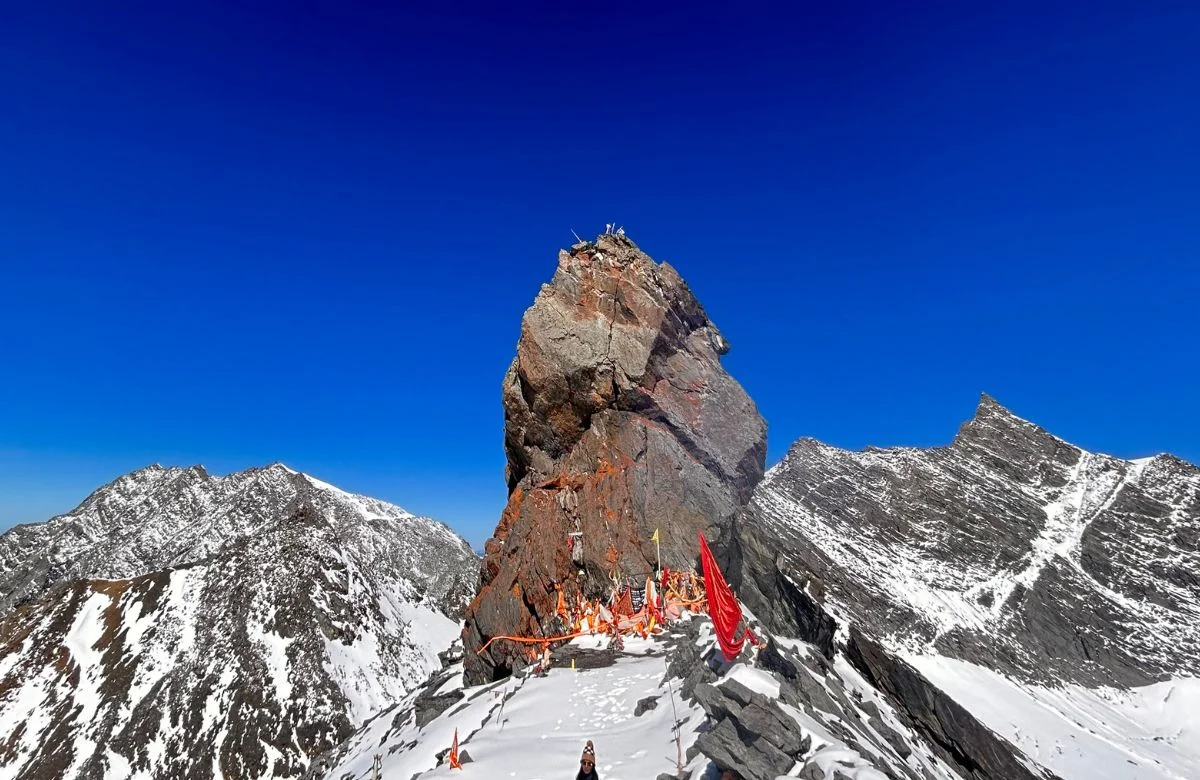
The Dolma La pass at 5,630 m is the pivot point of the entire Kora experience. It is named after Dolma — the Tibetan goddess of compassion, equivalent to the Hindu Devi — and is marked by a massive boulder covered in thousands of prayer flags left by pilgrims across generations. The climb to Dolma La from the camp at Dira Puk is approximately 8 km and gains over 900 m of altitude — one of the most physically demanding single sections of any pilgrimage route in Asia. At the pass, pilgrims leave behind old clothing, hair, or personal objects as a symbolic act of releasing old karma and old selves. The Gauri Kund — a sacred lake just below the pass — is where pilgrims traditionally bathe regardless of the temperature of the water, which is often just above freezing. The descent from Dolma La into the Lham Chu valley on the far side is described by almost everyone who has done it as the most peaceful walking of their lives — a sustained sense of completion that carries through the remaining day and a half of the Kora back to Darchen.
Lake Mansarovar: The Sacred Waters at the Foot of the Mountain
No kailash mansarovar package is complete without time at Lake Mansarovar — and once you have sat by its shores, you will understand why the lake's name has been placed alongside the mountain's in every pilgrimage tradition for thousands of years. Mansarovar is one of the highest freshwater lakes in the world, sitting at 4,590 m, and it is of a blue so deep and so clear that it reads almost as an hallucination against the surrounding brown and grey of the Tibetan plateau. In Hindu tradition, Mansarovar was created in the mind of Lord Brahma — its name means 'mind lake' (Manas = mind, Sarovar = lake) — and bathing in its waters is believed to cleanse the soul of sins accumulated across a hundred lifetimes. The lake is also associated in Buddhist tradition with the dream of Queen Maya, the mother of the Buddha, who is said to have dreamed of a white elephant descending from heaven and entering her womb from the shores of a lake matching Mansarovar's description.
At sunrise, when the first light strikes the surface of the lake and the reflection of mount kailash appears in the water, the scene is one of the most arresting sights available to any human being willing to make the journey to reach it. Many kailash yatra package itineraries include an early morning circumambulation of the lake shore — a 90 km Parikrama of Mansarovar that takes three days and is considered separately sacred from the mountain Kora.
What a Kailash Mansarovar Tour Package Typically Includes
If you are planning a kailash mansarovar tour package for the first time, understanding what is and is not included in a standard package helps you compare operators honestly and avoid unpleasant surprises mid-journey. The logistics of reaching mount kailash are complex — crossing an international border, obtaining restricted area permits for Tibet, acclimatising at multiple altitude stages — and a good package handles all of this seamlessly.
What Is Typically Included
- All China Tibet Travel Permits and Inner Tibet Permit documentation handling
- Airport and border transfers at all stages of the journey
- Accommodation throughout — guesthouses in Kathmandu or Dehradun, Tibetan guesthouses enroute, and tent camps at the base of the mountain for the Kora
- All meals during the pilgrimage section (the quality varies significantly between operators — askspecifically)
- An experienced local guide and Tibetan liaison officer (mandatory for all foreign nationals in Tibet)
- Porterage or yak support for luggage on the Kora (the amount of assisted weight varies by package tier)
- Oxygen cylinders and basic medical supplies for the high-altitude sections
- Group medical and evacuation insurance (confirm the specific coverage limit)
What Is Often Not Included
- International flights to Kathmandu or Dehradun — these are almost always booked separately
- Personal travel insurance — strongly recommended in addition to the group policy
- Tips for local guides, drivers, and camp staff
- Personal spending, souvenirs, and any additional meals outside the itinerary
- Medical evacuation helicopter if required beyond the standard policy coverage
- Costs arising from itinerary changes due to weather, permit delays, or political closures (Tibet border closures do occur)
Conclusion
The question of what is inside mount kailash may never be definitively answered. The mountain does not offer itself up for examination. It does not yield its summit or its secrets to those who approach with instruments and ambitions. What it offers instead — to the scientist, the pilgrim, the curious traveller, and the devoted yatri alike — is a confrontation with the limits of what can be known, measured, and explained. Four of the world's great religions, independently and across centuries, identified this mountain as the most sacred place on Earth. Ancient texts from multiple traditions describe hidden realms within it. Modern researchers have documented phenomena near its base that conventional science has not explained. And hundreds of thousands of pilgrims who have completed the Kora return describing changes in themselves — in their priorities, their fears, their sense of what matters — that persist long after the altitude sickness has faded and the dust of the Tibetan plateau has been washed off. If you are drawn to mount kailash — by the mystery, by the mythology, by the landscape, or by the pull of something you cannot quite name — trust that instinct. Plan your kailash mansarovar yatra package carefully, prepare your body seriously, and go with an open mind. Whatever is inside the mountain, the experience of being near it has a way of making something open up inside you instead.