

- Uttarakhand Tours
- @Nagarjuna_Travels
Most people planning to attend the Ardh Kumbh Mela Haridwar 2027 face the same problem: too many conflicting dates online, too much confusing information about which bathing dates are the most significant, and not enough honest practical guidance about how to actually plan a visit. Some sites list nine bathing dates. Others list ten. Some still use the old term Shahi Snan without mentioning that the government has officially changed it. And almost none of them tell you what the crowd reality looks like at Har Ki Pauri on peak days, or how to plan your visit without being stranded in a queue for six hours. This guide gives you the verified, complete picture — official dates confirmed by the Uttarakhand government and the Akhil Bharatiya Akhara Parishad, the full ten-date bathing schedule, what makes 2027 historically significant, and practical planning advice for every type of pilgrim.
What Is the Ardh Kumbh Mela and Why Is Haridwar 2027 Special?
The Ardh Kumbh Mela is one of the world's largest human gatherings, held every six years at two of India's four Kumbh pilgrimage cities — Haridwar and Prayagraj. The word Ardh means 'half', placing this event at the midpoint of the twelve-year Purna Kumbh Mela cycle. In Hindu tradition, however, the spiritual merit of bathing in the sacred river during Ardh Kumbh is considered equal to a full Kumbh — making it a pilgrimage of the highest significance for devotees who cannot wait another six years for the full cycle. The 2027 edition at Haridwar is particularly significant for several reasons that set it apart from previous editions.
Why 2027 Stands Apart
- Full restoration after 2021: The previous Haridwar Kumbh in 2021 was held under the severe restrictions of the COVID-19 pandemic, dramatically limiting participation. The 2027 edition is the first full, unrestricted Haridwar Kumbh since the pre-pandemic era — and anticipation has been building for years
- Post-Maha Kumbh spiritual momentum: The Ardh Kumbh Mela 2027 follows directly after the historic Maha Kumbh Mela 2025 in Prayagraj, which drew an extraordinary 66 crore pilgrims and shattered every record in the history of human congregation. The spiritual energy of that gathering is expected to carry directly into 2027
- Four Amrit Snan dates: This edition will be the first Haridwar Ardh Kumbh to feature four Shahi Amrit Snan events — adding an additional layer of ceremonial significance to an already powerful gathering
- Historic terminology change: For the first time in Haridwar Kumbh history, the term Shahi Snan has been officially replaced with Amrit Snan — a meaningful cultural and linguistic shift that aligns the event's language with its Vedic Sanskrit origins rather than its Persian-language predecessor
- Scale of expected attendance: Between 10 crore and 17 crore pilgrims are projected to attend across the 97-day mela, making it one of the largest gatherings in human history
Ardh Kumbh Mela Haridwar 2027: Official Dates and Duration
The dates for the Ardh Kumbh Mela Haridwar 2027 were officially announced following a formal meeting between Uttarakhand Chief Minister Pushkar Singh Dhami and the Akhil Bharatiya Akhara Parishad (ABAP), led by Mahant Ravindra Puri, in November 2025. These are the government-confirmed and Akhara-approved dates.
- Official start date: 14 January 2027 (Makar Sankranti)
- Official end date: 20 April 2027 (Chaitra Purnima)
- Total duration: 97 days
- Total official bathing dates (Snan Parv): 10
- Amrit Snan dates (formerly Shahi Snan): 3 confirmed (6 March, 8 March, 14 April); a fourth on 20 April is widely reported but not yet uniformly confirmed in all official sources
Complete Ardh Kumbh 2027 Bathing Dates: The Official Schedule
Here are all ten officially announced Snan Parv (sacred bathing) dates for the Ardh Kumbh Mela 2027, with the three confirmed Amrit Snan dates clearly identified.
| Date | Occasion | Type |
| 14 Jan 2027 | Makar Sankranti | Snan Parv (Opening) |
| 6 Feb 2027 | Mauni Amavasya | Snan Parv |
| 11 Feb 2027 | Basant Panchami | Snan Parv |
| 20 Feb 2027 | Magh Purnima | Snan Parv |
| 6 Mar 2027 | Mahashivratri | Amrit Snan (1st) |
| 8 Mar 2027 | Phalguna Amavasya | Amrit Snan (2nd) |
| 7 Apr 2027 | Nav Samvatsar | Snan Parv |
| 14 Apr 2027 | Mesh Sankranti | Amrit Snan (3rd) |
| 20 Apr 2027 | Chaitra Purnima | Closing Snan Parv |
Note: The three confirmed Amrit Snan dates are 6 March, 8 March, and 14 April 2027. Some sources also list 20 April as a fourth Amrit Snan. Verify this with the official Uttarakhand Mela Administration notification expected in late 2026. Nav Samvatsar (7 April) is included in the official 10-date schedule but is frequently missed in unofficial guides — do not rely on any guide listing only 9 bathing dates.
Amrit Snan vs Shahi Snan: The Historic Name Change in 2027
For the first time in the history of the Haridwar Kumbh, the Uttarakhand government has officially renamed the Shahi Snan (Royal Bath) to Amrit Snan (Nectar Bath) for the 2027 edition. This change has been implemented with the full consensus of all 13 Akharas and is now reflected in all official government signboards, administrative documents, and security schedules.
Why the Name Was Changed
- The word Shahi is of Persian and Urdu origin, meaning 'Royal'. It entered the Kumbh vocabulary during the Mughal period and has been used ever since without critical examination
- The government and the saint community opted for Amrit — Sanskrit for 'Nectar' — to align the terminology directly with the Vedic legend of the Samudra Manthan (Churning of the Ocean), from which the Kumbh tradition itself originates
- Amrit refers specifically to the divine nectar for which the gods and demons churned the cosmic ocean, drops of which are said to have fallen on the four Kumbh sites including Haridwar
- The change represents a broader cultural shift toward reclaiming Sanskrit-origin terminology for India's most ancient Hindu traditions
What Changes Practically?
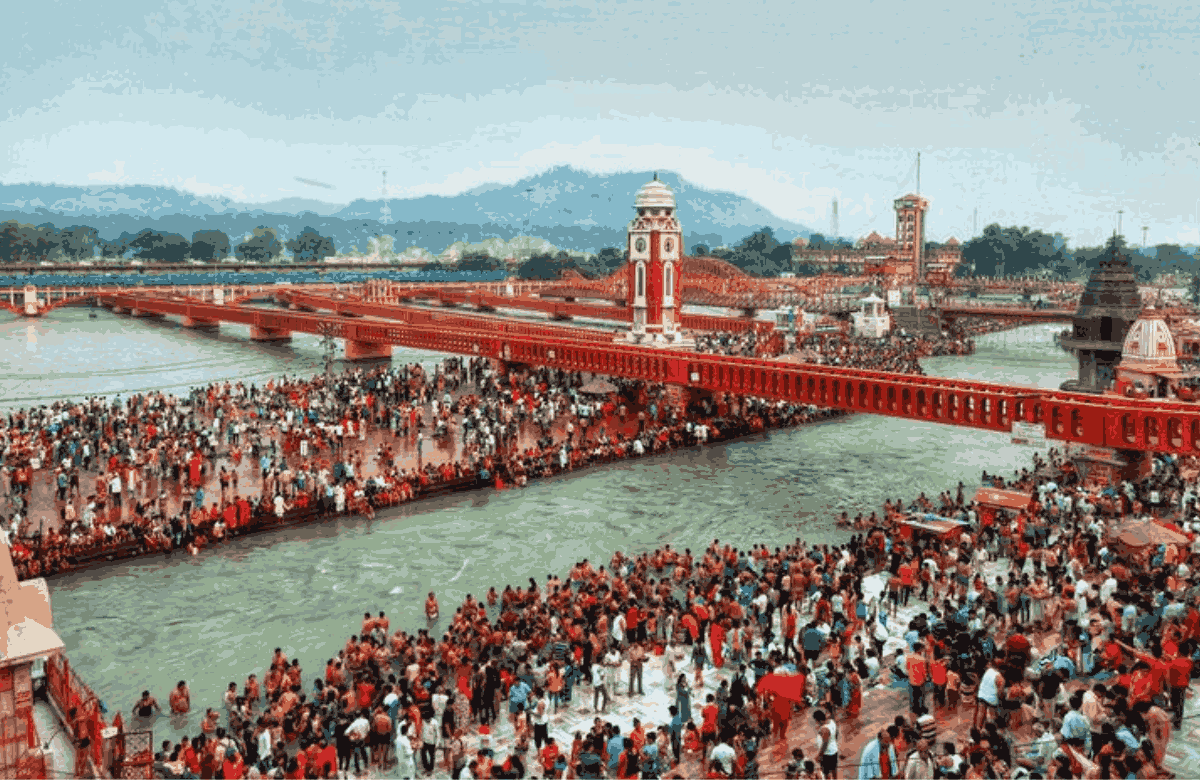
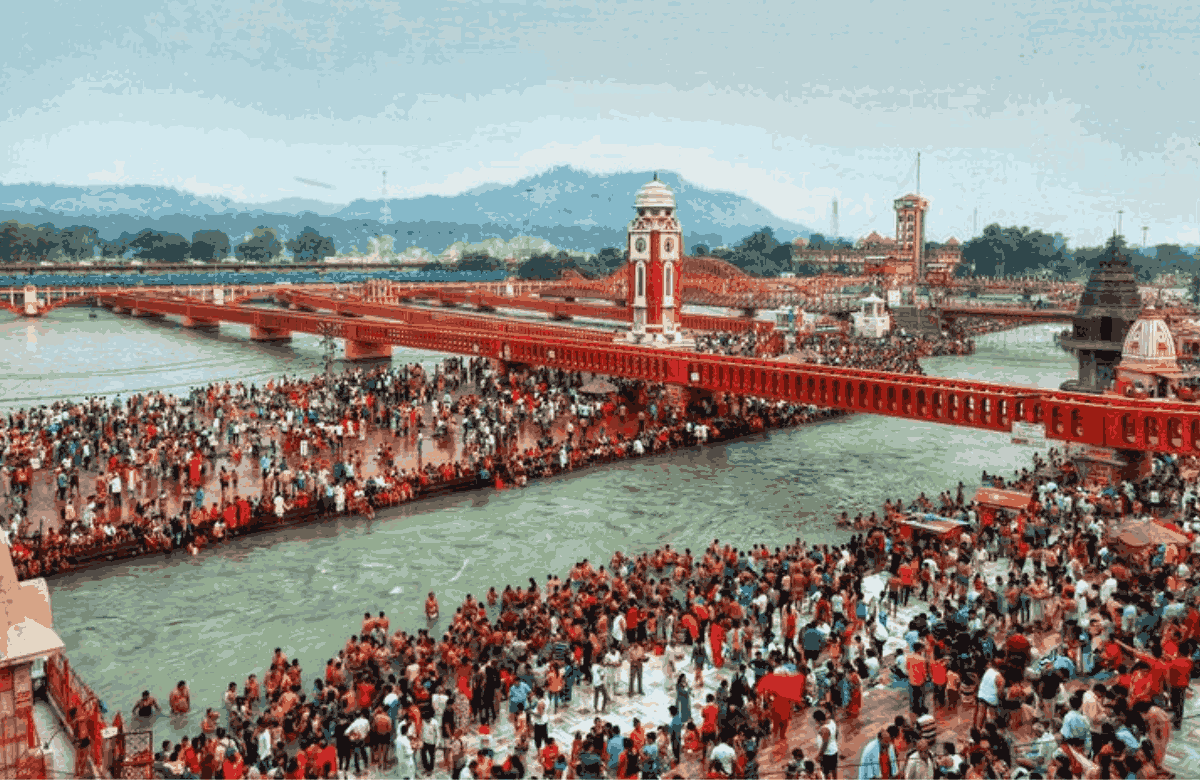
For pilgrims planning their visit, the practical experience of an Amrit Snan day is identical to what a Shahi Snan day has always involved. The Akharas process to the ghats in a fixed, traditionally determined order. Naga Sadhus enter the Ganga first. General pilgrim access to Har Ki Pauri is restricted or staggered around the Akhara procession window. These are the largest crowd days of the mela — if you are avoiding maximum congestion, treat 6 March, 8 March, and 14 April as the three days to plan around carefully.
The Spiritual Significance of Bathing at Haridwar During Kumbh
The Ardh Kumbh Mela is rooted in one of Hinduism's most ancient cosmological stories — the Samudra Manthan, or the churning of the cosmic ocean by the Devas (gods) and the Asuras (demons) in their contest for the pot of Amrit, the nectar of immortality. During the struggle for the pot, four drops of the nectar fell to earth at four sacred locations: Haridwar, Prayagraj, Nasik, and Ujjain. These four sites became the rotation points for the Kumbh Mela cycle. Haridwar's sacred geography places it at the point where the Ganga descends from the mountains onto the plains — Har Ki Pauri, the most sacred bathing ghat, is considered the precise point where the Ganga becomes accessible to millions of pilgrims who cannot reach its upper Himalayan courses. Bathing here during the Ardh Kumbh, at the astrologically determined moments of planetary alignment, is believed to cleanse all accumulated karma and grant moksha — liberation from the cycle of birth and death.
The Astrological Basis of the Kumbh
The Ardh Kumbh Mela 2027 dates are determined by the traditional Panchang (Hindu lunar-solar calendar) based on the alignment of three celestial bodies — Jupiter, the Sun, and the Moon. For the 2027 Haridwar Kumbh, the event begins when Jupiter enters Aquarius and the Sun enters Aries — a conjunction considered highly auspicious for ritual bathing. The specific dates within the mela when these alignments peak become the Snan Parv and Amrit Snan dates.
Scale and Infrastructure: What to Expect at Haridwar Ardh Kumbh 2027
The Ardh Kumbh Mela Haridwar 2027 will be one of the largest human gatherings in history. Understanding the scale helps pilgrims prepare realistically for what the experience involves.
Expected Attendance
- Total pilgrims across 97 days: between 10 crore and 17 crore (100 to 170 million people)
- The Uttarakhand Mela Administration's own crowd assessment projects 17 crore, based on trends from the 2010 Kumbh and 2016 Ardh Kumbh
- Single-day peak attendance on Mauni Amavasya (6 February) and Mahashivratri Amrit Snan (6 March) is expected to rival the largest single-day crowds in human pilgrimage history
- Pilgrim numbers are up 18.6% year-on-year compared to 2025 figures for comparable religious events, reflecting the post-pandemic resurgence in pilgrimage participation across India
Government Investment in Infrastructure
Uttarakhand Chief Minister Pushkar Singh Dhami formally requested a financial grant of 3,500 crore from Prime Minister Narendra Modi in July 2025 specifically for preparations and infrastructure development for the Ardh Kumbh 2027. The state has already begun reinforcing infrastructure including road widening, bridge construction, new pontoon bridges over the Ganga, enhanced crowd-control systems, improved sanitation facilities, and advanced security technology.
- Advanced crowd-control technology and AI-based pilgrim monitoring systems
- Expanded medical camp network with hospitals, oxygen facilities, and emergency response posts distributed across the mela grounds
- Designated camping and receiving areas for different Akharas and pilgrim groups
- Enhanced rail and road connectivity from Delhi and other major cities
- Women-focused help centres, police booths, and dedicated support teams at all major ghats
- Battery-operated vehicles and shuttle services within the mela area
The 13 Akharas and the Amrit Snan Processions
The Akharas are the ancient monastic orders that form the organisational and spiritual backbone of the Kumbh Mela. All 13 Akharas participate in the Ardh Kumbh Mela 2027 at Haridwar, and their ceremonial processions to the ghats on Amrit Snan days are the most extraordinary and visually dramatic moments of the entire event.
What Happens on an Amrit Snan Day
- Akharas process to the Ganga in a traditionally fixed order, determined by seniority and ancient custom — this order is a point of serious discussion and occasional dispute between Akharas
- The Naga Sadhus — ash-smeared, dreadlocked ascetics who live in complete renunciation — enter the river first on Amrit Snan days; witnessing this procession is considered one of the most powerful experiences available at any Hindu festival
- Mahamandaleshwars, revered spiritual leaders of each Akhara, are carried in elaborately decorated palanquins or ride elephants and horses as part of the procession
- Traditional music — conches, drums, and devotional singing — accompanies the entire procession from the Akhara camps to the ghat
- General pilgrim access to Har Ki Pauri is staggered around the Akhara procession to manage the extraordinary crowd density
- The procession and bathing ritual for the Akharas typically occupies the early morning hours (before 8 AM); general pilgrims are advised to plan their own darshan and bathing outside these windows
How to Plan Your Ardh Kumbh Mela Haridwar 2027 Visit
Planning for the Ardh Kumbh Mela 2027 requires much earlier action than most pilgrims expect. With 10 to 17 crore people converging on a single city over 97 days — and millions arriving on the same peak dates — accommodation, transport, and logistics fill up months in advance.
When to Go: Choosing Your Visit Window
- Amrit Snan dates (6 March, 8 March, 14 April): the most spiritually significant days — maximum crowds, maximum energy, maximum logistical complexity; plan to arrive a day early and leave a day after to manage crowd flow
- Mauni Amavasya (6 February): traditionally one of the largest single-day crowds of any Kumbh; a silent fast is observed by millions of devotees; accommodation within 50 km of Haridwar books out months in advance
- Weekday visits outside peak Snan dates: significantly lower crowd density at the ghats; ideal for devotees who want an intimate darshan at Har Ki Pauri and unhurried time at the mela grounds
- January 14 (Opening day) and April 20 (Closing day): significant spiritual moments with manageable crowds compared to the mid-mela peaks — good options for pilgrims who want to be part of the formal beginning or conclusion
Accommodation: Book Months in Advance
- Haridwar hotels within walking distance of Har Ki Pauri will be fully booked for all peak Snan dates by October 2026 at the latest — book immediately if you have a specific date in mind
- Rishikesh (25 km from Haridwar) and Roorkee (40 km) are viable base locations for pilgrims who cannot find Haridwar accommodation
- KMVN and government-operated accommodation is available for budget pilgrims but requires early registration
- Akhara camps on the mela grounds offer accommodation for pilgrims with spiritual connections to specific orders — these are typically arranged through personal introductions
- Dharamshalas near the ghats offer the most affordable options but have limited facilities — book directly and confirm well in advance
Getting to Haridwar
- By train: Haridwar Junction is well connected from Delhi (Shatabdi Express, Jan Shatabdi, and multiple night trains), Lucknow, Mumbai, and other major cities; book train tickets at least 3 to 4 months before peak dates
- By road: Haridwar is approximately 220 km from Delhi via NH58 — around 4 to 6 hours depending on traffic; Volvo bus services from ISBT Kashmere Gate and Anand Vihar run frequently
- By air: The nearest airport is Jolly Grant Airport in Dehradun (35 km from Haridwar); Indira Gandhi International Airport in Delhi (220 km) offers more flight options
- Local transport within Haridwar: battery-operated vehicles (BOVs), e-rickshaws, and shuttle services operate within the mela zone; private vehicles will face significant restrictions near the ghats on peak Snan days
What to Carry and Practical Tips
- Valid government-issued photo ID (Aadhaar, Voter ID, or passport) — required at various checkpoints
- Carry basic medicines including rehydration salts, antacids, and any personal prescription medication
- Avoid peak hours (5 AM to 10 AM) at Har Ki Pauri on Amrit Snan dates unless you specifically want to witness the Akhara procession — plan your personal bathing for later in the morning
- Wear clothing suited for bathing in the Ganga; carry dry change of clothes in a waterproof bag
- Keep your footwear secure at ghats — footwear theft and loss is common in large crowds
- Use digital payment methods where possible — carrying large amounts of cash in peak crowds is a security risk
- Designate a meeting point before entering the ghat area with any group members — mobile signals can be disrupted in extreme crowd density
What to Do at Haridwar Beyond the Holy Dip
The Ardh Kumbh Mela is a 97-day event, and the holy dip in the Ganga — however central — is one part of a rich, multidimensional gathering. Here is what else fills the days of the mela.
Spiritual and Cultural Experiences
- Ganga Aarti at Har Ki Pauri: the evening lamp ceremony at the sacred ghat is one of India's most visually magnificent rituals — attend at least one evening aarti during your stay, and arrive 30 to 45 minutes early for a good position
- Akhara camps: the temporary settlements of the 13 Akharas on the mela grounds are open to visitors; spending time in an Akhara camp — attending discourses, witnessing morning rituals, interacting with sadhus — is an experience unavailable at any other time
- Spiritual discourses (Pravachans): India's most revered saints and spiritual teachers give daily public discourses throughout the mela period; schedules are published in the mela's official daily bulletin
- Yoga and meditation camps: dozens of ashrams and yoga organisations run structured camps during the Kumbh period; sessions range from a single morning class to week-long immersions
- Cultural performances: traditional music, classical dance, devotional singing, and folk art performances take place at designated cultural stages throughout the mela grounds
- Kumbh marketplace: the mela features an extraordinary bazaar of spiritual literature, handicrafts, religious artefacts, Ayurvedic products, and traditional food — a cultural immersion in its own right
Sacred Sites Around Haridwar
- Mansa Devi Temple: accessible by ropeway from near Har Ki Pauri; views over the mela grounds from the hilltop temple are exceptional during the Kumbh period
- Chandi Devi Temple: a second hilltop temple on the opposite bank, reached by cable car or on foot; considered highly auspicious for pilgrims to visit alongside the Ganga darshan
- Maya Devi Temple: one of the Shakti Peethas and among the oldest temples in Haridwar; located near Har Ki Pauri
- Rishikesh (25 km): the yoga capital of the world is a day trip or overnight extension for pilgrims combining spiritual and wellness experiences with the Kumbh
Conclusion
The Ardh Kumbh Mela Haridwar 2027 is one of those rare events that genuinely exceeds every description of it. Ninety-seven days. Up to seventeen crore pilgrims. The sacred Ganga. The ancient Akharas. The Naga Sadhus. The evening aarti at Har Ki Pauri with lamps floating on the river. And the singular moment of standing in that water, with millions of others, at a crossing point between the human and the divine that has been recognized as such for thousands of years. Whether you come for the Amrit Snan of 6 March, the silence of Mauni Amavasya on 6 February, or a quiet weekday morning in April when the mela is still full but the ghat is less crowded — Haridwar in 2027 will return you to something ancient and necessary. Start planning now. The Ganga does not wait.