

- Uttarakhand Tours
- @nagarjuna_travels
Most pilgrims planning the Do Dham circuit hit the same wall: they know the kedarnath to badrinath distance is significant, but nobody explains it properly. Is it a few hours or a full day? Does the bus run directly, or do you need to change at Rudraprayag? What does the ticket actually cost, and is there a fixed timetable or do you just show up and wait? And underneath all of that sits an even more basic question that most guides skip entirely — how do you even get to Kedarnath in the first place if you are starting from Haridwar, the main railhead for most Indian pilgrims? This guide answers all of it in one place. We cover the exact kedarnath to badrinath distance by road, bus, and helicopter, the complete haridwar to kedarnath distance and route, and — because most pilgrims doing Kedarnath and Badrinath also want Gangotri and Yamunotri — the distances connecting those two shrines as well. Every figure here is checked against current 2026 government bus rates, GMOU fares, and published Nagarjuna Travels package data, so you are planning with real numbers, not guesses.
Kedarnath to Badrinath Distance: The Direct Answer
The kedarnath to badrinath distance by road, measured from Gaurikund (the Kedarnath trailhead, since the temple itself has no road access) to Badrinath temple, is approximately 215 to 233 km. The variation depends on the exact starting point used in the calculation — some sources measure from Sonprayag, others from Gaurikund, and some include the short stretch from Guptkashi. The drive takes approximately 7 to 9 hours under normal road conditions, routing via Rudraprayag, Chamoli, and Joshimath. It is worth being clear about something most guides gloss over: you cannot drive directly from the Kedarnath temple to Badrinath temple, because Kedarnath has no road connection at all. Every pilgrim doing the kedarnath to badrinath distance by road must first descend the 16 to 18 km Kedarnath trek back to Gaurikund, then begin the road journey to Badrinath from there. This means the realistic Kedarnath-to-Badrinath journey is really two separate legs: the trek descent, followed by the road drive.
For pilgrims who want to skip the road entirely, the kedarnath to badrinath distance by helicopter is a genuine option on some operator routes — typically completed in 25 to 30 minutes of flight time, replacing what would otherwise be a 7 to 9 hour road journey. This option is far less commonly available as a direct point-to-point flight compared to standard Kedarnath shuttle services, and is usually offered as part of a structured Do Dham helicopter package rather than a standalone ticket.
Kedarnath to Badrinath by Road: Stage-by-Stage Route
Understanding the kedarnath to badrinath distance by road as a sequence of stages makes the journey far more manageable to plan, especially for pilgrims unfamiliar with the Garhwal Himalayan road network.
Stage 1 — Gaurikund/Sonprayag to Rudraprayag: Approximately 75 km
The journey begins at Sonprayag or Gaurikund, descending through Guptkashi and Tilwara along the Mandakini valley to Rudraprayag — the sacred confluence of the Alaknanda and Mandakini rivers. This stretch takes approximately 2.5 to 3 hours. Rudraprayag is the key junction point where the road splits — south back toward Rishikesh, and north toward Badrinath via the Alaknanda valley.
Stage 2 — Rudraprayag to Chamoli: Approximately 70 km
From Rudraprayag, the road follows the Alaknanda river north through Karnaprayag — another of the five sacred Prayags — to Chamoli. This section takes approximately 2.5 hours and passes through some of the most dramatic gorge scenery on the entire route, with the road clinging to the valley wall above the river for long stretches.
Stage 3 — Chamoli to Badrinath via Joshimath: Approximately 70 km
The final stage continues from Chamoli through Joshimath — the winter seat of the Badrinath deity and an important halt town with good hotel infrastructure — and onward through Vishnuprayag to Badrinath temple at 3,133 m. This stretch takes approximately 2.5 to 3 hours and includes the most significant altitude gain of the entire kedarnath to badrinath distance journey, climbing steadily from the Alaknanda valley floor up to Badrinath. Most pilgrims do not attempt the full kedarnath to badrinath distance by road in a single day. The standard and recommended itinerary breaks this into two days: an overnight halt at Rudraprayag, Chamoli, or Joshimath, followed by the final approach to Badrinath the next morning. This avoids exhaustion and allows proper time for the multiple sacred confluence stops along the way.
Kedarnath to Badrinath by Bus: Timetable, Fare, and Ticket Price
For budget-conscious pilgrims, kedarnath to badrinath by bus is the most economical way to cover this leg of the journey. Government-operated GMOU (Garhwal Mandal Vikas Nigam-affiliated cooperative) buses and Uttarakhand Roadways services run on this route throughout the yatra season, alongside private operators.
Kedarnath to Badrinath Bus Timetable
There is no single direct bus that runs the full kedarnath to badrinath distance, because Kedarnath itself has no bus stand — the nearest point buses can reach is Sonprayag or Gaurikund. The practical kedarnath to badrinath bus timetable therefore involves taking a bus or shared taxi from Sonprayag/Gaurikund to Rudraprayag, and then a connecting bus from Rudraprayag onward to Badrinath via Joshimath. During peak season (May–June and September–October), buses on this corridor typically run from early morning (around 5 to 6 AM) through the late morning, with services becoming sparse after midday because of the long driving distance still required to reach Badrinath before nightfall.
Kedarnath to Badrinath Bus Fare and Ticket Price
The kedarnath to badrinath bus ticket price on government GMOU and Roadways services is approximately 400 to 600 one way for the Sonprayag/Rudraprayag to Badrinath sector, reflecting the standard per-kilometre government fare structure used across the Garhwal hill routes. Private buses and shared taxis on the same corridor typically charge a premium over the government kedarnath to badrinath bus fare, but offer more flexible departure timing and fewer stops. For pilgrims who prefer not to manage multiple bus changes, taxi and combined rotation services are widely available. According to current published Char Dham taxi rate cards, a Two Dham taxi package covering Badrinath and Kedarnath from Rishikesh runs at approximately 14,000 for the full circuit — significantly more than the bus fare but covering door-to-door transport across both shrines without the need to manage individual segment tickets.
Kedarnath to Badrinath Distance: Road vs Bus vs Helicopter
Here is a side-by-side comparison of every way to cover the kedarnath to badrinath distance, so you can choose based on your time, budget, and comfort needs.
| Mode | Distance / Route | Time Required |
| Private Car / Taxi | ~215–233 km via Rudraprayag, Chamoli | 7–9 hrs (often 2 days) |
| Government Bus (GMOU / Roadways) | Same route, via Rudraprayag transfers | 8–10 hrs |
| Combined Circuit Bus | Fixed-route Chardham circuit | Multi-day |
| Helicopter (Do Dham) | Direct aerial route | 25–30 min |
| Chardham Helicopter (Full) | All 4 shrines circuit | 5N / 6D |
How to Reach Kedarnath from Haridwar: The Starting Point for Most Pilgrims
Before any discussion of the kedarnath to badrinath distance makes sense, most pilgrims first need to know how to reach kedarnath from haridwar — since Haridwar is the primary railhead and the starting point for the overwhelming majority of pilgrims arriving from other parts of India.
Haridwar to Kedarnath Distance and Route
The haridwar to kedarnath distance to Gaurikund (the trailhead) is approximately 240 to 250 km, routing via Rishikesh, Devprayag, Rudraprayag, and Guptkashi. This haridwar to kedarnath distance by road takes approximately 8 to 10 hours by car or bus under normal conditions, and the haridwar to kedarnath km figure can be slightly higher or lower depending on whether you measure to Sonprayag or all the way to Gaurikund. The haridwar to kedarnath distance time breakdown looks like this: Haridwar to Rishikesh (approximately 24 km, 30 to 40 minutes), Rishikesh to Devprayag (approximately 71 km, 2 to 2.5 hours), Devprayag to Rudraprayag (approximately 76 km, 2.5 hours), and Rudraprayag to Gaurikund via Guptkashi and Sonprayag (approximately 73 km, 2.5 to 3 hours). Most pilgrims break this journey across two days with an overnight halt at Guptkashi or Rudraprayag rather than attempting the full haridwar to kedarnath distance by car in a single push.
Haridwar to Kedarnath by Train
There is no direct rail line to Kedarnath or even to Gaurikund — the haridwar to kedarnath distance by train applies only to the initial leg, since Haridwar Junction is itself the railhead. Pilgrims arriving by train from Delhi, Mumbai, Kolkata, or other cities disembark at Haridwar Junction and then continue the entire remaining haridwar to kedarnath distance by road via bus, taxi, or private car. There is no narrow-gauge or mountain rail connection into the Kedarnath valley.
Haridwar to Kedarnath by Road, Car, and Bus
The haridwar to kedarnath distance by road is covered by three main options. By private car, the haridwar to kedarnath distance by car takes approximately 8 to 9 hours of driving time, typically split across two days for comfort. By government bus, GMOU operates a direct daily service from Haridwar to Gaurikund, with departures typically around 5:15 AM, and Himgiri operating a second service around 7:10 AM during the yatra season. The haridwar to kedarnath distance by bus on this direct GMOU service costs approximately 300 to 400 one way and takes 7 to 8 hours including stops — though many pilgrims choose to break the journey rather than ride the full distance in one sitting.
Haridwar to Kedarnath KM: Complete Stage Reference
This table breaks down the haridwar to kedarnath km stage by stage, giving you the complete route picture from Haridwar railway station all the way to the Gaurikund trailhead.
| Stage | Section | Distance | Approx. Time |
| 1 | Haridwar → Rishikesh | ~24 km | 30–40 min |
| 2 | Rishikesh → Devprayag | ~71 km | 2–2.5 hrs |
| 3 | Devprayag → Rudraprayag | ~76 km | ~2.5 hrs |
| 4 | Rudraprayag → Gaurikund | ~73 km | 2.5–3 hrs |
| Road Total | Haridwar → Gaurikund | ~244 km | 8–9 hrs |
| Trek | Gaurikund → Kedarnath Temple | 16–18 km | 6–9 hrs |
Gangotri to Yamunotri Distance: Connecting the Other Two Dhams
Pilgrims completing the full Chardham circuit alongside Kedarnath and Badrinath also need the gangotri to yamunotri distance, since these two western shrines are typically visited together before moving on to Kedarnath and Badrinath in the traditional sequence. The gangotri to yamunotri distance by road is approximately 130 to 165 km, depending on the specific road taken and whether the measurement is from Gangotri temple itself or from Gangnani/Harsil along the approach road. The drive takes approximately 5 to 6 hours via Uttarkashi, which sits roughly midway between the two shrines and is the standard overnight halt point for pilgrims travelling between them. Both Gangotri and Yamunotri require a final walking stretch beyond their respective road-heads — Gangotri temple is accessible by road directly, while Yamunotri requires a 5 to 6 km trek from Janki Chatti. Because Gangotri and Yamunotri are relatively close to each other compared to their distance from Kedarnath and Badrinath, most Chardham itineraries visit them as a connected pair at the start or end of the circuit, with Uttarkashi serving as the natural hub.
Gangotri to Sonprayag Distance: The Link to Kedarnath
For pilgrims travelling the traditional Chardham order — Yamunotri, Gangotri, then Kedarnath — the gangotri to sonprayag distance is the critical link connecting the western shrines to the Kedarnath leg of the journey. Sonprayag is the last vehicle-accessible point before Gaurikund and the Kedarnath trek. The gangotri to sonprayag distance by road is approximately 240 to 260 km, routing back through Uttarkashi, then south to Tehri, and east via Rudraprayag and Guptkashi to Sonprayag. This drive takes approximately 8 to 9 hours and is one of the longer single-day transfers in the Chardham circuit, which is why most pilgrims split it across two days with an overnight halt at Tehri or Rudraprayag.
Conclusion
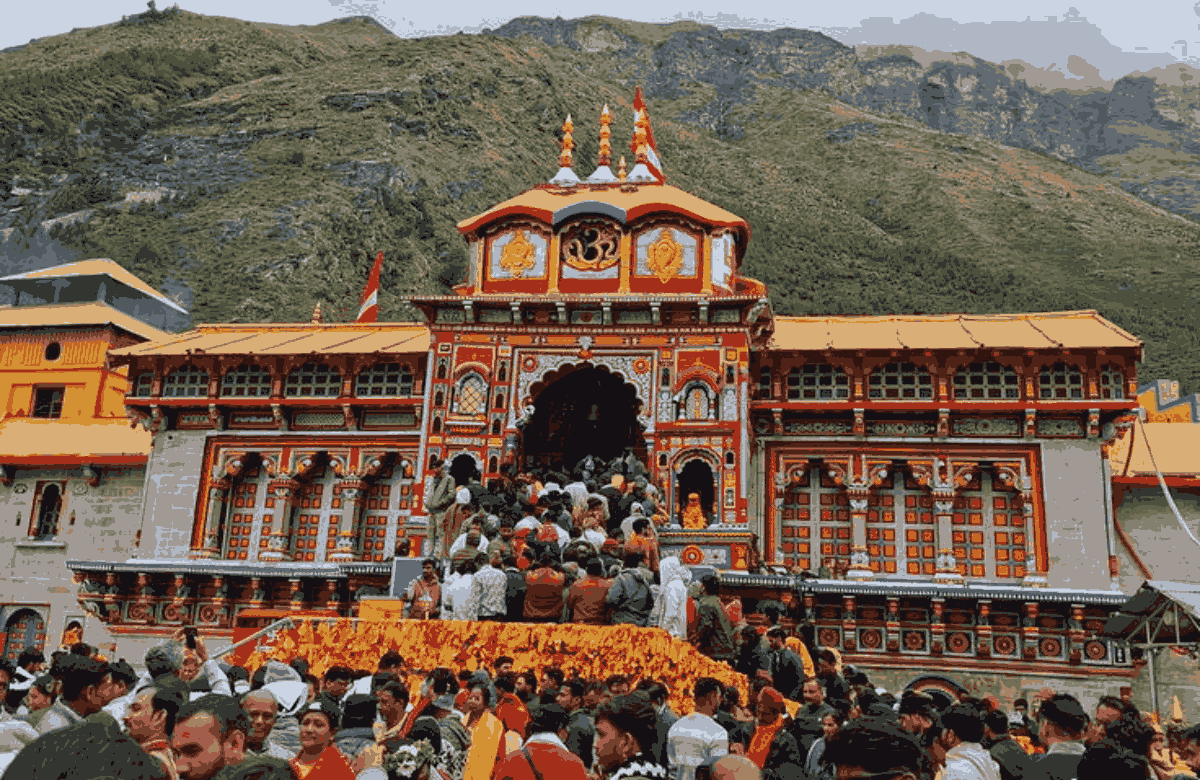
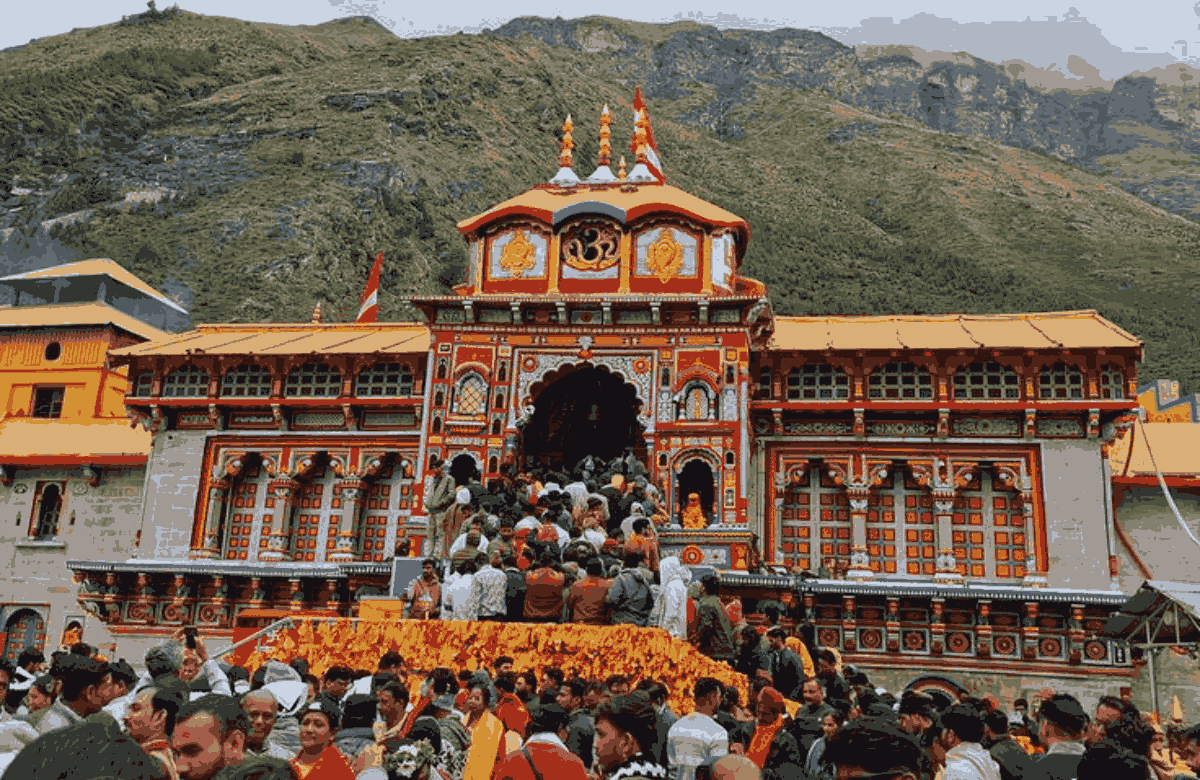
The kedarnath to badrinath distance of 215 to 233 km by road is really a journey in two parts — the trek descent from Kedarnath to Gaurikund, followed by the long, scenic drive north through Rudraprayag, Chamoli, and Joshimath to Badrinath. Whether you cover this by government bus for a few hundred rupees, by private taxi for comfort, or skip the road entirely on a 25 to 30 minute helicopter transfer, the destination is the same: the sacred Vishnu temple at 3,133 m, framed by the Nar and Narayan mountain ranges. Start by knowing how to reach kedarnath from haridwar, since that is where most pilgrimages genuinely begin. Plan the haridwar to kedarnath distance and the subsequent kedarnath to badrinath distance across realistic, unhurried days rather than rushing the mountain roads. And if your circuit extends to Gangotri and Yamunotri as well, factor in those longer inter-shrine distances early in your planning. Every kilometre of this Do Dham journey — by road, by bus, or by air — leads to two of the most sacred shrines in the Himalayas, and the journey itself is worth taking at the right pace.